Part 1
The Tickle That Started It All
The word lands like a feather in a boxing ring. "Tickle." Shardidrick says it on the Maury Povich stage the way you'd describe a puppy nipping at your shoelaces — except she's not smiling. She's sitting across from the man she's supposed to marry, and she's telling a national television audience that every time Ricky and Myteeka are in the same room, they tickle each other. That's the whole crime. Not a hotel receipt. Not a lipstick stain. A tickle. The studio audience lets out a noise somewhere between a gasp and a laugh, that specific Maury sound, the one that says we all know where this is going.
And here's the thing about the word "tickle" — it's a children's word. It belongs to sleepovers and little brothers and people who haven't learned yet how to lie with their bodies. When you hear "tickle" in a daytime talk show about infidelity, your brain does a little double-take. Because adults don't tickle. Adults touch. Adults brush past each other in kitchens and let their hands linger. So when Shardidrick says Ricky and Myteeka tickle, she's not describing a game. She's describing a language she doesn't speak anymore, one that her fiancé and her friend are fluent in. The audience hears it too. That applause isn't support. It's recognition.
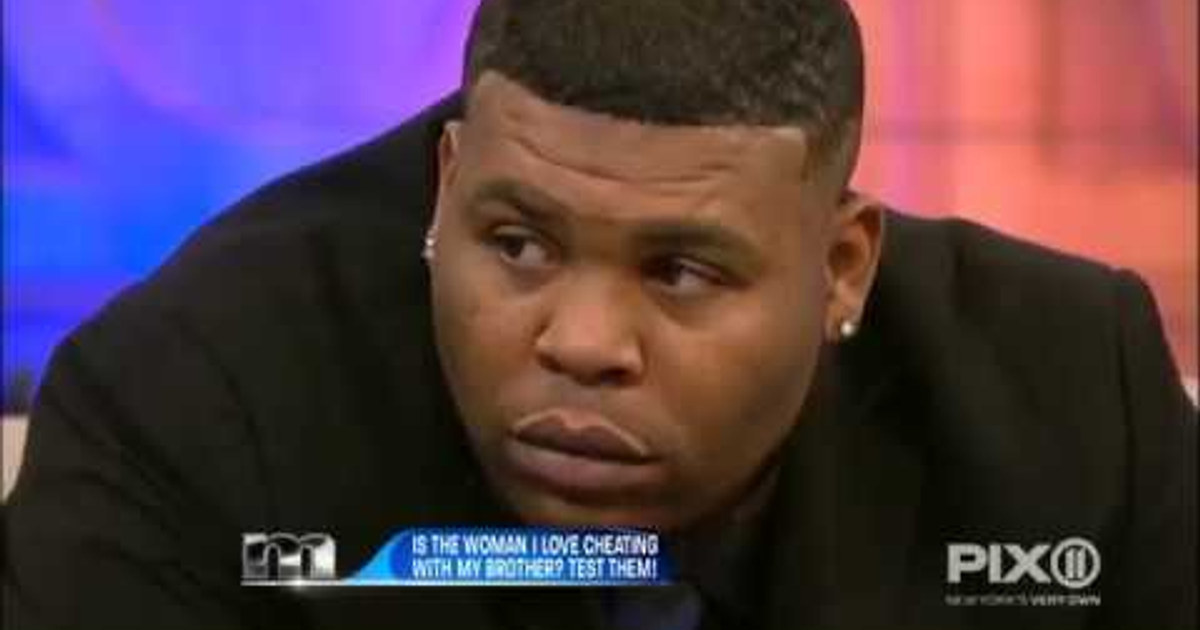
This is the Maury Povich show, a daytime institution that's been turning private suspicion into public spectacle since 1991. The episode likely aired in the 2010s or 2020s, but the format hasn't changed in decades: bring the accuser, bring the accused, bring the lie detector, let the audience decide. It's a courtroom where the judge is a man in a suit and the jury is a hundred strangers who've been waiting in line since six in the morning. And on this particular day, the case is a tickle.
The Tickle Defense
Shardidrick doesn't just mention the tickling. She builds her entire case on it. "They play too much," she says, and you can hear the exhaustion in her voice, the way a person sounds when they've been watching something they can't prove for months. "When they're around each other, all they want to do is tickle." She says it like she's describing a symptom, not a behavior. Like the tickling is a rash that appeared one day and never went away.
Ricky, for his part, doesn't deny the tickling. He doesn't even address it directly in his pre-taped statement. Instead, he calls Myteeka "like my little sister" and says he would "never look at her in a sexual way." But the audience has already heard the tickle. They've already seen the image Shardidrick painted — two adults, one of them engaged to be married, the other dating his brother, rolling around in laughter that looks a lot like flirting. The tickle is the seed. Everything else in this episode grows from it.
And that's the genius of the accusation. You can't disprove a tickle. You can't show a lie detector result for a tickle. You can't produce a receipt that says "not tickling." It's a gesture so small it slips through every crack in the evidence. But it's also a gesture so intimate it makes the whole room uncomfortable. The audience claps because they've been there. They've seen the tickle. They've been the Shardidrick.
The Cast
Every Maury episode needs a cast, and this one delivers. Shardidrick is the fiancée, the woman who came back to the show five months after her last appearance because she fears Ricky is hiding more cheating secrets. She's the one who says "I've been with Ricky almost 2 years" like it's a sentence she's been rehearsing in the mirror. She's the one who knows how Ricky looks after sex — "it's literally like it's uh uh and then do it, put you to sleep" — and she's not afraid to say it on camera.
Ricky is the accused. He's the man who says he's "sick and tired of constantly being accused of cheating." He's the man who admits he slept with one of Derek's girlfriends in the past but swears he was "young and immature back then." He's the man who says he'd "never betray" his brother, even as his brother sits a few feet away and says he's seen it happen before. Ricky is the kind of character a novelist would love — a man who tells the truth about the past while lying about the present, or maybe the other way around. You can't tell. That's the point.
Derek is the brother. He's the one who says "I do" when Maury asks if he thinks Ricky and Myteeka are messing around. He's the one who says he came home and saw Ricky on the couch with his girl — before Myteeka, a different girl, but the pattern is the pattern. Derek is the quiet one, the one who lets his brother talk and then delivers the knife with a single sentence. "He's never done anything to me before? Yes, he has." That's Derek's whole character in one line.
And Myteeka — Myteeka is the ghost at the feast. She's not in the transcript excerpt, but she's everywhere. She's the one who lets Ricky drive her car. She's the one Shardidrick has been friends with "from the beginning." She's the one who, according to an anonymous Facebook message, went on a romantic date with Ricky at McDonald's. Myteeka is the woman who might be guilty, might be innocent, but either way has already been convicted by the audience. That's the Maury show. You don't need to be present to be on trial.


