Part 4
And that's the thing. The genre and the craft aren't mutually exclusive. The same segment that makes you yell at your screen also demonstrates precise pacing and narrative construction. The 'You are NOT the father' payoff lands because it's earned. Not by the participants, necessarily, but by the format. It's a machine, and it works.
Next, we'll dig into the pure-craft side: editing, pacing, and the engineering of a reveal. Because whether you're here for the drama or the design, there's plenty to unpack.
Pure-Craft: Editing, Pacing, and the Engineering of a Reveal
If you're the kind of viewer who watches Maury for the chant, you already got your fix. But if you're the kind who watches for the machinery—the cuts, the pauses, the way a segment is assembled like a state machine—this is where the real show begins. Because a Maury paternity reveal isn't just drama. It's engineering. And the transcript we're working from is a blueprint.
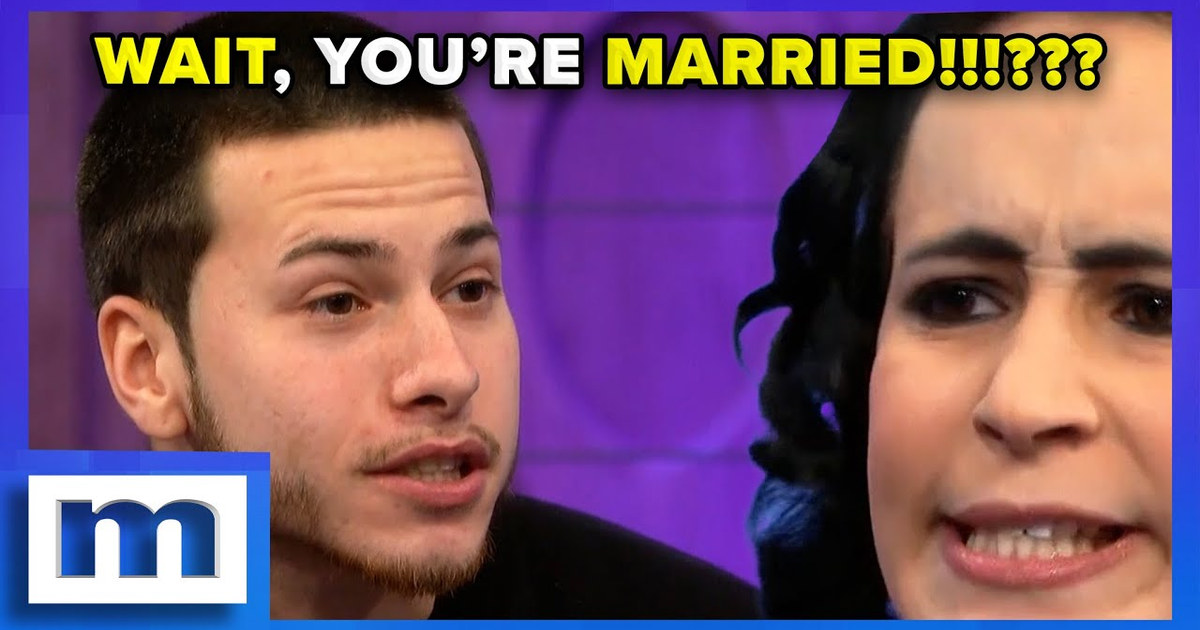
Let's treat the segment as a control flow. Every beat has a function. The setup: Sammy, 27, married to 52-year-old Lenny, admits to a one-night stand with then-18-year-old Fred three years ago. Conflict: Fred denies everything, calls Sammy a 'cheap liar,' claims he took an at-home DNA test that showed 'a big fat zero.' Complication: Sammy disputes the test's validity—'He was swabbing my son's teeth'—and drops the detail that her twin brother heard Fred say, 'I don't need this DNA test. I know you're my son.' Climax: the Maury DNA test. Resolution: Lenny accepts fatherhood; Sammy says they'll go home and love their son. That's not a talk show. That's a finite state machine with a built-in cliffhanger.
The editing rhythm is where the tension gets manufactured. Watch how the cuts alternate between Sammy, Fred, Lenny, and Maury. Sammy gets the emotional close-ups—tears, finger-pointing, the 'BE A MAN' outburst. Fred gets the defensive mid-shots—arms crossed, head shaking, the 'I'm not the father' refrain. Lenny, when he finally appears, gets the calm, steady framing that says 'I'm the anchor here.' And Maury? Maury gets the reaction shot. The deadpan stare. The slow turn to the audience. The pause before the verdict. That pause is the whole ballgame. It's a deliberate latency inserted into the system to maximize the payload when it finally delivers.
Audience reaction shots are the feedback loop. Every gasp, every 'Ohhhh,' every chant of 'Maury! Maury!' is a signal that the tension is working. The editors don't just cut to the crowd for color. They cut to the crowd to validate the stakes. It's the same principle Christopher Nolan used in The Dark Knight (2008, 152 min, Warner Bros.)—cut to the faces of Gotham to remind you what's at stake. Maury does it with a studio audience and a DNA swab.
Now, the craft details. Fred's line—'I paid 134 bucks for that DNA test'—is a concrete anchor. It's specific. It's defensible. It's the kind of detail that makes a denial feel real, even if you don't believe him. Sammy's medical detail about her son's scrotum color—'a browner color'—is a narrative device. It's uncomfortable, it's intimate, and it's the kind of thing a mother would notice. It grounds the accusation in lived experience. And Lenny's calm 'I love the kid' is the emotional counterweight. It's the steady hand on the tiller while everyone else is screaming.
Maury Povich himself is the producer of this machine. His deadpan delivery is legendary. His timing on 'you are NOT the father' is surgical. And his follow-up questions—'What happened to the test?' 'Do you know her husband?'—keep the segment moving. He's not just a host. He's a systems architect. He knows when to push, when to pull back, and when to let the silence do the work. It's the same skill Steven Soderbergh brings to a heist film like Ocean's Eleven (2001, 116 min, Warner Bros.)—the confidence to let the audience fill in the gaps.
So here's the payoff. Genre fans get the chant, the shock, the 'you are NOT the father' moment that's been memed into oblivion. Craft nerds get a tightly engineered state machine—a segment that moves from setup to resolution with the precision of a well-written function. And both audiences walk away satisfied. That's the genius of Maury. It's not high art. It's high engineering. And next time, we'll dissect another Maury reveal—or maybe a Jerry Springer brawl—to see how the same principles apply. Because once you start seeing talk shows as code, you can't unsee it.


