Part 1
The Consensus: Alton Is a Deadbeat Denier—Here’s Why That’s Too Simple
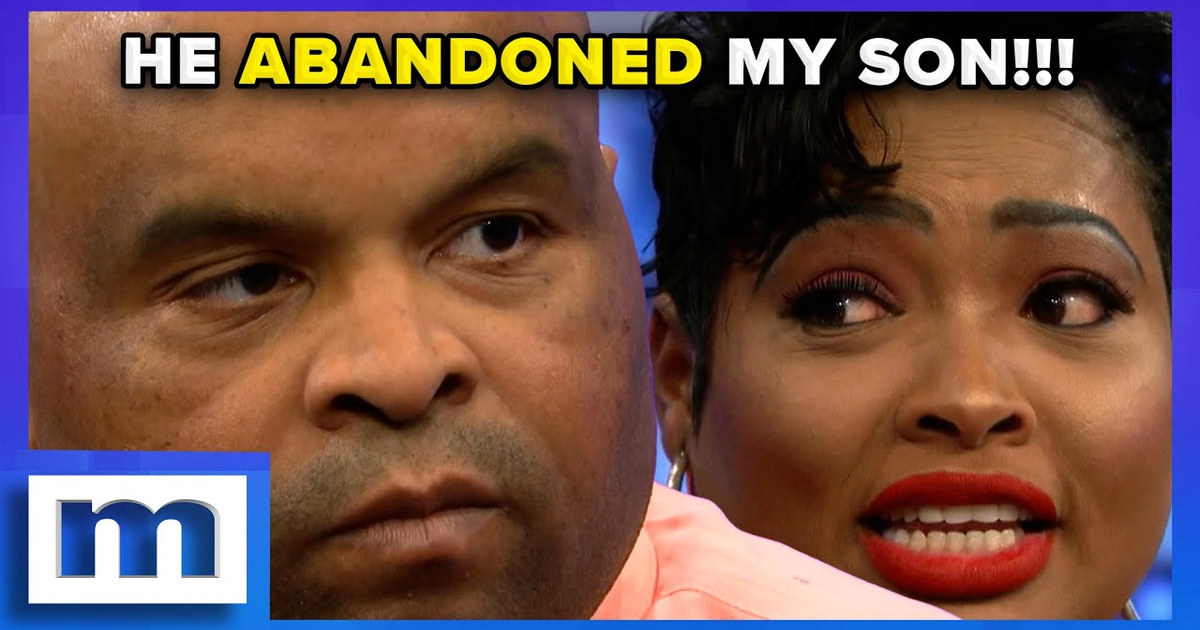
If you’ve been anywhere near social media since this episode of *Maury* aired, you already know the verdict. Alton is the villain. He’s a deadbeat dad who walked out on a premature baby, Nehemiah, after four months of playing father. He’s a denier. He’s a cheater. He’s the guy who looked at a miracle child and said, “Not mine.” The studio audience gasps. The internet piles on. And honestly? I get it. I really do. But the consensus is wrong—or at least, it’s way too simple. And I’m going to tell you why.
Let’s start with the show itself. *Maury* has been running since 1991, and its DNA-test reveals are the stuff of legend. Who can forget the classic “You are NOT the father!” moments that launched a thousand memes? The format is built for shock. The audience is conditioned to boo the man who denies paternity. And when a mother like Shameka sits there with tears in her eyes, holding a picture of a sick infant, the sympathy meter goes off the charts. That’s not a knock on Shameka—her pain is real. But sympathy is not evidence. And a TV studio is not a courtroom.
Here’s what the consensus ignores: the timeline. Alton didn’t just vanish when things got hard. According to what we know, he was present for the entire pregnancy. He left his job to support Shameka during her dialysis—three times a week, Monday, Wednesday, Friday, because she was in renal failure. That’s not the behavior of a man who was planning to bail. He was there for the scary stuff. He was there when they lost one of the twins. He was there when Nehemiah was born on March 26, at just 23 weeks and 6 days. The baby had a grade four brain bleed on one side and a grade three on the other. That’s a fight for life. And Alton was in it.
So when did he start doubting? August. Months after the birth. Not the day after. Not when the hospital bills came. Not when the sleepless nights piled up. He didn’t deny paternity until August. That’s not a deadbeat’s pattern. A deadbeat leaves. A deadbeat ghosts. A deadbeat doesn’t stick around for dialysis and a NICU rollercoaster only to suddenly develop doubts four months later. Something changed. And if we’re being fair, we have to ask what.
Now, let’s talk about Shameka’s story, because it’s powerful. She was 23 weeks and 6 days pregnant when she went into early labor. She lost one twin. The doctors didn’t even want to revive either baby. Nehemiah survived—a miracle by any measure. He had a grade four brain bleed, a grade three, and a long road ahead. Shameka calls him her miracle. And he is. Her pain is real. Her fear is real. Her love for that baby is undeniable. But here’s the hard truth: none of that proves Alton is the father. It just proves she’s a mother who went through hell. And when you go through hell, you want someone to blame. Alton is the easiest target.
The audience sees a crying mother and a stoic man denying a sick child. That’s a story as old as time. But stories aren’t facts. And the rush to judgment—the immediate labeling of Alton as a deadbeat denier—ignores three massive problems with the case against him. First, the casino “cheating” evidence is flimsy at best. Second, physical resemblance is not paternity. And third, the court of public opinion has no due process. We’re going to break each of those down. Because if we’re going to call a man a deadbeat, we better have more than a gut feeling and a dramatic pause from Maury.
I’m not saying Alton is innocent. I’m saying he deserves a fair hearing. And right now, he’s not getting one. The consensus says he’s a villain. I think the consensus is wrong. Let’s talk about why.
The Casino ‘Cheating’ Evidence Is Weak—and Alton Knows It
Let’s talk about the casino. It’s the centerpiece of Alton’s cheating case, the moment he points to as proof that Shameka was unfaithful. But when you actually break down what happened, it’s less “smoking gun” and more “fog machine.”
Here’s the story: Shameka admits she loves to gamble and went to a casino once. While she was there, a man sat next to her. That’s it. That’s the whole thing. Alton’s friend saw this and assumed they were together. No photographic evidence. No confession. No second witness. Just a friend’s assumption, filtered through Alton’s already-suspicious mind.
Alton also claims his family members saw Shameka “getting lucky” at a casino. But “getting lucky” is doing a lot of heavy lifting here. In gambling, it means winning money. In Alton’s retelling, it’s code for cheating. Which is it? Because those are two very different things, and the only evidence we have is a vague phrase that could mean either.
Compare this to the evidence we see in other Maury paternity cases. On that stage, when someone is accused of cheating, we get photos. We get text messages. We get multiple witnesses who saw the accused leaving a motel with someone else. We get confessions. We get timelines that don’t add up. Here, we get a friend’s assumption and a family member’s ambiguous phrase. That’s not evidence. That’s hearsay wrapped in a hunch.


