Part 1
The Two Viewers in the Room: Why This Maury Episode Works Twice
There are two kinds of people who watch a Maury Povich paternity episode. The first came for the genre: the casino night, the ex-boyfriend, the lie detector, the envelope, the verdict. The second came for the craft: how a daytime talk show builds a four-act machine out of a single unresolved question. Both are in the room. Both get what they came for. And if you think that’s an accident, you haven’t been paying attention to how this show is engineered.
I’m a hobbyist programmer. I spend my days thinking about inputs, state, and outputs. So when I watch Maury, I don’t just see drama. I see a system. And the case of Miranda and Nick is a clean, well-documented run of that system. Let’s walk through it.
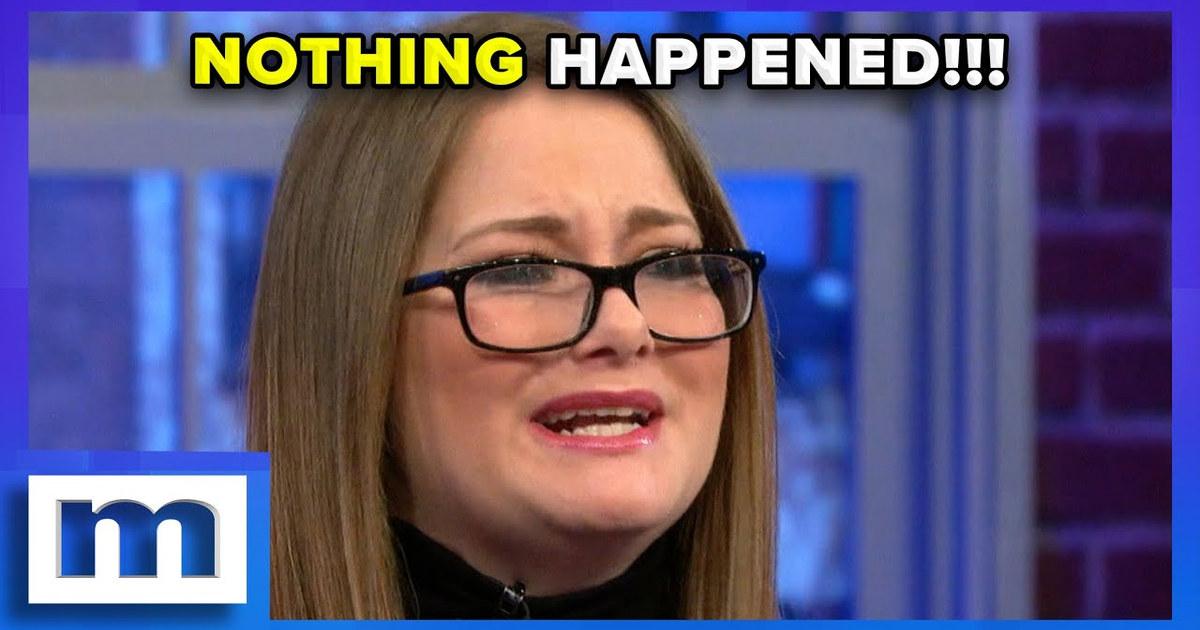
The facts, as presented: Miranda and Nick were together. Four years ago, there was a casino night. Miranda was drinking, gambling, feeling vengeful. She held hands with her ex. She kissed him. She admits this. The ex slept over at her house. She says nothing else happened. Nick’s best friend saw the hand-holding and made the phone call. Nick confronted Miranda. She admitted the ex slept over, swore nothing happened. Later, she admitted the kiss. Nick left. He didn’t speak to her for nearly four years. Meanwhile, Miranda had a daughter, Amira, now three years old. She sent Nick pictures on Facebook every couple months for three years. He read them. He never responded. Then, last October, he came back. He met Amira. He started to fall in love with her. But he still couldn’t commit. Why? Because he didn’t know the truth. So they came to Maury. On stage: a DNA test and a lie detector test. The question: Is Nick the father? And did Miranda sleep with her ex that night?
That’s the setup. Now here’s the tension that makes it work for both audiences. It’s a trust problem that is also a narrative problem. Nick says he cannot commit until he knows the truth. Miranda says her story never changed. The audience is asked to hold both claims at once. For the genre viewer, that’s the hook: will she pass? Will he be the father? For the craft viewer, that’s the architecture: a single unresolved question, stretched across four acts, with testimony, photos, and tests as the inputs, trust and doubt as the state, and a verdict and a reconciliation as the outputs.
Let’s talk about those inputs. You have testimony: Miranda’s account, Nick’s account, the best friend’s phone call. You have photos: Amira’s face, which everyone on stage points to as evidence. You have tests: the DNA swab, the polygraph. Each input is a data point. Each data point is contested. The system doesn’t resolve until the final act. That’s not sloppy. That’s design.
The state of the system is trust and doubt. Nick’s state: doubt. He says he’s starting to fall in love with Amira, but he can’t commit unless he knows. Miranda’s state: trust. She says her story ain’t never changed. She’s going to pass. The audience’s state: suspended between them. We want to believe Miranda. We also understand Nick’s doubt. That’s the engine. It runs on cognitive dissonance.
And the outputs? A verdict. And a reconciliation. But the outputs only matter if the inputs are credible. That’s where the craft comes in. The show doesn’t just present the tests. It stages them. The DNA envelope. The lie detector results. The pause before the reveal. The crowd reaction. All of it is engineered to make the verdict feel inevitable. And that’s not a knock. That’s a compliment. It’s the same thing Christopher Nolan does with a spinning top in Inception (2010, 148 minutes, Warner Bros.). It’s the same thing Sidney Lumet does with the jury room in 12 Angry Men (1957, 96 minutes, United Artists). You build a machine that produces a feeling. The feeling is truth.
Now, I know what you’re thinking. You’re thinking, “This is Maury. It’s not 12 Angry Men.” And you’re right. But that’s exactly why it’s worth studying. Maury Povich has been doing this since 1991. The show has a formula. But within that formula, there’s variation. And this episode is a good variation. It has a clear timeline. It has a sympathetic protagonist. It has a genuine mystery. It has stakes that are emotional, not just tabloid. A three-year-old girl is at the center. That’s not nothing.
So here’s what I’m going to do. I’m going to alternate. Some sections will lean genre-craft: the thrills, the reveals, the crowd. Some sections will lean pure craft: editing, pacing, staging, test design. Neither audience gets condescended to. The genre viewer gets the casino and the verdict. The craft viewer gets the mechanics behind them. And if you’re both — if you came for the drama and stayed for the engineering — then this is for you.
Because the truth is, a show like Maury is a system. And like any system, it can be analyzed. You can trace the inputs. You can map the state. You can predict the outputs. But you can also just enjoy the ride. And that’s the beauty of it. It works on both levels. It’s a guilty pleasure and a case study. It’s a casino night and a control flow diagram. It’s Miranda and Nick and Amira and a lie detector. And it’s coming up next.


