Part 3
That's the key difference. Springer was chaos. Wilkos is aggression. Maury is confession. And confession requires a certain visual dignity, even when the subject is a man who claims he bought condoms for a party he didn't attend.
The Technical Payoff: Why It All Works
When you put it all together—the shot-reverse-shot editing, the 35mm-to-85mm lens switch, the halo backlight on Maury, the film noir shadows on the guests—you get something that feels less like a talk show and more like a movie. A movie where the ending is always the same: someone is lying, and the camera is going to prove it.
[[AD]]
The next time you watch an episode, pay attention to the moment before the lie detector results are revealed. Watch how the camera cuts to Deborah, then to Anthony, then to Laquisha. Watch how the 85mm lens blurs out everything except their faces. Watch how the backlight makes Maury look like he's about to deliver a sermon. That's not accidental. That's craft. And it's why Maury's confession booth has lasted longer than most marriages it's tried to save.
In the next section, we'll look at what to watch for—the emotional payoff and the cinematic legacy of Maury's confession booth. Because the technical stuff is only half the story. The other half is what happens when the truth finally comes out.
What to Watch For: The Emotional Payoff and the Cinematic Legacy of Maury's Confession Booth
The lie detector results are in. Maury reads them like a judge delivering a verdict: Anthony lied about sleeping with another woman. Laquisha lied about being sabotaged. Deborah, who has been holding it together for the entire segment, finally breaks. She says she's done with both. The camera doesn't cut away. It stays on her face, catching every micro-expression—the twitch of disbelief, the flush of anger, the slow collapse into resignation. This is the payoff, the moment the entire episode has been building toward. And it's shot like the climax of a courtroom drama, not a daytime talk show.
As a cinematographer who's shot second-unit on everything from indie thrillers to network procedurals, I can tell you: this is no accident. The Maury Show, which ran from 1991 to 2022 in syndication, understood something that most reality TV producers never grasp. The lie detector segment isn't just about the result. It's about the emotional arc—denial, confrontation, acceptance—played out in real time. And the final shot, the one that lingers after Deborah walks off set and Anthony sits alone, is a masterclass in ambiguity. The camera holds on Anthony's face. He doesn't speak. He doesn't cry. He just sits there, a man exposed, his reaction shot leaving us to wonder: is he sorry? Is he relieved? Is he already planning his next lie? That's the power of the confession booth. It doesn't give you answers. It gives you a face.
This three-act structure—denial, confrontation, acceptance—mirrors the courtroom drama blueprint perfected in films like 'A Few Good Men' (1992, directed by Rob Reiner, 138 minutes). Think about the climax of that movie: Tom Cruise's Lt. Kaffee pushes Jack Nicholson's Col. Jessup until he cracks, and the camera holds on Jessup's face as he realizes he's been beaten. It's the same beat. The lie detector is the cross-examination. The results are the verdict. And the reaction shot is the sentence. On Maury, the stakes are personal, not military, but the emotional mechanics are identical. Deborah's arc—from 'I don't know what to believe' to 'I'm done'—is a complete character journey in under ten minutes. That's efficient storytelling, and it's why clips from these segments have racked up millions of views on YouTube and TikTok.
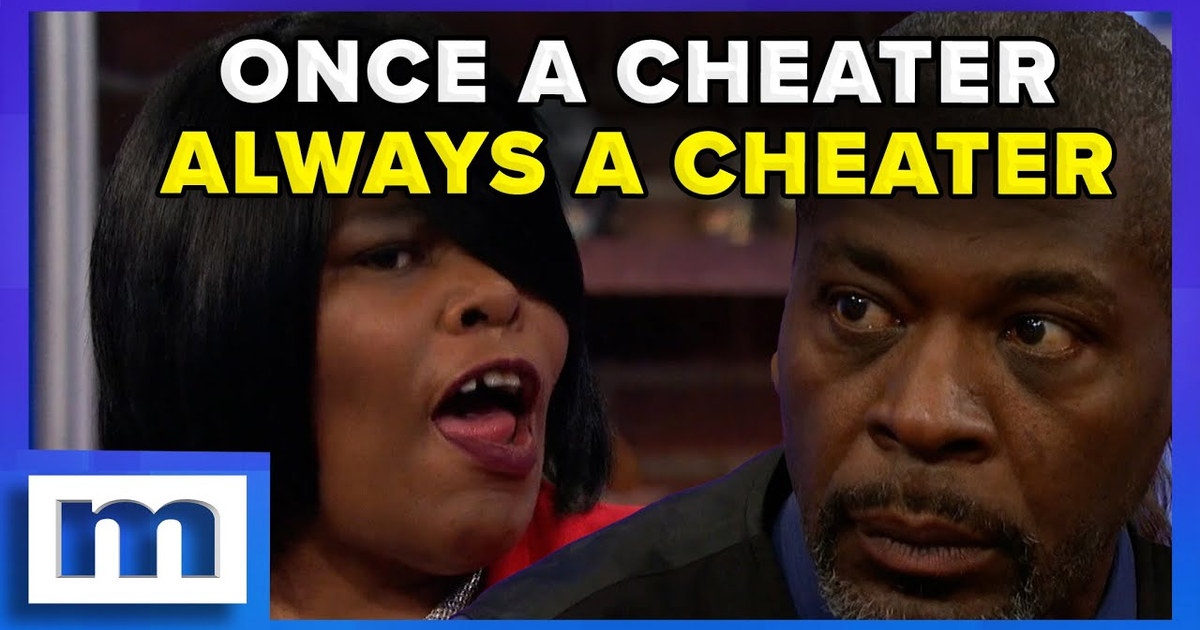
Take the 2022 episode 'Once a Cheater, Always a Cheater?'—which has over 10 million views on YouTube alone. The episode features Deborah, Anthony, and Laquisha, and it's a perfect example of how the show uses the lie detector as a narrative device. The setup is simple: Anthony has cheated before, Deborah suspects he's doing it again, and her sister Laquisha claims she saw him at a hotel with another woman. Anthony denies everything, blames Laquisha, and accuses her of making a pass at him. The audience is caught in the crossfire, unsure who to believe. Then the lie detector results come in, and the truth—or at least Maury's version of it—is revealed. Anthony lied. Laquisha lied. Everyone lied. And Deborah is left to pick up the pieces.
But here's what makes this segment cinematically interesting: the final shot. After Deborah walks off set, the camera stays on Anthony. He's alone now, the studio audience quiet, the lights still hot. The shot is tight, a medium close-up, and it holds for what feels like an eternity. In film terms, this is a reaction shot—a cutaway to a character's face to show their emotional response to the preceding action. But on Maury, it's more than that. It's a confession. Anthony doesn't have to say anything. His face says it all: the guilt, the defiance, the exhaustion. And because the camera doesn't cut away, we're forced to sit with him, to confront the ambiguity of his expression. Is he remorseful? Or is he just sorry he got caught? The show doesn't answer that question. It leaves it to us.
This is the cinematic legacy of Maury's confession booth. It's not just about the lie detector. It's about the way the show uses camera work, editing, and pacing to create a narrative that feels both raw and constructed. The split-screen during lie detector results, for example, is a technique borrowed from thriller films—think 'Phone Booth' (2002, directed by Joel Schumacher, 81 minutes) or 'Split' (2016, directed by M. Night Shyamalan, 117 minutes). It allows the audience to see both the accuser and the accused at the same time, heightening the tension and forcing us to compare their reactions. On Maury, the split-screen is used to devastating effect, especially when the results are read and one person's face falls while the other's lights up with vindication.
And then there's the increasing use of social media clips as evidence. In recent years, Maury episodes have incorporated text messages, Instagram DMs, and even TikTok videos as part of the lie detector segments. This is a new twist on an old format, and it's shot with the same attention to detail. The camera zooms in on the phone screen, the audience gasps, and the accused is forced to explain. It's like a modern-day version of the smoking gun, and it's edited for maximum impact. Watch for this in future episodes: the way the show uses split-screen during results, and the way it integrates social media evidence into the narrative. These are the techniques that keep the confession booth relevant, even in an era of endless content.
So what's the takeaway? The Maury Show may be over, but its cinematic influence lives on. The lie detector segment is a masterclass in emotional storytelling, and the final reaction shot—the one that holds on Anthony's face after Deborah walks away—is a reminder that sometimes the most powerful moment is the one where nothing is said. It's a technique that filmmakers have used for decades, from 'Citizen Kane' (1941, directed by Orson Welles, 119 minutes) to 'Marriage Story' (2019, directed by Noah Baumbach, 137 minutes). And it's why clips from Maury continue to go viral, years after the show ended. We watch because we want to see the truth. But what we really want is to see the face of someone who's just been caught in a lie.
Next time, we'll break down the cinematography of paternity test reveals—and why those episodes are shot like horror films. You won't want to miss it.


