Part 1
The Set as a Confession Booth: How Maury's Lie Detector Segments Are Shot Like Interrogation Rooms
The Maury Show's lie detector segments are not just trash TV—they are meticulously staged confession booths that use cinematography to amplify guilt, denial, and revelation. I've shot second-unit on enough procedurals to know an interrogation setup when I see one, and the Maury stage is lit and framed like a perp walk with a live audience. The moment Deborah walks out, the camera doesn't roam. It locks on her face, tight, like a 50mm prime wide open, and holds. That's not accident; that's design. The set becomes a pressure cooker, and every cut, every shadow, every bead of sweat is engineered to make you feel the weight of the lie before the results even come back.
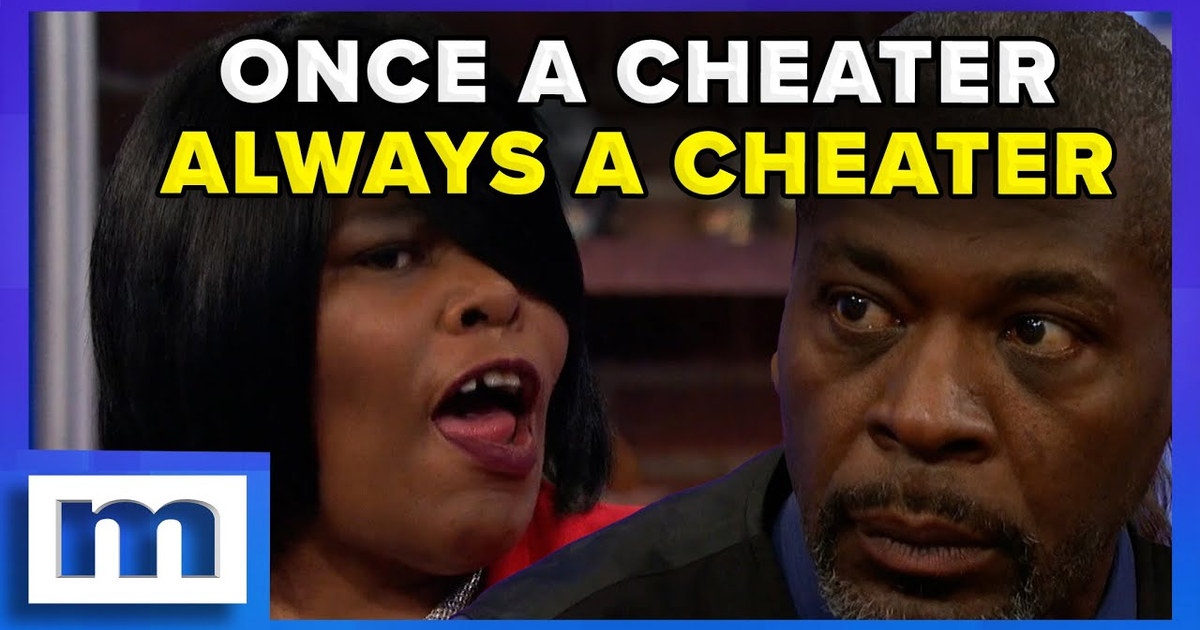
Take the 2023 episode where Anthony fails multiple questions. Deborah is backstage, and when Anthony is brought out, the first thing we see is his smirk—caught in a medium close-up that frames him against the audience, but the background is soft, almost irrelevant. The camera stays on his face as Deborah recounts finding the secret phone. "Anthony went in the bathroom and take a shower, so I happen to go in his pants and the phone slipped out," she says. The shot doesn't cut to the phone; it cuts to Anthony's eyes. He blinks, looks down, then back up. That's the money shot. Then the reveals come: lipstick, earrings, condoms. Each item is described, and the camera tightens. By the time she says, "An unwrapped condom and a condom fell out his pants pocket," we're in a close-up so tight you can see the pulse in his neck. The audience gasps, but the camera doesn't flinch. It's the same technique Errol Morris used in 'The Thin Blue Line' (1988)—hold on the face, let the contradiction do the work.
Lighting-wise, the Maury stage is a masterclass in moral ambiguity. The audience is bathed in high-key studio lighting—softboxes everywhere, filling every corner with an even, almost clinical glow. But the subjects? They get a harder key light, often from a 45-degree angle, casting shadows under the eyes and along the jawline. It's subtle, but it's there. In the 2023 Anthony episode, watch how the shadow deepens when he says, "I don't believe in that. I told I cheated twice." The light doesn't change, but his posture does, and the shadow swallows half his face. That's the visual language of guilt. Compare that to the audience, who are lit like a sitcom—flat, bright, no secrets. The contrast tells you everything: the crowd is the jury, the subjects are the accused, and the lighting is the judge.
The lie detector itself is a prop. It's not about accuracy; it's about performance. In the 2019 episode with Deborah and Laquisha, the test results are read aloud, and the camera cuts to each woman as her fate is announced. The polygraph machine sits there, wires and all, but it's never the focus. The focus is the face. The machine is just a MacGuffin—a reason for the confrontation. It's the same role the briefcase plays in 'Pulp Fiction' (1994): what's inside doesn't matter; what matters is how people react to it. And the reactions are pure cinema. When Anthony is told he failed, he doesn't argue with the machine; he argues with Maury. "Sister's a liar, man," he says, and the camera catches the twitch in his cheek. That's the performance. The polygraph is just the excuse.
The framing throughout these segments owes a debt to true-crime documentaries like 'The Jinx' (2015) and 'Making a Murderer' (2015). In 'The Jinx,' Andrew Jarecki keeps the camera on Robert Durst's hands, his eyes, his pauses. Minimal movement, maximum tension. 'Making a Murderer' does the same with Steven Avery—long takes, tight shots, no music. Maury's directors apply that same principle, but with a live audience and a host who knows how to milk a pause. The 50mm lens is key here; it mimics human eye perspective, so you feel like you're in the room, not watching from afar. When Deborah says, "I don't know if she lying or he lying," the lens makes you lean in. You're not a spectator; you're a witness.
And that's the genius of it. The Maury Show doesn't pretend to be prestige TV, but its lie detector segments are shot with the same precision as any high-stakes interrogation scene. The set is a confession booth, the lighting is a moral compass, and the camera is a lie detector of its own—catching every flinch, every swallow, every shadow. You can call it trash TV if you want, but I've seen Oscar-winning dramas with less visual storytelling. The next time you watch Anthony squirm under that hard key light, remember: this isn't just entertainment. It's cinematography with a polygraph.
Lens and Lighting: The Technical Craft Behind Maury's Most Explosive Reveals
The moment Anthony admits to the secret phone, the camera doesn't stay on him. It cuts to Deborah. Her jaw tightens, her eyes narrow, and the frame holds just long enough for you to feel the betrayal land. That's not an accident. That's shot-reverse-shot editing doing exactly what it's supposed to do: building suspense one reaction at a time.
As a cinematographer who's shot second-unit on more than a few unscripted shows, I can tell you: the Maury set is not a random circus. It's a precision instrument. Every lens choice, every light placement, every cut is engineered to squeeze maximum emotion out of the chaos. And the technical craft behind those explosive reveals is more sophisticated than most people realize.


