Part 2
[[AD]]
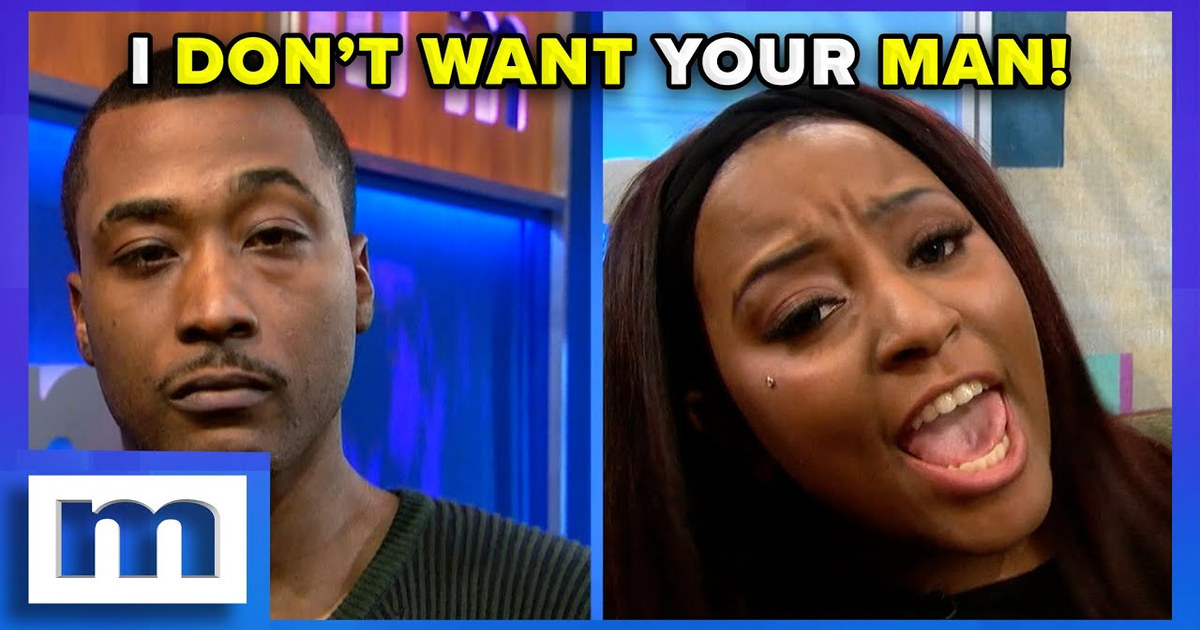
And that's before we get to Cassandra. She says she loves Carl, then says he's out of her house. She says she wants the truth, then when the polygraph confirms Carl slept with other women, she says, 'You want to hear the rest or not?' — a line that suggests she already knew. That's not a passive victim. That's a participant in the format. She's not just reacting to Carl's infidelity; she's steering the narrative, building suspense, giving the audience what they came for. She knows how this works. She's been watching Maury. She knows the beats: the accusation, the denial, the polygraph, the reveal. And she's hitting every one of them.
[[VIDEO]]
This is where the real-world context matters. Maury episodes like this are cast, not discovered. The show's producers find couples with dramatic stories, then build segments around them. Cassandra and Carl are not random people; they are selected for their ability to perform conflict on camera. That doesn't mean their pain isn't real — it probably is — but it does mean the version we see is shaped, edited, and packaged for maximum drama. The contradictions aren't bugs; they're features. They keep the audience guessing, keep the tension high, keep the clicks coming.
Take the detail about the daughter's fifth birthday party. Carl lied about going to play Xbox, then appeared on Snapchat at a party with a Corona. That's the kind of detail that makes the audience trust Cassandra — it's specific, it's visual, it's damning. But it's also the kind of detail that producers know how to use. It's a story beat, a hook, a reason to keep watching. And it works. We believe Cassandra because the detail feels real. But feeling real isn't the same as being the whole truth.
The polygraph clears Alante of sleeping with Carl, but it doesn't clear her of the watch, the flirting, or the tension. It doesn't clear Cassandra of knowing more than she's letting on. And it doesn't clear the show of manufacturing drama for ratings. The consensus wants a clean villain and a clean victim. The transcript gives us three people all performing for the same audience, all saying things that contradict themselves, all playing a role. That's not a bug in the Maury formula. That's the formula.
So if the women aren't reliable and the polygraph isn't truth, what is the show actually doing? The answer is in the final segment, where the audience gets the verdict it wants and the couple gets nothing. That's the real product. Not truth. Not justice. Just the performance of both.
The Verdict Is the Product — and the Audience Is the Mark
The third piece of the consensus is the one nobody even bothers to argue about: the polygraph results are the payoff. The whole episode builds to that moment. The audience sits through the accusations, the tears, the cousin drama, the 1,500 Facebook friends, the watch that definitely came from Alante, and then — finally — the lie detector speaks. That's the moment we came for. That's the truth. And I think that's wrong. Not because the results are fake, but because the payoff was never for Cassandra or Carl. It was for us. The verdict is the product. And we are the customers.
Let's walk through the final sequence, because the structure is almost beautiful in how ruthlessly it works. Carl is asked if he had sexual contact with Alante. He says no. The test says he is telling the truth. Beat. Applause. Then he is asked if he ever slept with another woman. He says no. The test says he is lying. Beat. Bigger applause. Then the phone question — did he hide his phone, did he act suspicious? The exes question — did he reconnect with women from his past? The 'while Cassandra was at work' question. The friends' house question. Each one is a beat. Each one gets a reaction. Each one is designed, paced, and edited to land.
[[AD]]
And here's the thing — I have to credit the opposing view, because it's a strong one. This is genuinely satisfying television. The structure works. The audience gets a clear arc: suspicion, confrontation, verdict, consequence. It is not wrong to enjoy it. It is not wrong to find it cathartic. There is something deeply human about watching a liar get caught in real time, especially when the liar spent the whole episode denying, deflecting, and blaming everyone else. The polygraph sequence delivers exactly what it promises. That's not an accident. That's craft.
But here's where I break from the consensus. The satisfaction is the point — and it comes at the cost of any real resolution. Cassandra does not get closure. She gets a verdict. Carl does not get a chance to explain, to apologize, to change, to do anything except sit there while a machine tells him who he is. The audience gets a verdict, then the show moves on. The couple is left with the same problems they walked in with, plus a camera crew. The polygraph doesn't solve anything. It just packages the problem for consumption.
And let's be honest about the scale of this operation. Maury has been on air for over three decades. The polygraph episodes are a reliable ratings draw. The show's format has been copied by dozens of imitators, from Jerry Springer to Steve Wilkos. This is not a public service. It is a business model. The verdict is not the truth. The verdict is the content. The truth is whatever keeps the audience watching.
Which brings me to the final line of the transcript: 'You are not the father.' That is the show's most famous catchphrase. It appears here not because it fits the story — this was a polygraph segment about infidelity, not a paternity test — but because it is the brand. The episode ends with a paternity-test punchline after a polygraph segment. That is the tell. The truth is whatever keeps the audience watching. The catchphrase is the product. The verdict is the packaging. And we are the customers.
Now, I can already hear the counter-argument, and it's the strongest one: maybe the show does help some people. Maybe Cassandra needed the polygraph to leave a relationship she could not leave on her own. Maybe the audience's applause is not cruelty but recognition — people who have been lied to, who have been gaslit, who have spent years doubting their own instincts, finally seeing someone else get the validation they never got. That's real. I can accept that. I can accept that the show has value for some viewers, and maybe even for some guests.
But I still think the consensus is wrong. The polygraph is not the truth. It is the show. And the show is very good at what it does. It gives us a villain, a victim, a verdict, and a catchphrase. It gives us a clean ending that feels like justice. But it is not justice. It is television. And the difference matters, because when we confuse the two, we stop asking the harder questions — like what happens after the cameras leave, and why we keep watching.
Next time, we look at what happens after the cameras leave — and why the Maury polygraph episodes are still being clipped, stitched, and shared years later. The verdict may be the product, but the aftermath is the real story.


