Part 3
But Alante isn't the whole story. Not even close. Cassandra started digging into Carl's Facebook, and what she found was a whole other life. Over 1,500 women friends. Fifteen hundred. That's not a social network. That's a fan club. Exes came out of the woodwork, women Cassandra had never heard of, suddenly appearing in her notifications. One woman posted that she wanted to be in a relationship with Carl. He tried to delete it before Cassandra could see it. He was too late.
Then came the Snapchat. This one hurts to hear. It was their daughter's fifth birthday party. Carl told Cassandra he was going to the house to play Xbox with his friends. Hours later, she called him. "Oh babe, what are you doing?" "Oh nothing. My phone's going to go dead." Classic. But then she got on Snapchat. There he was. At a party. Drinking a Corona. His best friend's camera had caught him in the background, just pinging out, living his best life while his girlfriend was home with their daughter and a birthday cake.
When confronted, Carl denied it. "That wasn't me," he said. Cassandra had to look at the Snapchat twice. "Is this really him?" she remembers thinking. It was him. It's always him.
And then there are the gifts. A nice watch. Necklaces. Earrings. Shoes. Karachis. Cassandra knows she didn't buy them. "I didn't buy that nice watch," she says. "I know I'm not buying him that nice kind of watch." Where does Carl say they came from? His mom. His grandma. Or he bought them himself, spoiling himself. Sure. A man out of work, spoiling himself with jewelry. The audience isn't buying it either. You can hear them react, that low rumble of disbelief that rolls through a studio when a story stops adding up.
The host presses. Carl insists he's home all the time. He says he doesn't want Alante. He says he didn't send the text. But the watch on his wrist is ticking, and everyone in the room can hear it. Cassandra has reached her limit. "If he's cheating, he's out of my house," she says. "Today is the day I know the truth."
There's a moment in every relationship when the questions stop being questions. Cassandra is there. She's not asking anymore. She's waiting for the answer to arrive. And when it does, the house on high alert will finally go quiet.
[[AD]]
The Lie Detector Doesn't Lie
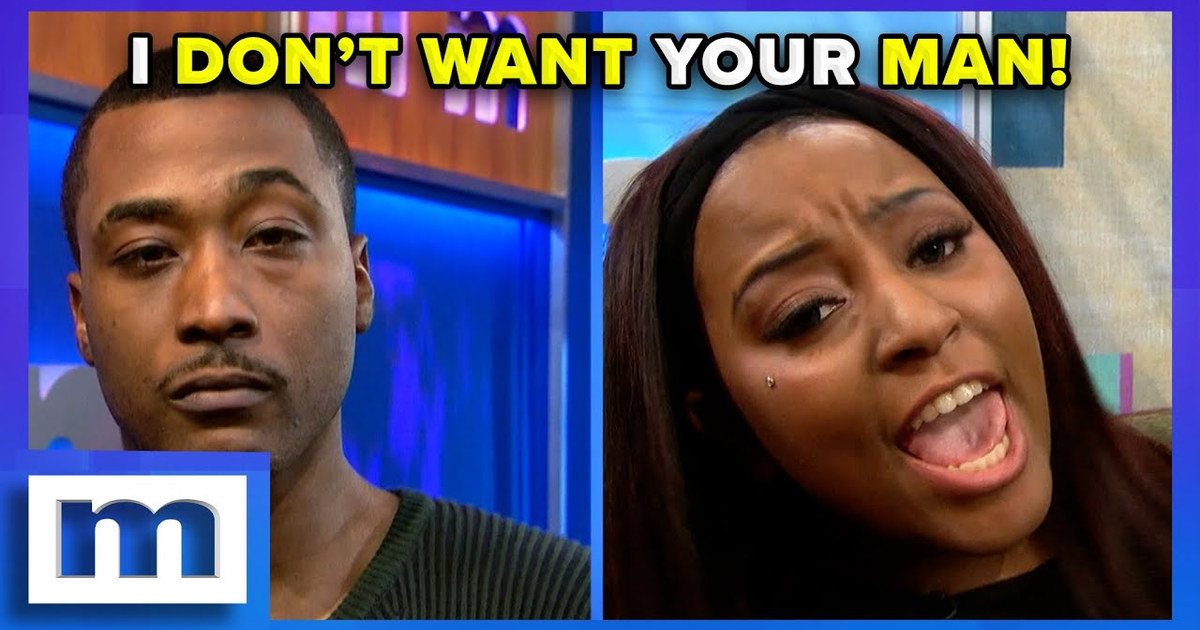
The polygraph machine sits between them like a third person in the room—a silent, unblinking witness that doesn't care about charm, doesn't care about excuses, doesn't care about the way Carl's jaw tightens when the host reads the first question aloud. The room goes quiet. You could hear a pin drop, or maybe just the hum of the studio lights. The host asks: Did you have sexual contact with Alante? Carl says no. The machine says he's telling the truth. For a second, the air shifts. Cassandra's shoulders drop half an inch. Somewhere in the audience, someone exhales. It's the kind of moment that feels like a reprieve—like maybe the whole thing was a misunderstanding, maybe the watch was just a watch, maybe the cousin really is just the cousin. But polygraphs don't do reprieves. They do data. And the data is just getting started.
If you've ever seen a courtroom drama like *A Few Good Men* (1992, Rob Reiner, 138 minutes), you know the rhythm: the calm before the storm, the one answer that lands clean, then the follow-up that cracks everything open. This is that follow-up. The host doesn't pause for effect. He moves straight to the next question: Have you ever slept with another woman? Carl says no. The test determines that was a lie. The audience gasps—not a polite gasp, but the kind that ripples through the room like a wave. Cassandra doesn't move. Her face is stone. The host keeps going. Have you locked your phone to hide cheating? Carl says no. That was a lie. Have you slept with exes? That was a lie. Have you slept with another woman while Cassandra was at work? That was a lie. Have your friends taken you to another woman's house? That was a lie.
Each question lands like a punch. The machine doesn't flinch. Carl does. He shakes his head, says the test is wrong, says it's not accurate, says he doesn't know why it's saying that. But the polygraph has already spoken. The host reads the results with the flat, measured tone of a man who has done this a hundred times—the tone of someone who knows that the truth doesn't need volume. It just needs a witness. And the witness is the machine. Cassandra still doesn't speak. She doesn't have to. The silence is its own verdict.
This is the part where daytime talk shows earn their reputation. Not the shouting matches, not the chair-throwing, but the quiet devastation of a lie exposed in real time. It's the same energy as *The Jerry Springer Show* (1991–2018), except Springer was theater—a carnival of chaos where everyone knew the score. This is different. This is *Maury* (1991–present), where the lie detector is the star and the audience is the jury. You can trace the DNA of this moment back to *The Phil Donahue Show* (1967–1996), which pioneered the audience-participation format that made shows like this possible. Donahue didn't need polygraphs. He had housewives in the audience who could smell a lie from the back row. But the polygraph is a different beast. It doesn't speculate. It measures. It records. It tells.


