Part 3
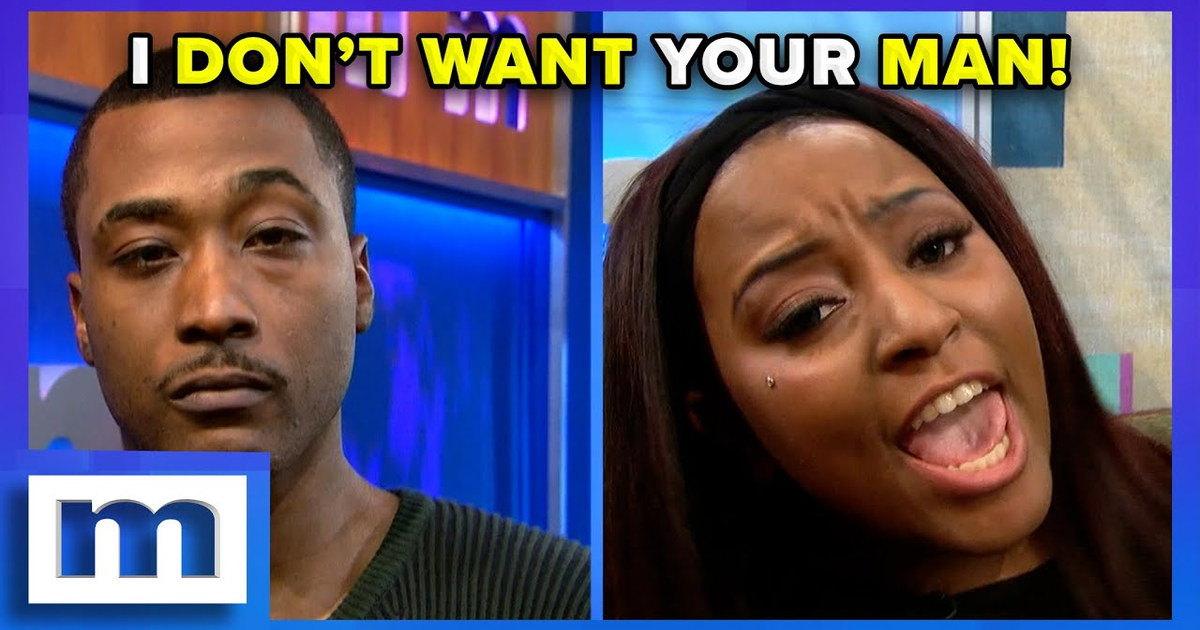
But here’s where the craft gets interesting. The show doesn’t just run the lie detector and read the results. It withholds. It teases. It cuts to commercial right before the results. It brings out the boyfriend, Carl, and lets him deny everything while the audience already knows what Cassandra found: the text, the 1,500 Facebook friends, the watch from Alante. That’s dramatic irony, and it’s engineered. The editing room decides when we learn what. The sound design — the tense music, the audience gasps — tells us how to feel about each revelation. The camera work zooms in on faces at the exact moment of maximum discomfort. None of this is accidental. It’s a pipeline: accusation → denial → evidence → test → result. Each stage is a function call, and the show’s pacing is the execution order.
[[AD]]
Compare this to Maury or Jerry Springer. Maury Povich’s show made the lie detector a staple, but it also made the “not the father” moment a cultural meme. The structure is similar: backstage interviews, on-stage confrontations, video packages. But the craft has evolved. Where Maury relied on raw confrontation, this show layers in pre-recorded messages — like Alante’s video package — that function as asynchronous events. They arrive when the host triggers them, and they change the state of the conversation. It’s like injecting a new thread into a running process. The audience gets the drama of a surprise reveal, and the craft nerd gets the satisfaction of a well-timed interrupt.
The host is the scheduler. He decides which process runs next: Cassandra’s testimony, Carl’s defense, Alante’s video, the lie detector results. He manages the flow, and his reactions — the raised eyebrow, the skeptical “Really?” — are part of the interface. He’s not just a moderator; he’s the runtime environment. And the backstage interviews? Those are the debug logs. They give us context, but they’re also edited for maximum emotional impact. The lighting is dimmer, the angles are tighter, and the sound is more intimate. It’s a different module in the same application.
Now, let’s talk about the lie detector as a narrative device. It’s not just a boolean function; it’s a MacGuffin that promises certainty in a world of he-said-she-said. Cassandra says Carl is cheating. Carl says he’s at home all the time. The lie detector will settle it. But the show knows that the real tension isn’t in the result — it’s in the waiting. The editing stretches that wait. We cut to commercial. We cut to a reaction shot. We cut to the host asking another question. The pacing is deliberately uneven: long, slow builds followed by rapid-fire revelations. That’s a classic suspense technique, and it works because the audience is emotionally invested in the outcome. We want to know if Carl is lying. We want to see Cassandra’s reaction. We want the machine to speak.
And when the machine does speak, the show delivers. The result is definitive: true or false. But the craft is in how we get there. The camera cuts to Cassandra’s face as the result is read. The sound drops out for a split second. Then the audience reacts. It’s a carefully orchestrated sequence, and it satisfies both audiences. The genre fan gets the catharsis of a verdict. The craft nerd gets the satisfaction of a well-executed reveal. It’s like watching a perfectly tuned algorithm output the expected result — but the journey was the point.
Let’s go deeper into the structure. The episode follows a clear pattern: backstage interview with Cassandra, on-stage confrontation with Carl, video package from Alante, then the lie detector. Each segment has its own rhythm. The backstage interview is shot with a single camera, close-up, and the audio is clean. The on-stage confrontation is multi-camera, with audience reactions cut in. The video package is pre-edited, with music and graphics. The lie detector segment is the climax, with dramatic lighting and a slow reveal. This is modular design. Each segment is a component, and the host is the API that connects them.
The show also uses reality TV conventions to manipulate emotions. The “backstage boyfriend” reveal is a classic trope: the partner is hidden away, then brought out for maximum shock. The “not the father” moment is another: the lie detector result is framed as a life-changing verdict. These conventions are familiar, but the craft is in the execution. The editing makes the reveal feel fresh. The sound design amplifies the emotional beat. The camera work captures the raw reaction. It’s a formula, but it’s a formula that’s been optimized over decades of talk show history.
As a hobbyist programmer, I can’t help but see the show as a state machine. The states are: accusation, denial, evidence, test, result. The inputs are the accusations and the evidence. The outputs are the lie detector results. The transitions are triggered by the host. And the whole thing runs on a loop: new episode, new accusation, new test. It’s a simple machine, but it’s incredibly effective. The drama emerges from the interactions between the states. The suspense comes from the uncertainty of the output. And the satisfaction comes from the resolution.
But here’s the thing: the show isn’t just a machine. It’s a machine with a soul. The craft is what gives it that soul. The editing, the pacing, the camera work, the sound design — all of it is designed to make us feel something. And it works. We feel Cassandra’s frustration. We feel Carl’s defensiveness. We feel the audience’s shock. That’s the magic of production craft. It turns a simple boolean function into a gripping human drama.
So how does this satisfy both audiences? The genre fan gets the drama: the cheating, the lies, the confrontations, the verdict. The craft nerd gets the engineering: the structure, the pacing, the editing, the sound design. And the show doesn’t privilege one over the other. It delivers both in the same package. That’s the genius of it. It’s a talk show that’s also a masterclass in suspense. It’s a lie detector test that’s also a lesson in narrative design.
If you’re the kind of viewer who came for the drama, you got it. If you came for the craft, you got that too. And if you’re like me, you got both — and you’re already thinking about how you’d code the next episode. Next time, we’ll dive deeper into the lie detector technology itself: how polygraphs actually work, why they’re inadmissible in court, and how shows like this use them as a narrative device. We’ll also analyze another episode where the machine’s output was anything but definitive. Stay tuned.


