The consensus is clear, universally agreed upon, and plastered across decades of pop culture: Dolly Parton is our ultimate rhinestoned fairy godmother. Ask anyone on the street, and they will tell you she is primarily a larger-than-life entertainer, a camp icon of wigs and southern charm whose celebrity aura eclipses everything else in the room. She is treated as a walking national treasure whose sheer charisma made her famous.
And I think that consensus is completely wrong. Here is why.
To view Dolly Parton primarily through the lens of performance, spectacle, and charismatic celebrity is to mistake the packaging for the engine. People look at the hair, the makeup, and the theme parks and assume the music is just the soundtrack to her persona. In reality, the persona was never the driving force—it was just the delivery system for an obsessive, hyper-disciplined writer who treats storytelling like a precision trade.
[[AD]]
Myth 1: The 'Effortless' Pop Star vs. The 3 A.M. Blue-Collar Grind
The popular image of superstar entertainers usually involves late nights, private jets, and a machine of producers feeding them hooks. You see Dolly grinning under the stadium lights, and you assume she lives in the hazy glow of legendary status. That image makes people forget that she functions more like an Appalachian craftsman than a Hollywood diva.
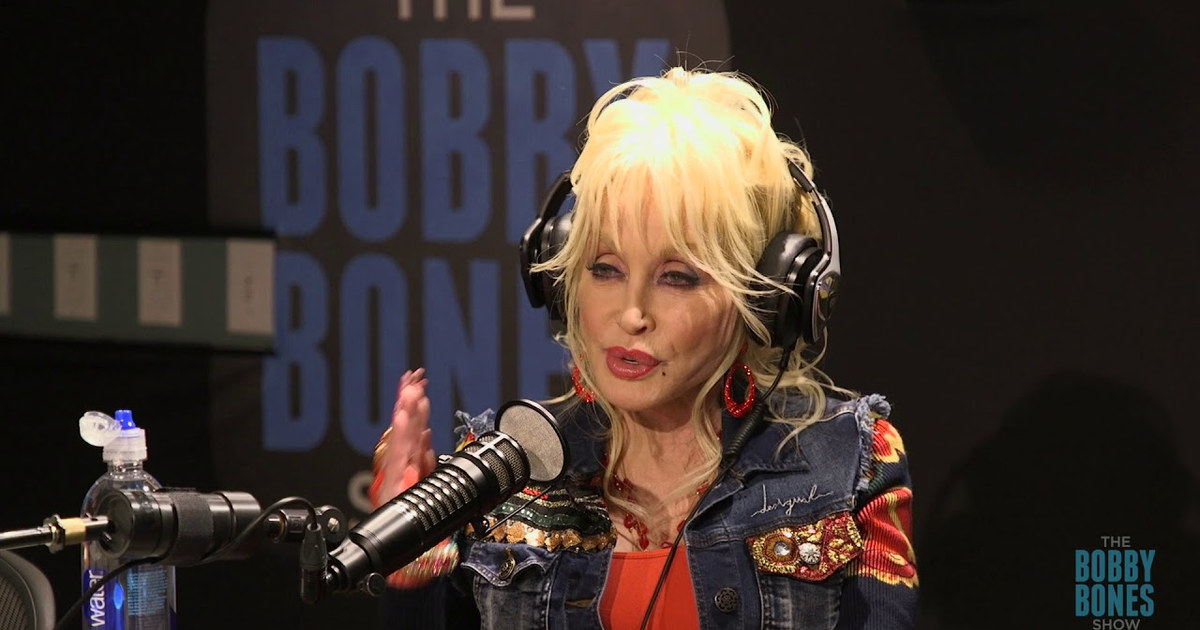
When she sat down with Bobby Bones, she laid out a daily routine that would make an ironworker sweat. 'I am an early bird, so I am usually up and around by 3:00 a.m. every day,' she explained. She gets up in the pitch black, works from 3:00 to 9:00, and knocks out entire days of productivity before most executives have even looked at their alarms. She is not resting on royalties; she is putting in shifts.
Dolly casually estimates she has penned over 5,000 songs across her career. While she self-deprecatingly jokes that she only has 'probably five good ones,' that volume tells the real story. Writing isn't an artistic hobby she pulls out between red carpet appearances; it is an obsession that predates her recording contract.
[[AD]]
For Dolly, the act of putting ink to paper is personal therapy, spiritual ritual, and sheer survival. When asked whether she considers herself an artist or a songwriter first, she does not hesitate for a microsecond: she is a songwriter. Strip away the record deals, the TV appearances, and the sold-out arenas, and she would still be sitting in an empty room constructing rhymes.
Myth 2: She Stumbled Into Nashville as an Innocent Country Darling
There is a lazy retrospective narrative that frames Dolly Parton as an accidental pioneer—a sweet mountain girl who wandered into the male-dominated lion's den of 1960s Music Row and melted hearts with her sincerity. That framing strips her of her tactical brilliance. Nashville wasn't a fairytale kingdom she charmed; it was a cutthroat business district she methodically outmaneuvered.
She arrived in town writing for BMI alongside her maternal uncle, Bill Owens, writing songs on long drives and mailing tapes like a determined salesperson. When she co-wrote 'Put It Off Until Tomorrow,' it ended up with Bill Phillips at Decca Records. The label did not even put her name on the vinyl, yet she was singing harmony so distinct that listeners flooded the radio stations demanding to know who the girl in the background was.
[[AD]]
Label executives like Fred Foster tried to shove her into pop or rockabilly simply because she was young. Dolly stood her ground: she knew she was country, she knew her lane, and she used her undeniable songwriting output as leverage to prove the suits wrong. She wasn't asking for permission—she was backing them into a corner with hit material.
When asked if walking into rooms full of powerful industry men was intimidating, Dolly’s response dismantled every victim trope in the book. Growing up with six brothers gave her an immediate read on male psychology. She didn't rely on institutional protection; she relied on sharp boundaries, street smarts, and absolute creative sovereignty. If an executive tried to flirt, she took it in stride because she knew she held the cards: 'I knew that I had the goods. I knew I had songs.'
Myth 3: 'I Will Always Love You' Is Just a Tragic Love Ballad
The biggest misconception in Dolly Parton's entire canon centers on 'I Will Always Love You.' The mainstream consensus treats the track as the quintessential heartbreak ballad—a sweeping confession of star-crossed romance made immortal by Whitney Houston on *The Bodyguard* soundtrack. It gets played at weddings, funerals, and breakups as an emotional surrender.
[[AD]]
In reality, the song was a cold, calculated strategic negotiation tool. In 1972, Dolly was trapped under the thumb of Porter Wagoner. Her partnership with him had made her a household name on syndication, but it was suffocating her solo career. Every verbal argument, contract discussion, and meeting about her departure hit an immovable brick wall.
Instead of hiring a squadron of litigators or staging a public tantrum, Dolly went home and wrote. In that same legendary writing stretch where she penned 'Jolene,' she engineered 'I Will Always Love You' specifically to disarm Wagoner's ego. She walked into his office the next morning, sat him down, and sang it directly to his face.
It brought Wagoner to tears, and he agreed to release her on the condition that he could produce the track. It was not a plea of romantic devotion; it was an exit strategy disguised as a melody. Dolly used high-level emotional intelligence and lyrical precision as a corporate escape hatch.
[[AD]]
When Kevin Costner and his production team tracked down the song for *The Bodyguard* after another planned theme fell through, Dolly did not meddle. She simply let her work do the talking. She famously heard Whitney’s earth-shattering rendition for the very first time on the car radio while driving from her office to Brentwood, nearly swerving off the road when that iconic acapella intro blasted through the speakers.
[[VIDEO]]
Conceding the Counter-Argument: The Performer Made the Platform
Now, to be completely fair to the consensus view: the dazzling entertainer persona is not irrelevant. It is impossible to deny that without Dolly’s comedic timing, self-deprecating wit, and larger-than-life fashion, her songs might never have reached the stadium-level heights they did. As she admits herself, she needs the outlet of the performer to give the writing a home in the modern world.
Furthermore, Whitney Houston’s technical, jaw-dropping vocal delivery transformed 'I Will Always Love You' from a poignant country departure into an inescapable global anthem. Whitney gave the song an operatic grandeur that Dolly's original, intimate version deliberately avoided. Without the powerhouse pop delivery, the song would not hold the worldwide box-office resonance it enjoys today.
[[AD]]
But credit where credit is due: Whitney gave that song its lungs, but Dolly gave it its spine. Without the structural perfection of Parton's pen at 3:00 in the morning, there would be no chorus for the world to belt out in the first place.
So stop looking at Dolly Parton as merely a glittery treasure of vintage Americana. She is not an accidental icon who lucked into the pantheon. She is one of the most calculating, dedicated, and prolific writers ever to pick up a guitar—and it is high time we recognize the author behind the sequins.


