Part 2
In the next section, I’ll dig into Whitney’s disappearances and why they’re not a footnote—they’re the headline. Because if you ignore them, you’re not watching The Maury Show. You’re watching a fairy tale.
Whitney's Disappearances Aren't a Side Note — They're the Whole Story
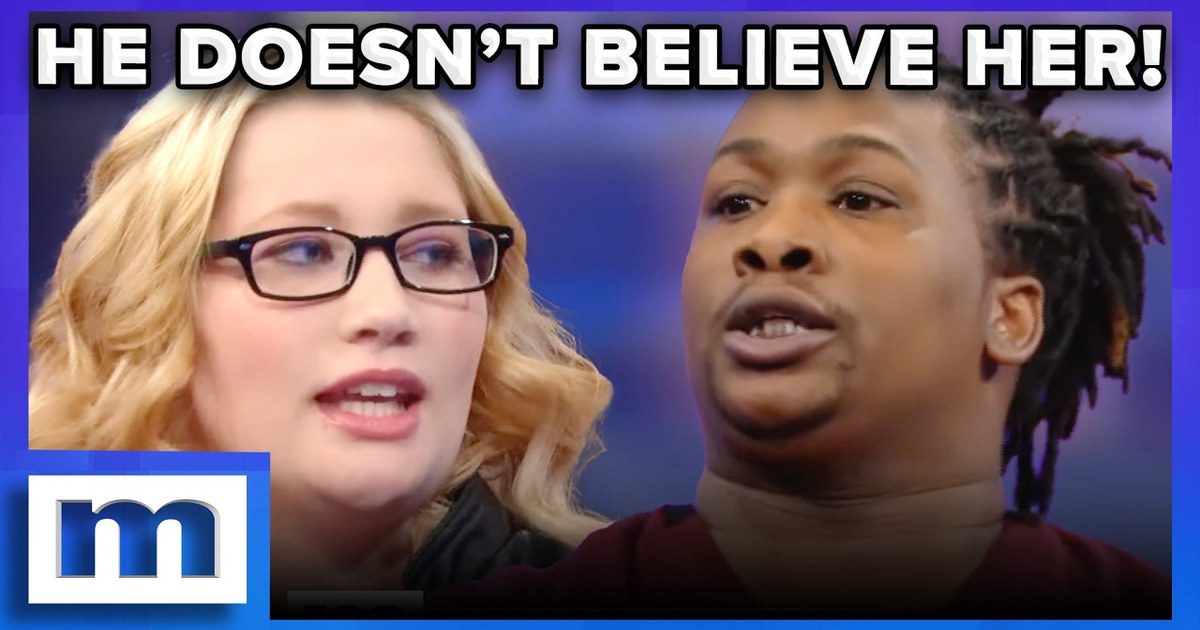
The Maury Show wants you to see Whitney as the devoted girlfriend who dropped out of high school to have Rick's babies, stuck by his side even when he denied their first daughter, Kazari, and got her GED while he ran around accusing her of cheating. That's the story the producers sell you in the first five minutes. And look, it's a hell of a story. It's the kind of narrative that makes you want to boo Rick the second he walks out. But here's the thing the consensus keeps skipping over: Whitney herself admits she disappears. Not once. Not as a one-time mistake. As a pattern.
When Rick says, "Every time you all have an argument, whether you're pregnant or not, you leave," Whitney doesn't deny it. She says, "Yes, I leave. I don't want to be around him when he acts like that or treats my kids like that." That's a direct quote. She owns it. And Rick doesn't just say she leaves for an afternoon to cool off. He says she disappears for days, weeks, months. Pregnant or not. That's not a minor character flaw. That's a fundamental breakdown of the relationship's basic reliability.
Now, before you come for me, let me be clear about what I'm not saying. I'm not saying Rick is a saint. I'm not saying he handled any of this well. The man sat on national television and denied two children who look exactly like him. That's cruel. That's damaging. That's the kind of thing that follows those girls for the rest of their lives. But the question isn't whether Rick was cruel. The question is whether his doubt was irrational. And when you actually look at the facts Whitney herself confirms, his doubt starts to look a lot less like spite and a lot more like a man doing broken math.
Think about what this relationship actually was. Six and a half years, yes. But no legal commitment. No shared address stability. No marriage license. No lease with both names on it. Just a boyfriend and a girlfriend who kept breaking up and getting back together. And in that vacuum, the one thing that could have given Rick certainty — Whitney being consistently present — is the one thing she admits she wasn't. In a relationship with no legal ties and a partner who vanishes, paternity uncertainty isn't a moral failing. It's a rational response. It's what any thinking person would feel.
And here's the contrast that blows the whole "Rick is just a deadbeat" narrative out of the water. Rick has an older daughter named Nariah. He's cool with her. He says, "That's my baby right there. We was happy at the time with her. She wasn't leaving. Everything was copathetic. Like no arguing, rocky here and there, but you didn't leave. You didn't leave." That's the tell. Rick trusted Nariah's paternity because Nariah's mother stayed. He didn't have to wonder. He didn't have to check Facebook. He didn't have to listen to his sister's rumors. The woman was there. The certainty was built in. With Whitney, that certainty was never there. And that's not because Rick is a monster. It's because Whitney gave him nothing to hold onto.
This doesn't excuse the cruelty on The Maury Show stage. Nothing does. But it reframes the denial. Rick isn't denying his children out of pure spite. He's denying them because Whitney's behavior gave him no certainty. He's not sitting at home cackling about how he's going to hurt her. He's sitting at home wondering if the kids in his house are actually his. That's a different thing. That's a human thing. And it's the thing the consensus refuses to engage with because it's easier to just call him the villain.
Go back to the hospital scene. Whitney says Rick signed the birth certificate but "did not want anything to do with it" and "wasn't comfortable." She says she wasn't going to beg him. Fair enough. But think about what that discomfort actually means. A man who knows a child is his doesn't hesitate at the birth certificate. He signs it. He's proud. He's scared, sure, but he's not uncomfortable in that specific way. That discomfort tracks with a man who genuinely did not know. A man who was standing in a hospital room, looking at a baby, and thinking, I can't be sure. That's not cruelty in that moment. That's confusion. That's doubt. That's a guy who has been given every reason to question and no reason to trust.
[[AD]]
Now, the consensus will say Whitney left because Rick was toxic. And you know what? They might be right. If Rick was treating her badly, leaving might have been the healthiest thing she could do. But here's the catch: leaving has consequences. You can't disappear for weeks at a time in a relationship with no legal commitment and then act shocked when your partner questions whether he's the father of your children. That's not how trust works. Trust is built on presence. On reliability. On showing up. Whitney didn't show up. She left. And she kept leaving. And that's the whole story the show doesn't want you to focus on.


