Part 1
The Set Is the Story: How Maury's Studio Lighting Manufactures Confession
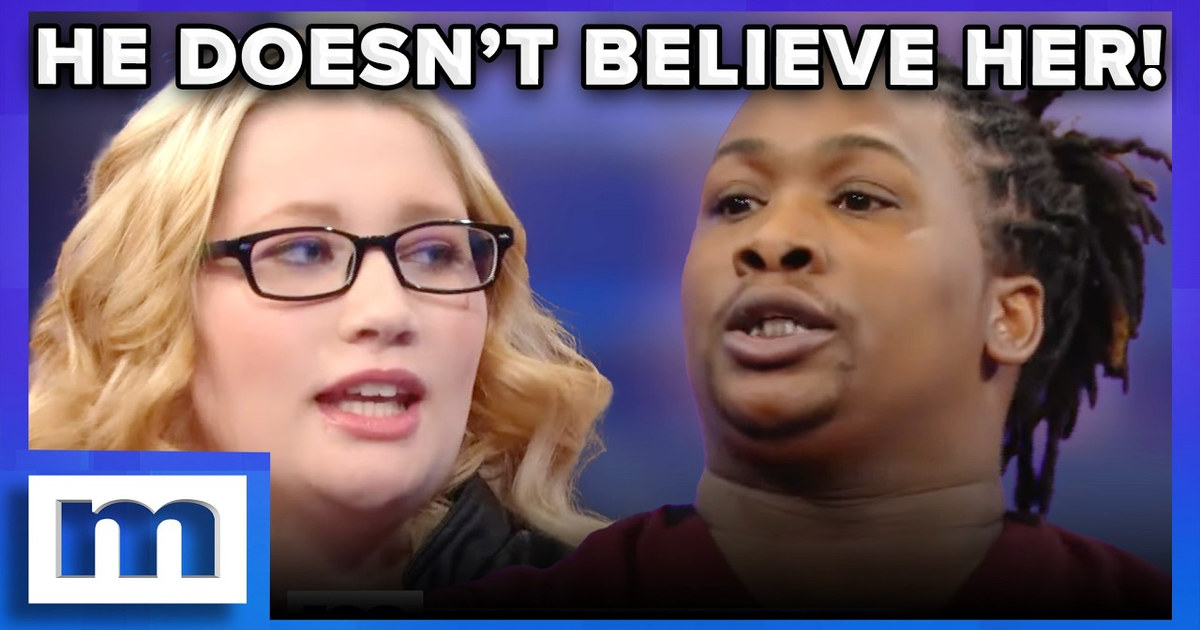
Whitney steps onto the Maury Povich Show stage and the light hits her like a verdict. It's flat, bright, and relentless—a wall of soft white that erases every shadow from her face. She squints slightly, adjusts her posture, and says, 'We're still in a relationship. 6 and 1/2 years strong.' In that instant, the studio lighting isn't just illuminating her; it's interrogating her. This is not accidental. Reality TV's emotional authenticity is a product of precise cinematographic choices, not accidental capture. The Maury show, which ran from 1991 to 2022, didn't just happen to look a certain way. It was engineered—frame by frame, fixture by fixture—to turn real people into characters in a morality play, and the DNA test reveal is the climax of a carefully constructed three-act structure.
I've shot second-unit on enough sets to know when lighting is doing narrative work. On a film set, you might use a softbox to flatter a lead actor or a hard key to suggest moral ambiguity. On Maury, the lighting does something else entirely: it manufactures confession. The high-key setup—multiple softboxes, fill lights bounced off white cards, an overall exposure that pushes the highlights to near-blown-out levels—eliminates shadows the way a police interrogation room eliminates privacy. There's no place to hide. Whitney's face is a map of every micro-expression, and the audience sees all of it. That's the point.
Compare this to The Jerry Springer Show (1991–2018), which thrived on a darker, moodier palette. Springer's studio was a cauldron of saturated colors and harsh backlights, creating a chaotic, almost carnivalesque atmosphere. The lighting there said: anything can happen, and it probably will. Maury's lighting says: we are here to find the truth, and the truth is clinical. It's a subtle but crucial distinction. Springer was a brawl; Maury is a tribunal. The soft, even glow of Maury's set mimics the fluorescent hum of a doctor's office or a courthouse hallway. It's the visual equivalent of a sworn statement.
Then there's MTV's Teen Mom (2009–present), which took the opposite approach: naturalistic, available-light cinematography that often left subjects in dim bedrooms or blown-out parking lots. That show's aesthetic screams 'real life,' but it's just as constructed. The difference is that Teen Mom wants you to forget the cameras are there. Maury wants you to remember. The studio audience, the host's desk, the giant screen for DNA results—every element is designed to remind you that this is a spectacle of truth-telling. The lighting is the glue that holds that spectacle together.
Now look at the camera angles. During Whitney's testimony, the director cuts to a medium close-up—her head and shoulders filling the frame, the background a soft blur of audience and set. This is the classic daytime talk show shot, and it's no accident. A medium close-up creates intimacy without claustrophobia. It lets us see the tremble in her lip when she says, 'I still stuck by his side.' It also allows the editor to cut away at the perfect moment—like when Rick says, 'I don't think they are [my kids],' and we get a reaction shot of Whitney's face collapsing. That cutaway is only possible because the show uses a 3-camera setup, a standard for daytime talk since The Oprah Winfrey Show (1986–2011). One camera stays wide, one holds the host, and one is dedicated to the guest's emotional close-up. The director switches live, choosing which feed to send to the broadcast. It's a high-wire act, and the lighting has to be consistent across all three angles so the cuts feel seamless.
The lens choice matters just as much. On Maury, they're almost certainly using a 2/3-inch broadcast zoom lens, probably set to a medium focal length—around 40-50mm equivalent in full-frame terms. That's not a random number. At that focal length, you compress the space between subjects just enough to keep both Whitney and Rick in frame during confrontations, but not so much that the background turns into a mushy blur. You can see the audience, the set, the other guests waiting in the wings. That context is crucial. It reminds you that this is a public reckoning, not a private conversation. Contrast that with Cops (1989–present), which uses wide-angle, handheld cameras to create a sense of chaotic immediacy. Cops wants you to feel like you're running alongside the action. Maury wants you to sit still and watch the knife twist.
The lighting and lensing work together to create a specific emotional register: confessional, almost clinical. When Whitney says, 'Why would I cheat while I'm pregnant? Come on. It's your child. Be serious,' the camera holds on her face, and the soft light catches the sheen of sweat on her forehead. You can see the pores. You can see the fear. That level of detail isn't an accident; it's the result of a lighting setup designed to eliminate shadows and a lens designed to compress space. The result is a kind of hyper-reality. These aren't just people anymore. They're specimens in a morality play.
And that's the larger argument here. The visual language of Maury turns real people into characters in a three-act structure. Act one: the accusation. Act two: the confrontation. Act three: the DNA test reveal. The lighting and camera work are the invisible scaffolding that holds this structure together. Without the high-key lighting, the confession wouldn't feel as raw. Without the medium close-ups, the reaction shots wouldn't land as hard. Without the 3-camera setup, the live editing wouldn't have the same punch. Every technical choice serves the narrative, and the narrative is always the same: someone is lying, and the truth will be revealed.


