Part 1
Great comedic timing is purely an exercise in visual blocking and frame tension, proving that verbal punchlines only hit when the spatial mechanics of the scene are engineered with surgical precision.
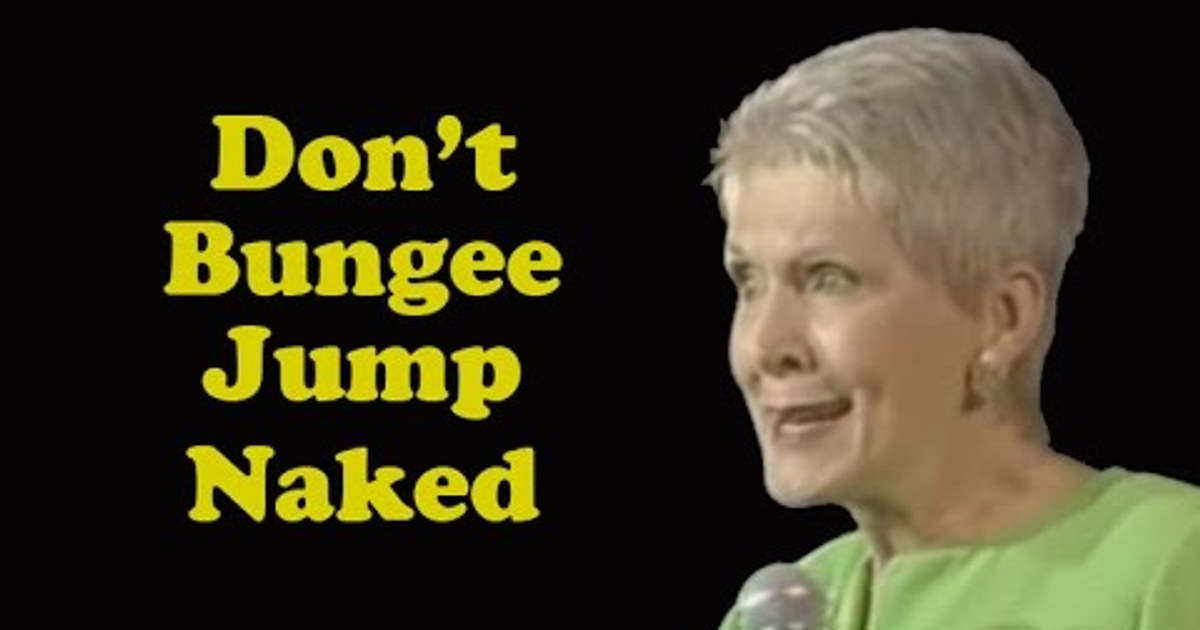
When you spend enough years hanging off Russian Arms, setting up high-speed Phantom rigs on cold tarmac, or balancing an Arri Alexa 35 on a rickety Chapman crane, you realize comedy isn't written in the script supervisor's binder—it is built entirely in the camera package. If you can't frame the absurdity before the actor opens their mouth, your joke dies in the cutting room floor before color grading even gets a look at the log files. That brings us straight to Jeanne Robertson's legendary live routine detailing an unexpected five-hour layover in Nanaimo, British Columbia with her husband, Left Brain.
On paper, this sounds like standard road-trip filler: an elderly couple kills half a day before catching a Canadian ferry, talks to a desk clerk at a visitors bureau, and gets recommended an extreme sports attraction. But as any DP worth their day rate will tell you, raw script pages are inert until you block the geography. Jeanne treats this stage monologue not like a standup bit, but like a masterclass in wide-to-tight camera coverage, building a physical storyboard right in front of the live auditorium audience.
[[AD]]
Look at how she establishes the stakes before introducing the conflict. She lays down the temporal perimeter immediately: five hours to kill, a rental car that must be returned, and a ferry terminal waiting at the horizon. In narrative filmmaking, that is your ticking clock, your hard out. Without a hard deadline, your sequence has zero kinetic friction, and any gag you stage feels floaty and unearned.
Every beat that follows operates on sharp contrast, optical dissonance, and spatial misdirection. She doesn't just deliver punchlines; she pulls focus across generational divides, pits fragile human physiology against structural industrial steel, and cranks the emotional ISO until the whole frame is buzzing with tension. Let's dissect the three core beats of this narrative through the glass of a second-unit camera department.
The Visitor's Counter Two-Shot: Engineering Generational Optical Dissonance
The sequence ignites on the interior setup inside the Nanaimo Visitors Bureau, framing a deadpan two-shot across a promotional counter where a twenty-something employee hands brochures to two retirees.
If I were lighting this scene on location, I would keep the counter bathed in flat, low-contrast overhead fluorescents—maybe punch in an Astera Titan tube at 4000K just to wash the clerk in sterile, unearned administrative optimism. Across from her, you frame Left Brain and Jeanne under the warm, tungsten glow of life experience. The visual contrast needs to hit instantly: the clerk has clear skin, boundless youth, and zero contextual awareness, while Left Brain is standing there at sixty-eight years old, rail-thin, sporting a head of solid white hair that is equally thin.
[[AD]]
Jeanne maps her own profile into the frame with brutal technical precision: sixty-two years old, not quite as trim as she used to be, sporting Clairol Tweed Number 14. This isn't just character description; it is a lens chart. When Jeanne says, 'Look at us—just look at us,' she is effectively grabbing the director's viewfinder, pulling back to a 28mm wide lens, and asking the audience why in the world anyone would frame these two subjects inside an extreme sports advertisement.
The clerk begins reading the map like an assistant director handing down call sheets without reading the script. She instructs them to head south down the highway for thirteen kilometers to reach the Nanaimo River, proceed a little further to the manmade Nanaimo River Bridge, and sign up right on the spot to bungee jump. Jeanne highlights the robotic bureaucracy of the moment with her running commentary: the river is named after the town, and the bridge is named after the river and the town. It's the kind of repetitive, mechanized staging that sets up an explosive reveal.
The comedy detonates because of the sheer focal mismatch. The clerk looks at two seniors and registers only generic tourists with time to burn, completely blind to the biological reality captured in high-definition 4K right across the laminate counter. When Jeanne asks the audience if they have ever wanted to take a young person's face gently in their hands and whisper, 'Are you in there? Loving, are you in there?', she is performing an internal close-up. It breaks the fourth wall, snaps the frame into razor-sharp emotional clarity, and locks down the central thesis: visual blindness is the truest engine of farce.
[[AD]]
The 140-Foot Plunge: Kinetic Mechanical Horror Meets Geriatric Realism
The camera moves from bureaucratic absurdity to visceral stunt staging as Jeanne translates the clerk's suggestion into practical, second-unit stunt mechanics: dropping 140 feet off a bridge deck strapped to rubber cords.
Notice how Jeanne choreographs Left Brain's internal processing speed. When you've been married for decades, you develop the telepathic shorthand of a seasoned camera operator and their focus puller. You don't need spoken dialogue to know when the operator has lost the mark. Jeanne knows immediately that Left Brain hasn't fully processed the technical specs of what this clerk is selling, so she begins reading out the stunt coordination step-by-step.
She describes the rig: you walk out to the edge of the bridge, lace your feet into heavy harness boots bound with thick ropes, step out into negative space, and hurl your physical frame straight down into a 140-foot vertical drop until you hang upside down over the river canyon. This is prime second-unit territory—you can practically hear the safety supervisor going over the tensile strength of the carabiners and the drop line elasticity. But the emotional payoff comes when the human element violently rejects the stunt apparatus.


