Every time a clip from The Golden Girls circulates online, two distinct viewers enter the chat. Viewer A arrives for pure comfort genre: the warm lighting, the multi-cam laughter, the familiar dopamine hit of four powerhouse women trading barbs in a pastel Miami kitchen. Viewer B arrives with an analytical eye for the underlying architecture: cadence, escalation, joke efficiency, and the ruthless clockwork of multi-camera screenwriting.
The legendary exchange revolving around a rogue mouse and teenage rebellion is not just cozy weekend television. It is a clinic in functional programming applied to stage performance. When you deconstruct this scene beat by beat, you see an ensemble operating at absolute peak runtime efficiency.
At first glance, the setup seems straightforward. Dorothy Zbornak is dealing with a home invasion—specifically, an unwanted rodent running across a dresser. Within three lines of dialogue, the conflict bifurcates into physical domestic chaos and parenting panic over young Lucy defying authority.
[[AD]]
The Genre Layer: Archetypes Doing What They Do Best
For the genre purist, the joy lies in watching classic sitcom archetypes fire in perfect sequence. Rose Nylund immediately defaults to pastoral optimism. She does not want an exterminator; she proposes direct diplomatic negotiations with the field mouse because she claims an innate ability to communicate with animals. It is the textbook Rose stance that sitcom fans rely on to center their expectations.
Then comes the pivot to Lucy walking out the door. The teenage rebellion trope is a staple across decades of American television. It serves as an emotional springboard to get three women from distinct backgrounds comparing notes on their formative misconduct. On a purely episodic level, it delivers exactly what traditional multi-camera comedy promises: relatability wrapped in snappy domestic tension.
You get the comfort of knowing Dorothy will play the world-weary cynic, Blanche will lean into vanity and scandalous youthful escapades, and Rose will take an absurd side road into rural Midwestern folklore. But underneath those cozy tropes lies a far more rigorous system.
[[AD]]
The Pure Craft: Algorithmic Escalation and Stack Overflow
Now look at the underlying script mechanics. Rose begins her story about Clyde Leightner—the only high school sophomore old enough to enter a bar—with the premise of juvenile delinquency. That is the baseline premise. But instead of delivering a linear punchline, the writing constructs a nested loop that drifts wildly from the calling function.
Rose sits paralyzed in her father's truck in Tyler's Landing, only to run into Reverend McKenzie escorted by Millie Beasley. That detail alone should trigger a punchline. Instead, the narrative appends metadata: Millie is married to Emmett Beasley, the town's most decorated war hero with three Purple Hearts, all for head wounds, who ran the feed store where Millie actually had to make change for customers.
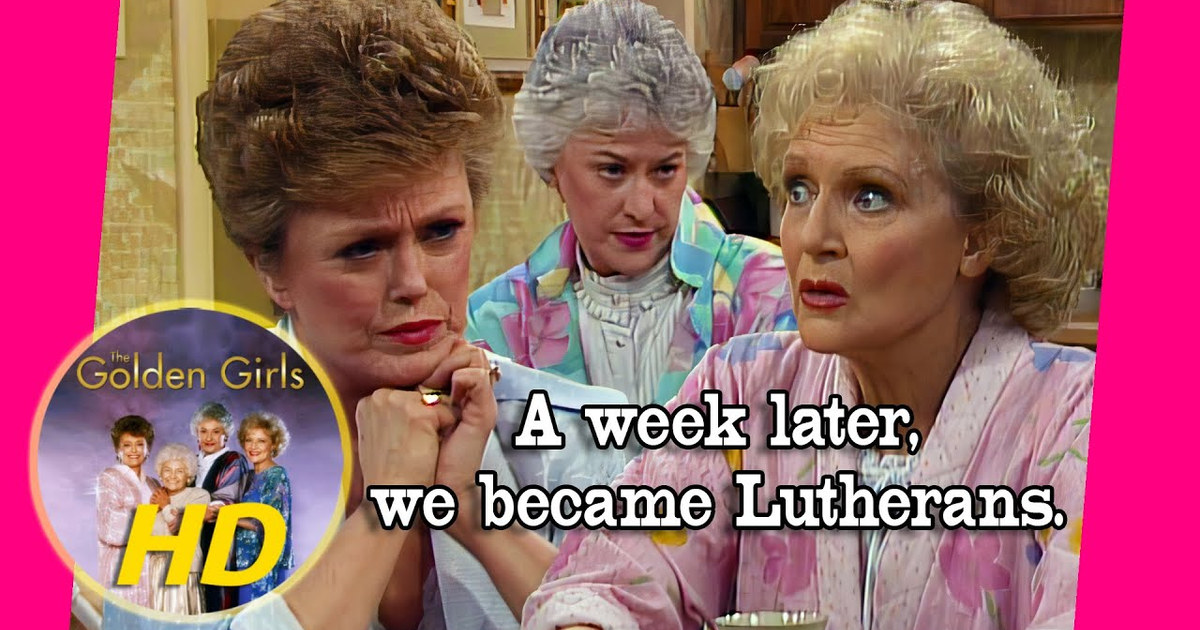
By the time the story concludes with the Reverend and Millie getting shot while skinny-dipping in the church fountain, leading the whole town to become Lutherans a week later, the original argument has collapsed under the weight of its own absurd logic. Dorothy's response is the ultimate exception handler: 'Rose, that isn't a teenage rebellion story. That is a changing religion story. That is a big who cares story.'
[[AD]]
The Blanche Counterweight: Compression Versus Sprawl
If Rose's monologue is an unindexed database query sprawling in all directions, Blanche Devereaux's rebuttal is hyper-compressed, high-yield joke architecture. Blanche follows with an immaculate three-beat ladder: age 15 as a magician's assistant, age 16 running off with an older gas station attendant to Mexico, and age 17 hitchhiking to New York to become a Rockette under an assumed name.
The contrast between the two storytelling styles is where the ensemble genius lives. Rose exhausts the room with irrelevant context; Blanche detonates three movie concepts in eight seconds flat. The scene balances the rambling episodic charm of regional character comedy against rapid-fire, hard-punching line delivery.
Neither style cannibalizes the other. Instead, Blanche's escalation provides the exact narrative leverage required to pivot the emotional stakes back toward Lucy. Blanche recalls her big sister Charmaine tracking her down to knock sense into her head, which gives Dorothy the tactical solution: rally the roommates and track Lucy down together in the dead of night.
[[AD]]
The Return Callback: Closing the Loop
Before the characters can exit the kitchen stage right, the scene executes a textbook return statement. The mouse subplot, introduced in the opening seconds, re-enters the active thread. Rose is forced to confess that her diplomatic summit with the rodent failed because the creature proved to be an 'odd duck' who refused to leave.
Dorothy's final parting shot ties the entire narrative arc together with laser precision, referencing the earlier Emmett Beasley subplot: 'Rose, how many head wounds have you had?' In a span of just a few minutes, the script opens two parallel threads, executes asymmetrical comedic monologues, finds emotional purpose, and cleans up its own garbage with a savage callback.
[[VIDEO]]
That dual appeal is why this writing endures. If you came strictly for the sitcom comfort of four brilliant women shouting about mice and small-town scandals, the scene delivers wall-to-wall laughs. If you came to observe how master craftsmen structure beats, pace pauses, and thread running gags without wasted motion, it is as satisfying as clean, perfectly compiled code.


