Part 1
Cinematic genius is never born of academic reverence; it is the direct byproduct of deliberate, weaponized technical ignorance.
When you spend enough years on set pulling focus, rigging speed rails, and sweating out lighting ratios on second unit, you notice a recurring disease: filmmakers know so much about what they cannot do that their frames turn sterile. They measure the focal distance, check the lens chart, look at the optical limits of a 24mm prime, and politely surrender before pushing the camera cart an inch forward. They play it safe because the technical manual told them to.
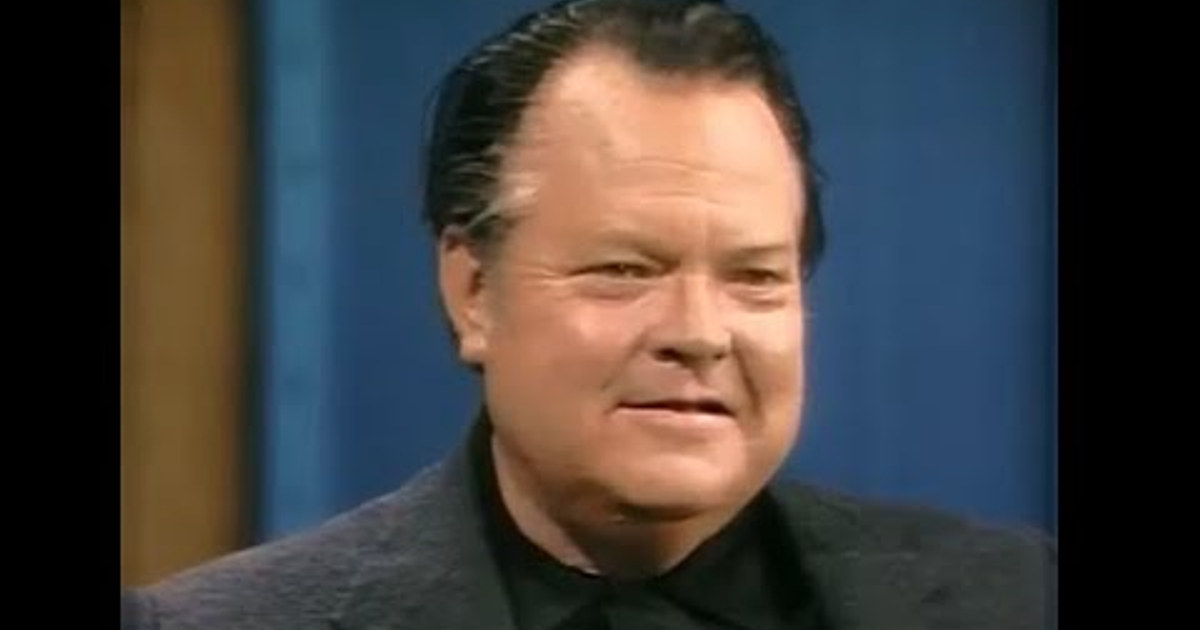
Then you sit down and watch Orson Welles casually trade war stories with Jack Lemmon and Dick Cavett, strip-mining the mythology of his own career with a deadpan grin. The boy wonder who walked onto the RKO lot at twenty-five didn't build cinematic modernism out of scholarly perfection. He did it because he genuinely didn't know the machinery was supposed to say 'no.'
[[AD]]
The Optics of Arrogance: Why Breaking the Lens Chart Works
The host leans in, desperate to extract the mystical secret behind the visual architecture of 1941: 'How did you know technically that you could have the background in focus when they told you that you couldn't?' Welles doesn't drop a masterclass lecture on optical physics. He simply answers: 'Because I didn't know any better... it comes from sheer dumbness, your good and your gretchen ignorance—there's no authority in the world like it.'
Let’s talk brass tacks about what that 'ignorance' actually meant inside Stage 19 at RKO with legendary cinematographer Gregg Toland. Hollywood convention demanded shallow depth of field, gentle key lights, flattering diffusions, and painted backdrops safely blurred out of existence. The camera was supposed to isolate stars with soft three-point lighting setups, preserving glamorous portraiture at a wide-open T2.3 aperture.
Welles walked in and demanded everything in the frame remain razor sharp, from the salt shaker six inches in front of the front element all the way back to the practical ceiling fifty feet away. Any seasoned studio technician would have laughed him off the stage. To pull that off on a Mitchell BNC, you have to stop down to f/8 or f/16, which swallows light like a black hole.
Toland didn’t laugh; he smelled blood and opportunity. To feed that mercilessly stopped-down iris, they had to hammer the stage with carbon-arc floodlights usually reserved for exterior night-shoots, pump toxic heat onto the soundstages, coat lens coatings with cutting-edge anti-reflective fluorite, and pioneer split-field diopters. Welles didn't invent deep-focus physics, but his refusal to bow to studio common sense forced the camera department to rewrite optical history.
[[AD]]
Live Ammunition on the Turntable: When Staging Outruns Practical Safety
Welles breaks into an uncontrollable laugh as he recounts the opening night of 'Five Kings' in Boston, where fifty Harvard undergraduates loaded live, target-tipped arrows onto their longbows while standing on a revolving stage. Welles watched from the wings as the mechanised deck drifted off-axis, pointing fifty lethal weapons straight at the first ten rows of the orchestra stalls. The cue dropped: 'Cry God for Harry, England, and Saint George!' The archers let fly, burying real arrows into the auditorium right over the heads of the nation's terrified theater critics.
That is not theatrical choreography; that is pure, high-stakes blocking executed with the reckless abandon of an artillery strike. It exposes the absolute core of Welles’ design philosophy: if an effect looks spectacular on paper, you rig it, you run it, and you let the audience feel the physical shockwave. He did not build scenes to sit polite and flat behind a proscenium arch.
You see that exact same visceral, high-wire danger running through his second-unit framing in 'Touch of Evil' or 'Chimes at Midnight.' Most directors stage an action beat with safe coverage—a medium close-up, a cutaway to a shield, a punch on a telephoto lens to fake the impact. Welles builds deep, swirling vortexes of physical motion where extras crash into the edges of the wide-angle frame, forcing the camera operator to dodge axes and swinging limbs.
He treated live theater like an uncontrollable visual spectacle and cinema like a massive mechanical stage where sets had to be cut apart, floors dug up to drop the tripod below grade, and ceilings lowered to pin the actors against the architecture. When the turntable rotates the wrong way, a lesser artist stops the show. Welles leans into the wings and marvels that they didn't miss a single critic.
[[AD]]
The Glider and the Stanley Steamer: The DNA of Mechanical Audacity
Welles settles back in his chair, smoking imaginary cigars as he describes his eccentric inventor father testing an early flying machine. Convinced the Wright brothers were fools for putting heavy combustion engines inside airborne craft, his father designed an engineless wooden glider, tethered it to a steam-powered automobile via a long tow rope, ordered his household servant into the cockpit to test the aerodynamics, and hauled it across rough terrain at maximum speed until it predictably shattered into splintered scrap.
Listen closely to that anecdote and you decode the entire genealogical origin of Orson Welles' filmmaking style. His father built useless, beautiful, absurd mechanical wonders—like 'The Picnic,' a multi-compartment lunch box containing collapsible salt shakers that couldn't hold salt, yet made him fabulously wealthy off military supply contracts during the First World War. Invention wasn't about cautious engineering; it was about theatrical bravado.


