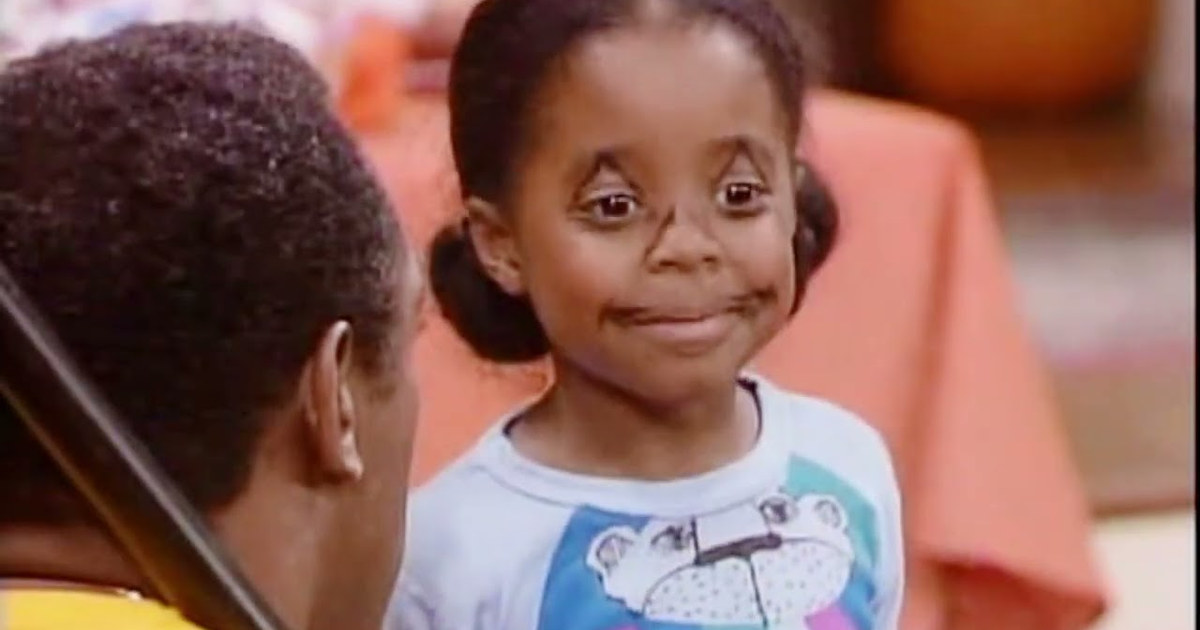
Classic multi-camera sitcom comedy only achieves immortality when rigorous spatial blocking and precise eye-line geometry transform domestic domesticity into high-velocity visual choreography.
If you came off that clip thinking you just watched some breezy, nostalgic 1980s punchline delivery, look at the deck again. When you run a second-unit crew or step onto a broadcast soundstage with three or four pedestals rolling on hard linoleum, you realize instantly that making twelve actors feel natural inside a twenty-foot practical living room is pure spatial warfare. You do not get the luxury of twenty-five takes to relight a 50mm anamorphic close-up; your tungsten keys and fill ratios have to hold up from center wide to extreme side-profile in continuous real time.
This sequence pulls off an absolute masterclass in three-dimensional character movement. It takes two parallel romantic encounters—one brand new and adolescent, one seasoned and marital—and runs them through a dynamic physical relay that relies on spatial distance to land every single beat.
[[AD]]
Beat One: The Threshold Shift from Chaotic Master to Intimate Frame
"Vanessa, somebody's waiting for you in the hallway." That single off-screen prompt immediately ruptures the wide-angle party set and forces the focal point to pivot ninety degrees.
Watch the transition as the camera trucks past the packed bedroom doorway into the cramped, quieter hallway space. On a multi-camera floor, moving two actors into a secondary corridor frame is a high-wire lighting gamble because your overhead grid has to kill the broad bounce fill and isolate the subjects with subtle rim light. The vulnerability of teenage infatuation—sweaty palms, awkward promises to walk in the rain, and asking permission if it snows—is locked into that tight two-shot. The framing traps them between the noise of the party behind them and the open air ahead, isolating their awkward rhythm with immaculate focus-pull discipline.
The writing works because the camera refuses to cut away during the awkward pauses. By keeping both actors inside a balanced profile setup without intrusive over-the-shoulder cuts, the visual composition forces the audience to live inside their unpolished physical ticks.
[[AD]]
Beat Two: The Human Relay Track in the Living Room Master
"Rudy, come here quick." The second the scene drops down to the main floor, the blocking introduces a brilliant living mechanical dolly: Rudy.
Instead of cutting back and forth between married partners across a room with conventional single-camera shot-reverse-shot coverage, the production uses the youngest child as a physical shuttle. Clair stakes out home base stage-left, Cliff anchors stage-right, and Rudy sprints the horizontal track between them. Every lap alters the exposure, shifts the field of view, and stretches the comic tension through purely visible distance.
Notice how the lighting crew maintained a rock-solid key across the entire crossing lane. There is zero falloff as Rudy sprints across the carpet delivering garbled whispers. The setup forces your eyes to track across the physical proscenium arch, letting the adult flirtation play out through distorted childhood translation.
[[AD]]
Beat Three: Absurdist Escalation and the Final Spatial Collapse
"Tell her that at 0300 the leukocytes will take over all of the reject fields." When Cliff responds with high-register medical nonsense to sabotage the telephone game, the scene’s physical radius snaps shut.
The joke is not merely the verbal gibberish; it is Rudy’s deadpan, completely mangled reportage delivered back across the floor. Multi-cam works best when the geography pays off in a physical touchpoint. After stretching the space to its absolute limit across the living room, the direction collapses the frame entirely down to a two-shot of a father and daughter dancing with her shoes planted squarely on top of his loafers.
That sudden compression from room-wide farce into a tender, grounded macro-beat creates the emotional payoff that cheap multi-cam setups consistently fail to generate. You go from fifty feet of operational stage distance right into an intimate, shared center-weighted frame without ever feeling the mechanics of the transition.
[[VIDEO]]
What to Watch for on the Rewatch
When you cue this clip up again, stop watching the faces and start watching the feet and sightlines. Look at how Clair never breaks her eyeline vector across the soundstage floor while whispering to Rudy, creating an invisible, taut string between her and Cliff that pulls the child back and forth like a pendulum.
Check the background fill light when the teenagers are talking in the hallway. See how the production design traps ambient spill from the party to sell the illusion of depth without blowing out the talent's rim highlights. It is a textbook clinic in multi-camera discipline that modern single-camera streaming productions would do well to study before framing their next conversation.


