Part 3
Music and applause cues are the invisible hands guiding your emotions. When Adonis is declared “not the father” in the Cece episode, the music swells, the audience gasps, and you feel the sting even if you’ve never met these people. When Michelle describes the open condom wrappers, a low, ominous tone creeps in. And the applause? It’s not just noise; it’s a laugh track for drama. It tells you when to be shocked, when to cheer, when to boo. It’s the same Pavlovian trick used in *The Jerry Springer Show* (1991–2018)—a show that, love it or hate it, understood that conflict is a spectator sport. Maury refined that formula, swapping Springer’s chaos for a more structured, almost legalistic approach. Modern equivalents like *Paternity Court* (2013–2020) took it further, adding a judge and a courtroom set, but the DNA is the same: real people, real stakes, real messy.
Now, the lie detector. Let’s talk ethics and engineering. Polygraphs are controversial—scientifically, they’re about as reliable as a coin flip with a grudge. The American Polygraph Association claims 90% accuracy, but independent studies put it closer to 70%, and that’s in lab conditions. On Maury, the polygraph is presented as definitive, a binary yes/no that determines the fate of relationships. The show doesn’t explain the nuances; it just says “you failed” and lets the audience react. It’s a narrative device, not a scientific one. And that’s fine—if you’re watching for craft, you appreciate how the show weaponizes that ambiguity. The lie detector segment is shot like a thriller: close-ups on the examiner’s face, the slow reveal of the results envelope, the reaction shots of Michelle and Adonis. It’s *The Usual Suspects* (1995, 106 min) by way of daytime TV.
Michelle’s storytelling is the secret weapon. She doesn’t just say “he cheated”; she gives you specifics: the 10-piece chicken nugget meal, the red lipstick on the collar, the big granny panties (size small, thank you very much), the open condom wrappers, the sex store with another man, the pictures of his private parts, the tuna fish smell. These details are vivid, absurd, and deeply human. They make her narrative impossible to ignore. It’s the same principle behind Quentin Tarantino’s dialogue—specificity breeds authenticity, even when the situation is ridiculous. Michelle is a natural storyteller, and the editors know it. They give her room to breathe, then cut to Adonis’s reaction, then back to her. It’s a dance.
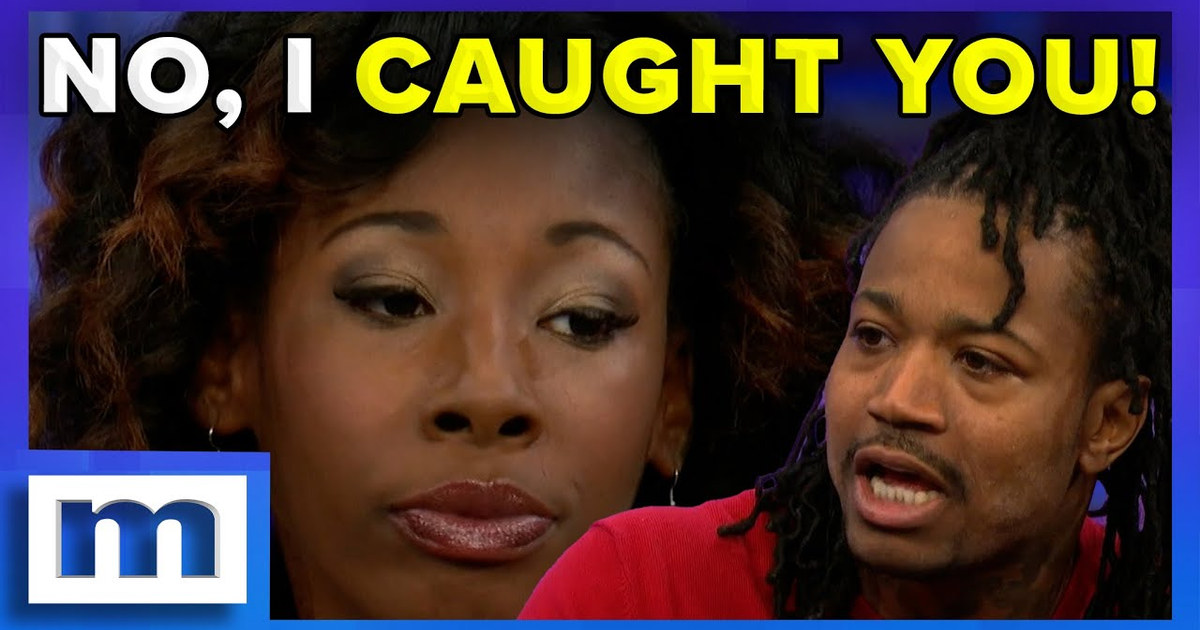
Camera work is another layer. The close-ups on reactions—Michelle’s eye rolls, Adonis’s smirks, Maury’s incredulous stare—are timed for maximum impact. The green room footage, where Michelle watches Adonis’s past episodes, is shot like a reality show confessional, with her reacting in real time. And the door moment—when Adonis walks out, the audience erupts—is pure theater. The camera pulls back, the lights flare, and you’re in the arena. It’s not subtle, but it’s effective. Compare it to the door moments in *The Jerry Springer Show*, where guests would literally run backstage, or the dramatic entrances in *Paternity Court*. Maury’s version is cleaner, more controlled, but the DNA is the same.
So here’s the thing: the Adonis saga works for genre fans because it delivers the goods—DNA tests, lie detectors, extended universe crossovers. And it works for craft nerds because it’s a tightly engineered piece of television, with editing, pacing, and storytelling that would make a film school professor nod approvingly. It’s a case study in how to make a lie detector segment feel like a season finale. And that’s the takeaway: whether you’re here for the drama or the dissection, you’re getting a masterclass. Next time, we’ll break down another Maury classic—maybe the one where the guy brought his mistress to the show. Stay tuned.


