Part 1
Two Audiences, One Couch: Why the Adonis Saga Rewards Both
You’re sitting on your couch. Maybe you’re the kind of viewer who lives for the moment a DNA envelope opens and Maury Povich says those four words: “You are the father.” Or maybe you’re the kind of viewer who watches the same clip and thinks, “That cut was perfectly timed — the editor knew exactly when to hold and when to punch.” Either way, the Adonis saga on Maury is a goldmine. It’s a three-episode arc that delivers paternity-test chaos for the genre fan and a masterclass in production engineering for the craft nerd. And you don’t have to choose sides. This is a show that rewards both.
Let’s start with the central figure: Adonis. He’s a male exotic dancer from Chicago who appeared on Maury three separate times. If you’re a genre fan, you already know the drill. If you’re a craft nerd, you’re already taking notes on how the show builds a recurring character. Think of it as a state machine: predictable inputs — accusations, denials, audience gasps — but unpredictable outputs. You never know which way the DNA test will go, and that’s the point.
Adonis’s first appearance set the template. A woman named Nene accused him of fathering her two children: three-year-old Akil and one-year-old Akira. Adonis was determined to prove he was not the father. Spoiler: he was. Maury delivered the verdict twice — “You are the father” for both kids. For genre fans, that’s the rollercoaster: the buildup, the denial, the collapse. For craft nerds, it’s a lesson in stakes. Two children, one segment, and a man whose entire narrative just got rewritten in real time.
But Adonis wasn’t done. Three years later, he returned to prove that a woman named Cece’s child was not his. Cece’s daughter, Lamaya, was three years old. This time, the twist was internal: Adonis’s own sister, Lakeisha, sided with Cece. That’s a character-consistency move that would make a showrunner proud. The family dynamic shifts, and suddenly the audience isn’t just watching a paternity test — they’re watching a betrayal. The result? “You are not the father.” Adonis walks away clean, but the emotional damage is already done. Genre fans get the shock. Craft nerds get the narrative symmetry: first he’s the father twice, then he’s not the father once, and the sister flips the script.
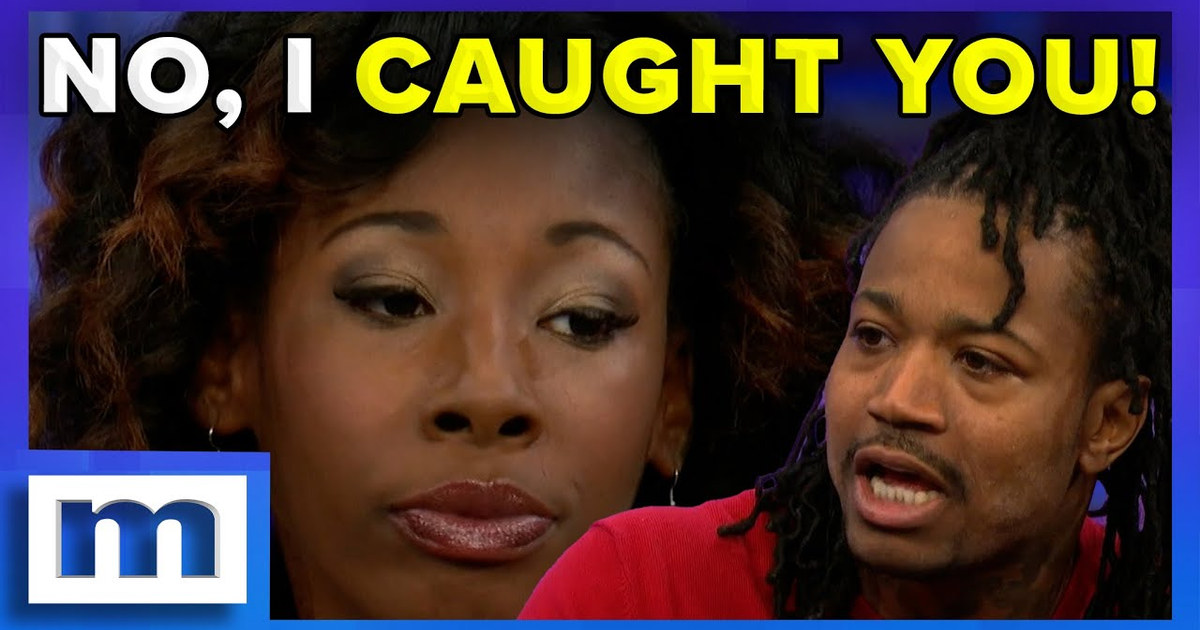
Then came the third appearance, and this is where the saga goes full meta. Michelle, Adonis’s girlfriend and fiancée, confronted him after seeing him on the show. She was watching at home — a fan of Maury — when she saw her own man being accused by Cece. She was furious. “My supposed-to-be man, boyfriend, fiancé is on Maury,” she said. “What the hell?” She took him back, but the suspicions never went away. So Adonis took a lie detector test. The results revealed multiple lies. For genre fans, that’s the ultimate payoff: the lie detector episode is the season finale of paternity TV. For craft nerds, it’s a masterclass in pacing — the test is teased, delayed, and then delivered with maximum impact.
Now, let’s talk about the platform. Maury is a long-running daytime talk show that has been on the air since 1991. It’s syndicated, it’s ubiquitous, and it has a cultural footprint that stretches from memes to catchphrases. The show’s format is deceptively simple: guests, accusations, DNA tests, lie detectors, and audience reactions. But the engineering behind it is anything but simple. The editing rhythm, the commercial breaks, the way Maury’s voice drops when he reads the results — it’s all designed to maximize tension and release. If you’re a craft nerd, you’ve probably already noticed how the camera cuts to the audience at exactly the right moment, or how the music swells just before the verdict. That’s not accident; that’s architecture.
For the genre fan, the Adonis saga is a three-act play. Act one: the double fatherhood. Act two: the false accusation and the sister’s betrayal. Act three: the girlfriend’s revenge and the lie detector. It’s a complete arc with a protagonist who never quite learns his lesson. For the craft nerd, it’s a case study in how to build a recurring character on a show that thrives on one-off conflicts. Adonis is a returning champion, a villain, and a cautionary tale all at once. The show’s producers understood that his story had legs — and they kept bringing him back because the audience wanted to see what happened next.
And that’s the beauty of it. You can watch Maury for the chaos — the open condom wrappers, the big granny panties, the McDonald’s run that took two hours. Or you can watch it for the craft — the way the show builds suspense, the way it uses repetition and variation, the way it treats every guest as a character in a larger narrative. The Adonis saga is a perfect example of both. It’s a state machine with predictable inputs and unpredictable outputs, and it’s also a masterclass in human engineering.
Over the next two sections, we’re going to alternate between these two lenses. We’ll dive into the genre-fan perspective: the DNA tests, the lie detectors, and the extended universe of Adonis’s appearances. Then we’ll switch to the craft-nerd perspective: the editing, the pacing, and the engineering of a lie detector segment. We’ll give equal weight to both, because the show itself does. You don’t have to be a film school graduate to appreciate the craft, and you don’t have to be a reality TV junkie to appreciate the storytelling. All you need is a couch and a remote.


