Part 1
Picture this scene, because if a Hollywood screenwriter turned it in on page twelve of a script, an executive would kick them out of the office for being too sentimental: A Category 5 hurricane is chewing up the Gulf Coast. Traffic out of New Orleans is at an absolute standstill, bumper-to-bumper despair, heat waves radiating off the asphalt. Inside a single minivan, twelve family members are stacked shoulder to shoulder, scared out of their minds, trying to outrun the storm of the century. And right in the middle of that chaos sits Fannie Eugene, a working-class matriarch from New Orleans, wearing a shimmering rhinestone tiara straight on top of her head.
She was not losing her mind. She was protecting her crown. You see, the van was so dangerously packed with children, nieces, nephews, and suitcases that Fannie looked down at the velvet box containing the tiara Oprah Winfrey had gifted her two years earlier and realized something immediate: if that tiara hit the floorboards, one of the kids would step on it. So Fannie did what any self-respecting queen would do when staring down the wrath of the Atlantic Ocean—she placed the crown squarely on her brow, gripped the steering wheel, and hauled twelve souls to dry land. That is the exact moment this story hooked me by the throat, and it has never let go.
If you missed daytime television during its golden mid-2000s renaissance, you might think you are reading about an exaggerated internet fable. You are not. This is genuine television history, documented on *The Oprah Winfrey Show*, and it serves as the prologue to what I genuinely consider the greatest, most emotionally coherent home makeover Nate Berkus ever pulled off in his entire career. You need to pull up a chair, order another round, and listen to the whole tape, because the way this narrative unfolds is a masterclass in human resilience.
[[AD]]
Let us rewind to 2003, before the skies opened up and drowned the Ninth Ward. Fannie Eugene was an everyday hero living in a modest house in New Orleans. She was holding down a job, putting herself through school, and raising an entire constellation of extended family—her sister's kids, her grandchildren Amber and Johnny, anybody who needed a plate and a bed. She drove a broken-down van that lacked air conditioning in the sweltering Louisiana humidity. Money was perpetually tight, the kind of tight where every dollar has three jobs before you even cash the check.
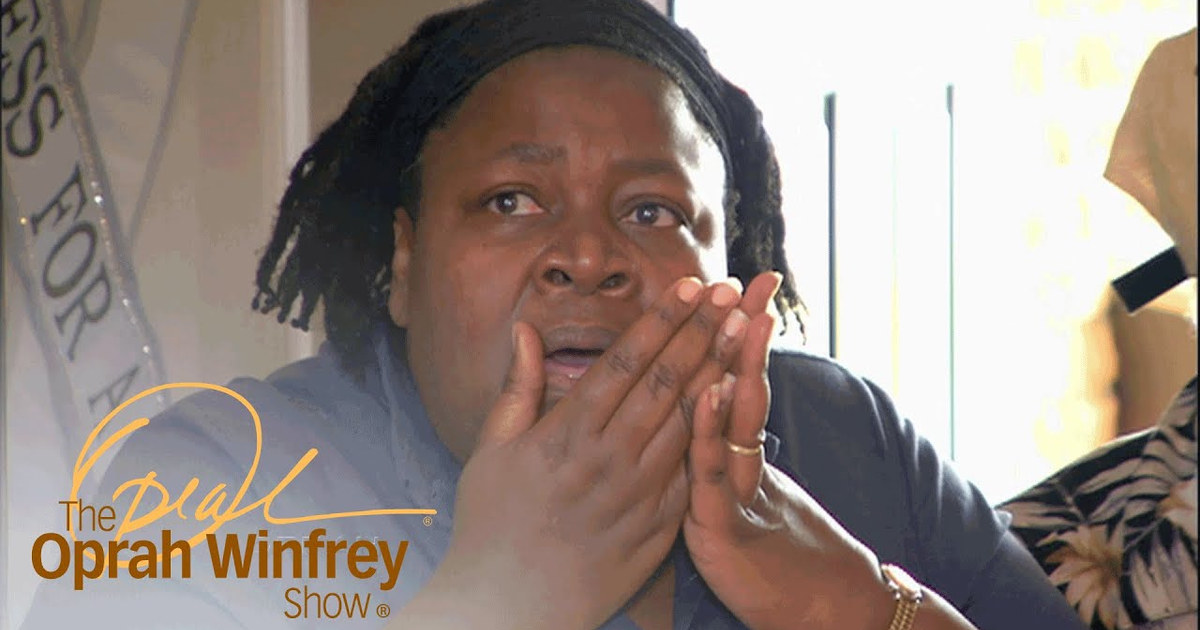
Oprah's producers found Fannie and decided she earned the ultimate daytime royal treatment: they crowned her 'Princess for a Day.' They gave her a brand-new minivan with working AC, a custom satin sash, and that infamous tiara. It felt like a classic, tear-jerking, feel-good daytime stunt designed to sell commercial breaks. Nobody in Harpo Studios could have guessed that thirty months later, that precise vehicle would literally serve as Fannie’s family ark when Katrina made landfall.
When Fannie eventually navigated her way back into New Orleans after the floodwaters receded, the reality was sickening. Her house was gone. Not damaged, not wet—completely gutted down to the naked brick piers and soaked subfloor. Everything she owned was waterlogged trash. So Fannie, her husband Gene, and their family were shoved into one of those infamous white FEMA trailers parked right in the dirt of their front lawn. That trailer was supposed to be a ninety-day temporary fix. Instead, it became an eighteen-month prison sentence.
[[AD]]
The Brutal Reality of the 18-Month FEMA Box
You have to understand what living in a FEMA trailer actually did to the spirit of Gulf Coast residents. These were cramped, tinny, toxic-smelling shoeboxes that amplified the summer heat and rattled whenever someone took three heavy steps. Contractors started rebuilding Fannie's original house, but like thousands of post-Katrina projects, the contractors stalled out, ran behind, and left the structure sitting as a hollowed-out skeleton just yards from where the family slept.
When Oprah got wind that Fannie was still trapped in a metal trailer a year and a half after the storm, she bypassed the usual red tape and put Nate Berkus on a commercial flight straight to New Orleans. For those who only know Nate as a polished interior designer from magazine spreads, seeing him drop into post-Katrina mud in work boots was a revelation. Nate showed up on the property, ducked his head inside that claustrophobic trailer, and met Fannie, her husband Gene, and her nephew Lloyd.
The conversation they had inside that tiny kitchenette cut right through the typical makeover fluff. Nate asked Fannie what was hurting her the most about not having her home. She didn't complain about lost electronics or ruined furniture. She looked at him and explained that her bathroom had always been her private sanctuary—the only spot where she could fill up a tub after working, studying, and tending to the babies to just breathe. In the trailer, the bathroom was a plastic cubicle. Worse, she could no longer feed her people. In Fannie’s world, dinner is not a formal reservation; it is fifteen to twenty relatives showing up on an unannounced Tuesday afternoon to eat, talk, and stay grounded.
[[AD]]
Nate didn’t flinch. When Fannie told him that having twenty people over at once was not a holiday party, but just regular life, Nate realized this couldn't be a delicate, boutique redesign. This house needed to function like a high-traffic civic center wrapped in coastal comfort. Before laying a single tile, he staged the psychological victory Fannie desperately needed: he had a tow truck back into the driveway, hitch up that miserable FEMA trailer, and yank it out of her life forever. You could see fifty pounds of trauma slide off Fannie’s shoulders as the metal box disappeared down the block.


