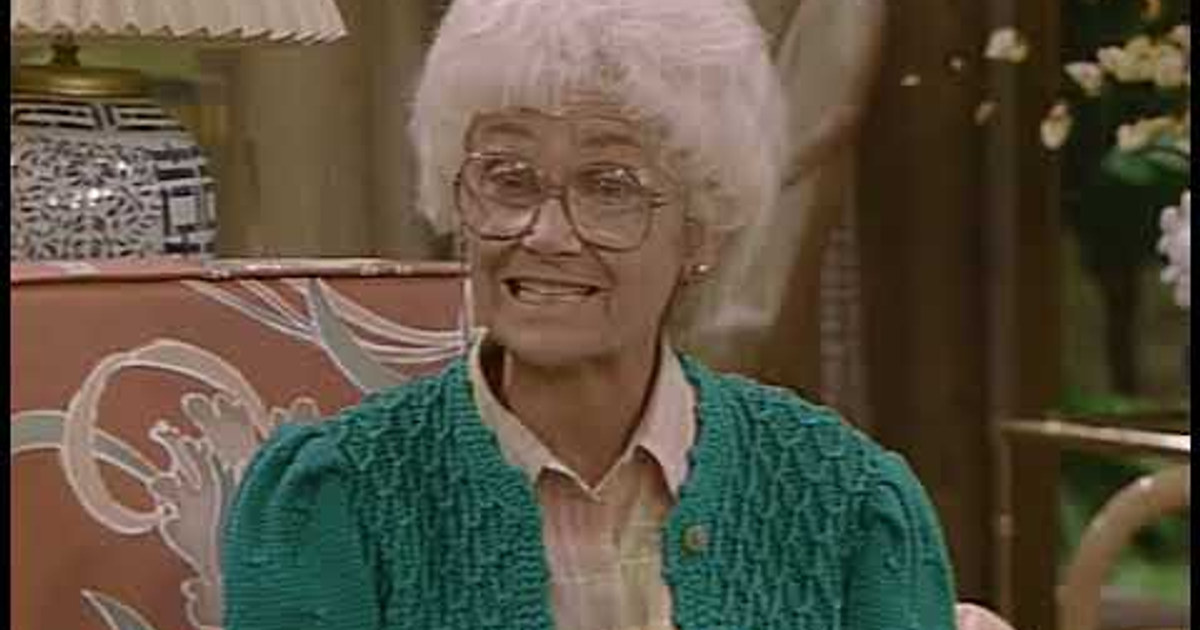
The consensus is that Frieda Claxton is simply a cartoonish, irredeemable sitcom monster who exists solely to get roasted by Sophia Petrillo. For decades, classic television fans have cheered as Blanche, Dorothy, and Sophia tear into the neighborhood crank for wanting to chop down a majestic 200-year-old oak tree. She is universally viewed as the ultimate antagonist of Richmond Street—a bitter roadblock to suburban harmony who gets exactly what she deserves.
And I think that consensus is completely wrong. Here is why.
When you look past the razor-sharp punchlines and examine the anatomy of this iconic living-room confrontation, Mrs. Claxton is not just some lazy caricature tossed in for cheap hostility. She is the crucial thematic engine that exposes the messy, hypocritical core of our four favorite Miami roommates. Everyone loves to celebrate Rose Nylund’s endless empathy or Sophia’s brutal takedowns, but the Claxton conflict proves that the girls are far more complicated—and far more culpable—than nostalgia lets us remember.
[[AD]]
Deconstructing the Myth of Pure Villains in Miami
The first major pillar of the consensus is that Mrs. Claxton exists in a moral vacuum of pure spite. Sophia calls her a 'miserable, vile, scum-sucking crank who gives nice old ladies like me a bad name.' The show sets up a black-and-white moral binary immediately: the tree is 200 years old and gorgeous, so anyone wishing to cut it down must be inherently rotten to the bone.
However, this completely ignores how suburban groupthink works. The neighborhood didn't just disagree with Mrs. Claxton; they completely dehumanized her long before the tree petition ever circulated. When Blanche points out that 'half the kids in the neighborhood wore Frieda Claxton costumes' for Halloween, the audience laughs. But think about what that actually reveals about Richmond Street.
Claxton is an isolated, elderly woman living surrounded by neighbors who turn her into a localized boogeyman. Her bitter isolation did not happen overnight. By treating her as public enemy number one, the neighborhood created a self-fulfilling prophecy. When a woman is treated as a neighborhood freak, why on earth would she do a favor for the very people who mock her on their front porches?
[[AD]]
Blanche and Dorothy represent the comfortable majority who prefer ostracizing an outsider over investigating why someone becomes so defensive. It is easy to gather signatures and pat yourself on the back for saving local flora. It is infinitely harder to acknowledge that an entire block participated in weaponizing a lonely woman's misery.
The Genius Satire of the Ernest T. Minkey Parable
The second consensus take is that Rose’s obligatory St. Olaf monologue is just wacky, surreal filler meant to test Dorothy’s blood pressure. The moment Rose starts talking about Ernest T. Minkey, Dorothy acts like she would rather pass a kidney stone, and viewers tune in strictly for the goofy absurdism of St. Olaf folklore.
Yet Rose’s story about Ernest T. Minkey is secretly one of the sharpest parables in the entire history of the sitcom. Minkey was not just St. Olaf's librarian; he was also the town's only dentist, operating both jobs out of the exact same office. Rose deadpans that 'in 1938, you could tell if someone was from St. Olaf. They were illiterate and they had teeth that looked like Indian corn.'
Beyond the brilliant lunacy of Betty White’s delivery, the Minkey story offers a profound psychological blueprint. Minkey was despised because he appeared to enjoy inflicting pain on others. But what was his actual dysfunction? He was an impossibly rigid bureaucrat who believed 'books belong in a library' and could only process human connection through institutional control.
[[AD]]
When Rose saves his life from his own stamping machine using her trusty Girl Scout knife, Minkey does not miraculously transform into Santa Claus. He merely extends her book checkout privilege from sixty minutes to a full week. Rose understands something Dorothy and Sophia consistently miss: miserable people do not need grand transformations; they need a cracked door.
Rose does not look at Claxton and see an alien monster. She recognizes the exact same emotional paralysis that infected Minkey. While the rest of the household settles for venomous insults, Rose sees a system of stubbornness that can only be interrupted by relentless, irrational kindness.
How Claxton Shatters the Girls' Moral Superiority
The third and most pervasive consensus assumption is that our four protagonists occupy the absolute moral high ground throughout this battle. After all, they are fighting for nature, community heritage, and aesthetic beauty. Claxton wants destruction. Ergo, the girls are saints and Claxton is the devil.
Yet look at the methods being deployed. Sophia Petrillo prides herself on being a sweet, harmless senior, but her immediate reaction to civic friction is scorched-earth defamation. Blanche only cares about the tree because it enhances the prestige of the neighborhood. Even Dorothy, usually the voice of reasoned civic duty, quickly surrenders to total exasperation and writes Claxton off as untouchable scum.
[[AD]]
Their activism is superficial because it costs them nothing socially. They rally the neighborhood around a shared hatred, feeding their own self-image as righteous guardians of Miami. But the moment community engagement requires sitting down with someone genuinely unpleasant, their coalition collapses into catty living-room gossip.
Mrs. Claxton’s sheer refusal to roll over exposes their civic virtue as paper-thin. She is the immovable object testing whether their famous charm extends to someone who rejects their charm offensive. The answer, brutally demonstrated across the entire scene, is that they only extend grace to people who reflect their own warmth back at them.
Rose is the lone exception because she is willing to look foolish in pursuit of reconciliation. When she picks up the phone to call Claxton directly, she is not defending Claxton’s right to be nasty. She is defending the fragile principle that nobody is beyond outreach until the final gavel falls.
[[VIDEO]]
Conceding the Counter-Argument: Is Claxton Truly Beyond Help?
To be completely fair to the consensus view, there is an undeniably massive counter-argument: Frieda Claxton really does make it almost impossible to defend her. The scene’s knockout closing punchline underscores this with perfection. Rose cheerfully rings her up, asks how she is doing, and is met with a suggestion so vile that Rose replies: 'Well, I've never sat on one before, but wouldn't that be painful?'
That brilliant, understated Betty White delivery acknowledges the brutal reality of the situation. There are people in this world who will respond to an extended olive branch by telling you precisely where to shove it. You cannot romanticize cruelty, and you cannot pretend that every bitter person is secretly yearning for a warm mug of cocoa and a friendly chat.
Claxton is aggressive, hostile, and completely uncooperative. The mainstream reading of her character exists for a reason: writers Susan Harris and her team crafted one of television's most unapologetically acidic foils, and Estelle Getty's venomous delivery lands because Claxton genuinely earns the neighborhood's ire.
Still, writing Frieda Claxton off as just a disposable villain robs this episode of its genius. She is not there just to be hated; she is there to force the Golden Girls to confront the limits of their own compassion. In doing so, she anchors one of the most unforgettable comedic exchanges in television history.


