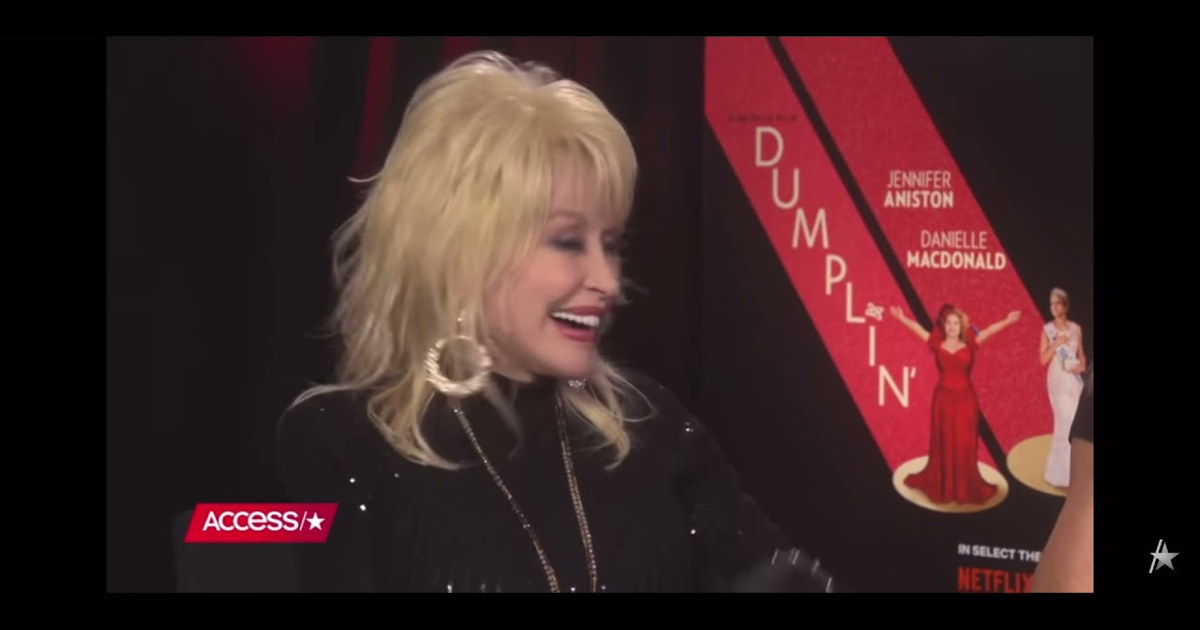
The consensus view on Dolly Parton is practically set in stone: she is America's ultimate sweetheart, a wholesome, cuddly, rhinestone-studded national treasure who floats above modern cynicism on a cloud of down-home charm and sweet tea. And I think that consensus is completely wrong.
Do not get me wrong—it is easy to see why people fall into that trap. Dolly is radiant, relentlessly polite, and beloved across every cultural divide. But reducing her to an innocent Appalachian fairy godmother completely sanitizes the raw, calculating comedic genius that actually built her empire.
Dolly was never harmless. She was a subversive, sharp-tongued satirist who figured out how to smuggle razor-sharp punchlines and bawdy counterculture humor directly into middle America's living room. Here is why the cuddly saint narrative misses the entire point.
[[AD]]
Myth 1: She Was a Mild-Mannered Folk Sweetheart
The popular reading says country stars of her era had to stay clean-cut and pious. Yet whenever Dolly sat in an interview chair, she operated more like a stand-up veteran at a late-night comedy club than a choir singer.
Listen to her talk about growing up: she openly admits that country humor was born from surviving hard times by laughing at things you are not supposed to laugh at. When asked for advice for the youth of America, she skipped the moral lecturing entirely and delivered a pure dirty-joke punchline: 'Act like it's raining every day and wear your rubbers.'
Whether she was joking on national television about her husband Carl fantasizing about a threesome with Jennifer Aniston or casually recounting the time she streaked across Tom Jones' lawn after three margaritas, Dolly was never playing it safe. She weaponized bawdy, shock-value humor while keeping a megawatt smile on her face.
[[AD]]
Myth 2: Her Image Was an Accidental Gimmick
For decades, highbrow fashion critics mocked Dolly's aesthetic. She famously landed on 'worst dressed' lists of all time, with tastemakers treating her towering blonde wigs and hyper-glam outfits as a gaudy country accident. But the consensus that she was an unwitting fashion victim completely misreads what camp actually is.
Dolly did not accidentally look like a caricature; she engineered it on purpose. As a kid, she modeled her look after the local town prostitute because she thought the peroxide hair and tight skirts were the pinnacle of glamour. When people warned her that style was pure trash, her response was instant: 'That is what I'm going to be when I grow up.'
She took the visual language of high-glam drag culture and wore it as armor. As she famously quipped, it is a good thing she was born a woman or she would have been a drag queen. When she entered a Dolly Parton look-alike contest in Los Angeles and lost to local drag queens, she turned the defeat into an iconic bit of self-satire. She was never the butt of the fashion world's joke—she wrote the punchline.
[[AD]]
Myth 3: Her Success Stems from Naive Aw-Shucks Charm
There is a persistent belief that Dolly simply stumbled into billions through folksy luck and undeniable singing pipes. In reality, behind the plastic surgery quips and the self-deprecation sat one of the sharpest media operators in entertainment history.
When scientists cloned a sheep using mammary glands and cheekily named it Dolly, lesser stars would have issued an outraged press statement. Dolly embraced the chaos immediately: there is no such thing as bad publicity, so why not own the narrative? When asked if she resented Whitney Houston's world-conquering cover of 'I Will Always Love You,' she cut through the polite industry nonsense with ruthless clarity: Whitney could have the credit as long as Dolly got the checks.
Even her work ethic dismantled the 'ditsy blonde' trope. On the set of 9 to 5, while co-stars Jane Fonda and Lily Tomlin rolled in bleary-eyed, Dolly had already been up for hours, fully glammed, writing hit songs and driving everyone crazy with her boundless energy. She made looking effortless cost a fortune in both labor and discipline.
[[VIDEO]]
The Real Genius Behind the Rhinestones
Now, let us concede the strongest point of the popular consensus: Dolly Parton genuinely *is* kind. She donates millions of books to children, finances medical breakthroughs, and treats interviewers with unmatched warmth. It makes total sense why the public wants to put her on an innocent pedestal.
But confusing goodness with softness does Dolly a massive disservice. She did not survive fifty years in a cutthroat industry by being a naive Southern belle. She survived because she was funnier, quicker, and significantly smarter than everyone in the room—and she used their own low expectations to win the game.


