Part 2
Dismantling Myth #3: The Persona Was Rooted in Toxic Aggression Rather Than Panic
Perhaps the most pervasive misconception is that Don Rickles functioned from a posture of unshakeable machismo. The archetype of the stand-up comic often relies on cool detachment—the comic as the smartest, sharpest observer in the room who sees through everyone else's flaws. If Rickles were simply an insult comic, his character would need to project intellectual supremacy and effortless contempt. Instead, his entire performance is a masterclass in manic, out-of-breath desperation.
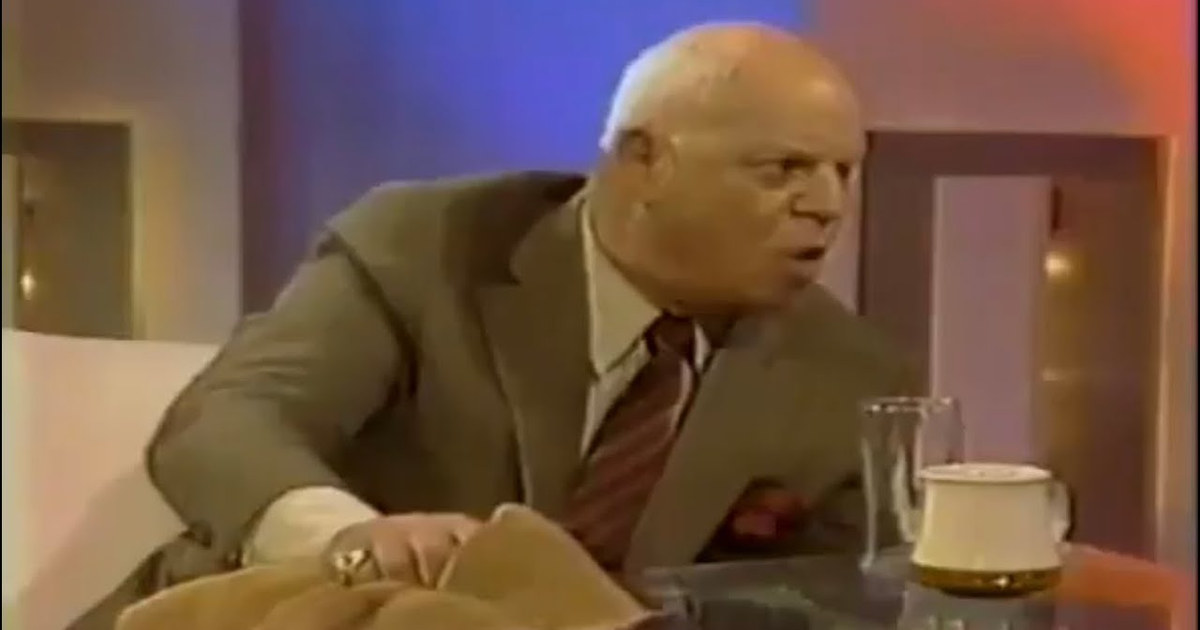
Notice how many times during his interview with Griffin he complains about his own physical decay and professional anxieties. He begs for water, wipes his brow, and admits, 'When you're on this kind of a show, you gotta fight for your life!' When discussing his Showtime cable special, *Don Rickles on the Loose*, and his friendship with legendary Los Angeles Dodgers manager Tommy Lasorda, Rickles continually paints himself as an exhausted, hypochondriac relic barely surviving in a changing television landscape.
He riffs on his own show being buried in the middle of the night across disparate TV markets: 'At two o'clock in Jersey, at four in Pakistan, at 8:30 in the afternoon in Orlando, Florida, and Tuesday night in Elko, Nevada, and once in a while in Iowa if the wind is right!' That is not the swagger of an arrogant tyrant. It is the exquisite, hyper-articulate neurosis of a Jewish comic from Jackson Heights who knows that no matter how many times he plays Las Vegas, the ground beneath his feet is always precarious.
[[VIDEO]]
By constantly framing himself as the biggest loser in the building—a man plagued by sweat, cardiac fears, failed series, and an overbearing ego that constantly lands him in hot water—Rickles makes his outward bluster completely toothless in the best possible way. The loudmouth shouting 'Dummy!' is visibly falling apart at the seams, transforming what could be bullying into sublime, high-wire slapstick.
Conceding the Counter-Argument: The Era's Content Still Stings
It is only fair to acknowledge the strongest piece of evidence supporting the consensus take: if you isolate the literal words on a page without Rickles' dazzling physical presence, a significant chunk of his material sounds undeniably jarring to contemporary ears. His rapid-fire riffs on race, national origins, and physical characteristics rely heavily on mid-twentieth-century ethnic shorthand that feels utterly foreign to modern comedic etiquette.
Critics who argue that his act was genuinely offensive have real, undeniable textual data to point toward. When Rickles casually drops broad ethnic labels or riffs on his long-time associate Harry Goines, modern listeners understandably tense up. It would be disingenuous to pretend that the cultural baggage of that material does not exist, or that everyone in 1986 or today is obligated to find that specific vocabulary charming.
[[AD]]
Yet reducing Don Rickles to a list of forbidden buzzwords completely ignores what was actually happening onstage. Rickles was not an architect of division; he was an equal-opportunity demolisher of pretense. In an era when suburban American television smoothed over every rough edge in pursuit of bland, sanitized perfection, Rickles dragged the boisterous, chaotic polyglot energy of urban immigrant streets right into prime-time living rooms.
The popular memory of Don Rickles as an offensive shock comic fundamentally misunderstands the heart of his genius. He did not survive six decades at the top of show business by making people feel small; he endured because his breathless, sweating, manic routine made everyone in the room feel seen, forgiven, and loved in all their flawed, ridiculous humanity. Rickles wasn't an insult comic—he was a high-wire humanist in a tailored suit.


