Part 1
The Consensus Is He Was a Vicious Attack Dog — and That Is Completely Backwards
The consensus on Don Rickles has been chiseled into granite for over half a century: he was the ultimate roastmaster, the undisputed heavyweight king of the insult, an unapologetic bruiser who marched onto late-night stages to cut people to ribbons. Cultural commentators and casual fans alike look back at vintage clips of Rickles hijacking talk show couches and declare, with a mixture of reverence and hand-wringing, that his savage brand of humor could never exist today because it was simply too dangerous, too hostile, and too sharp-edged for modern sensibilities.
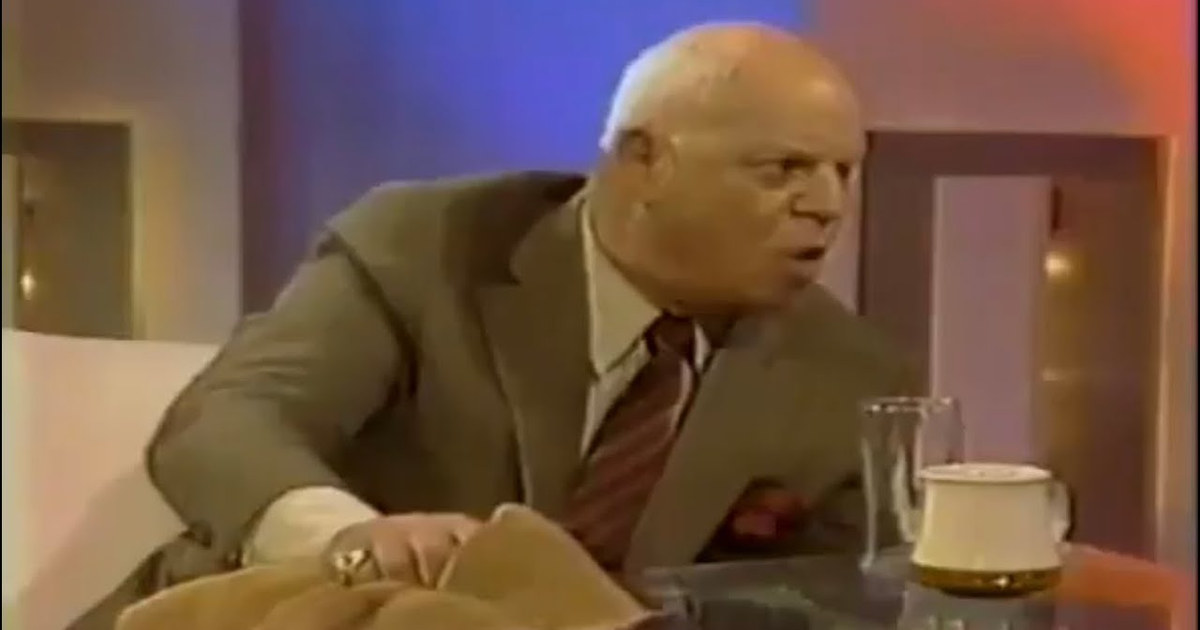
It is an easy, seductive narrative. When you watch Rickles storm the stage on classic television, barking ethnic stereotypes, targeting front-row audience members, and berating talk show royalty, it certainly looks like an unrelenting scorched-earth campaign. But taking his act at surface value misses the underlying theatrical engine of his entire career. The popular consensus that Rickles succeeded primarily because he was cruel, brave, and viciously offensive is wrong, and watching his iconic guest appearance on The Merv Griffin Show proves why.
Rickles was never genuinely playing a predator. He was playing an absurd, sweating clown trapped in a cage of his own making, frantic for air and desperate for love. His entire performance style was not about dominance or superiority; it was an extravagant burlesque of insecurity and desperate showbiz panic. Let us dismantle the three biggest myths that prop up the traditional view of Don Rickles.
[[AD]]
Dismantling Myth #1: His Crowd Work Was Designed to Humiliate Civilians
The first pillar of the consensus take is that Rickles weaponized crowd interaction to belittle average people, using everyday ticket-holders as punching bags to assert his own comedic supremacy. When Rickles leans over the edge of Merv Griffin's stage to interrogate an audience member, the traditional reading paints the interaction as an ambush. In the broadcast, he points into the crowd, singles out a bewildered young man named Rick Finnegan from Northern Illinois University, and immediately begins throwing jabs about college, finance, and heritage.
Yet if you actually study the rhythm of the interaction rather than just cataloging the transcripts, the dynamic is the complete opposite of hostility. Rickles asks the young man where he went to school, hears 'Northern Illinois University,' pretends to be stunned, and when Finnegan reveals he studied finance, Rickles immediately pivots to deflate himself: 'I got a Jewish mind, move up! What the hell are you doing in the back? Good boy, good luck to you.' He establishes instant kinship disguised as a reprimand.
Watch the audience's physical reactions during these moments. Rickles never punches down; he pulls every spectator into an exclusive conspiracy where the joke is the utter stupidity of racial and ethnic categorization itself. When he glances across the studio seats, pretending to spot German tourists or Italian waiters, the target is never the identity of the person sitting there—it is the frantic, outdated absurdity of his own loudmouth stage persona frantically trying to pigeonhole everyone in sight.
[[AD]]
The people he speaks to in the studio are not shrinking in fear or leaving in tears. They are beaming, basking in the manic affection of a man whose weapon of choice is speed, theatrical nonsense, and instant personal warmth. In an era when most talk show guests treated studio crowds as passive wallpaper, Rickles saw them as scene partners. He did not seek to isolate and destroy his audience; he treated them like conspirators in an oversized living room.
Dismantling Myth #2: His Targets Were Vulnerable Victims of Raw Hostility
The second core argument for Rickles as an offensive juggernaut is that his relentless barbs at fellow celebrities constituted genuine hostility. People love to point to his encounters with iconic figures, insisting that he took genuine pleasure in knocking giants off their pedestals. On Merv Griffin, Rickles spends a significant portion of his appearance detailing his real-life dynamic with Frank Sinatra, Dean Martin, and Steve Wynn, spinning tales that sound on paper like terrifying disrespect toward some of the most powerful, dangerous men in entertainment.
Griffin recounts an intimate post-inauguration breakfast where Rickles relentlessly hammered Sinatra for an entire hour while everyone else at the table gripped their seats in terror. Griffin recalls thinking, 'Well, it's all over for all of us in show business, we're all gonna be out tomorrow!' Yet rather than resulting in Rickles being banished from the Rat Pack orbit, it cemented his place in Sinatra's inner circle. Why? Because Sinatra and Griffin both understood the underlying architecture of the performance: Rickles was stripping away the paralyzing sycophancy that surrounded royalty.
Listen to the Atlantic City story Rickles shares on the couch. Sinatra summons him in the middle of the night from Resorts to the Golden Nugget, sending state troopers to Rickles' dressing room. Rickles arrives, marches onstage right in the middle of Sinatra crooning 'Summer Wind,' and hijacks the set for twenty minutes of relentless ribbing. The punchline is not that Rickles made Sinatra look weak; the punchline is that Sinatra was the first person in the room howling with laughter.
[[AD]]
Far from being a venomous attack, Rickles' legendary takedowns of Hollywood powerhouses were acts of immense emotional generosity. He offered gods like Sinatra the one thing absolute power denied them: genuine, honest human contact devoid of fawning flattery. When Rickles tells Griffin, 'You're in this little Mickey Mouse theater hanging on by the ropes hoping Coca-Cola calls and says here's your check, Merv,' he is puncturing the self-important gloss of television celebrity, turning the medium's biggest stars into regular stiffs who can laugh at their own mortality.


