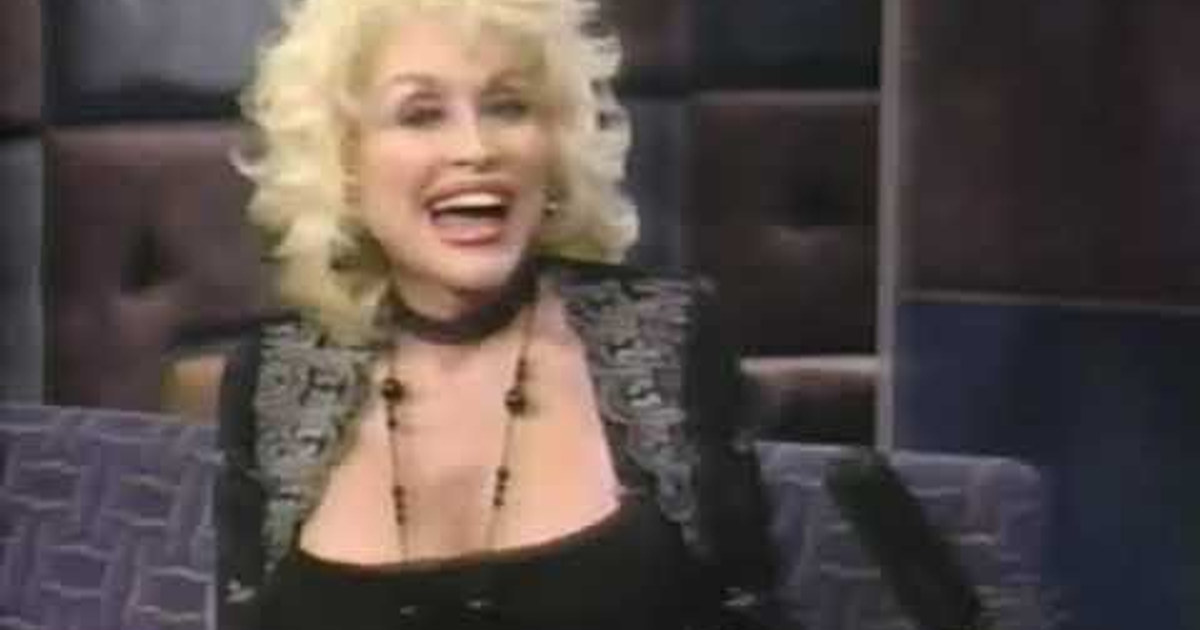
You have probably seen the clip circulating in low-resolution syndication: Dolly Parton strutting onto Conan O’Brien’s stage in 2001, radiant in shimmering rhinestones, completely disarming the host within thirty seconds. It plays like effortless late-night television banter, but beneath the surface sits a fundamental question about modern celebrity: How does a performer manufacture total visual artificiality and turn it into the most authentic persona in American popular culture?
Most stars spend millions trying to hide the scaffolding of their fame. They pretend their cheekbones are natural, their style is effortless, and their public image is just who they happen to be on a quiet Sunday morning. Dolly Parton, promoting her bluegrass-rooted record Little Sparrow, walked onto Late Night with Conan O'Brien and did the exact opposite.
She showed up not to conceal the construction, but to celebrate every stitch, tuck, and wig that holds the dream together. By putting all her cards on the table, she unlocked a rare kind of cultural invincibility.
[[AD]]
Radical Vanity: Confessing the Craft on National TV
The opening beats of the interview established the dynamic immediately. When Conan complimented her appearance and asked about her fountain-of-youth secrets, Dolly bypassed the usual Hollywood platitudes about clean water and good genes. Her reply was crisp: good doctors and good makeup.
She declared openly that if something is 'sagging, dragging, and bagging,' she pays to get it fixed, proudly noting she has no secrets and has had plenty of work done. In an era when most public figures still denied the scalpel, her admission felt like Mae West in She Done Him Wrong (1933)—a woman commanding the room because she owns every inch of her manufactured allure.
She dubbed her signature aesthetic 'pica boutique,' framing it as an audacious collision between Park Avenue glamour and trailer park grit. She traced that unmistakable image back to a real-life figure from her rural childhood: the local town tramp, whose towering bleached hair and high heels seemed like peak luxury to a young girl from the Great Smoky Mountains.
[[AD]]
Dollywood and the Art of Owning Your Empire
Dolly's radical self-awareness does not stop at her wardrobe; it extends directly into her boardroom decisions. Conan pivoted to Dollywood, her sprawling East Tennessee theme park then entering its sixteenth season alongside the debut of Dolly's Splash Country.
Instead of marketing it with sterile corporate talking points, she admitted on air that you will never catch her riding the marquee attractions. She will not step foot on the Tennessee Tornado roller coaster, nor will she plunge down the water flumes, for one practical reason: the wigs might fly off and the makeup might wash away.
Like Walt Disney steering viewers through Disneyland (1955), Dolly understood that you do not have to test every mechanical bolt to embody the spirit of the kingdom. She joked about putting Opryland out of business while maintaining the self-deprecating grace that makes an empire feel cozy.
[[AD]]
The Outlaw Spirit Behind the Rhinestones
The conversation peaked with the kind of vintage folklore that money cannot buy: the confession that Dolly can never resist a direct dare. Conan pressed her on an old Hollywood rumor involving legendary singer Tom Jones and a late-night stunt in Bel Air.
Without hesitation, she confirmed it. While filming The Best Little Whorehouse in Texas (1982), a few margaritas with friends led to a double-dog dare outside Jones's estate. The result? Dolly stripped down and streaked straight across his manicured lawn before diving back into the car.
That rebellious, thrill-seeking spark echoed the freewheeling energy of Burt Reynolds in Smokey and the Bandit (1977). She proved that beneath the polished rhinestones lives an unvarnished Southern hellraiser who lives entirely on her own terms.
[[VIDEO]]
When Conan cheekily tried to double-dog dare her to strip on late-night broadcast television right then and there, she turned the joke back on him with lightning comedic timing, reaching for his zipper instead. She controlled the frame from the first minute to the last.
[[AD]]
The Real Illusion Was Thinking She Was an Illusion
So how does extreme artifice produce genuine authenticity? Dolly Parton’s sit-down with Conan O’Brien provides the answer: true authenticity is not the absence of artifice; it is the absolute refusal to lie about it.
By pulling back the curtain on her own caricature, Dolly turned what could have been a plastic persona into folk poetry. She showed the world that when you own who you are—flaws, fillers, wigs, and all—no one can ever reduce you to a punchline.


