Part 2
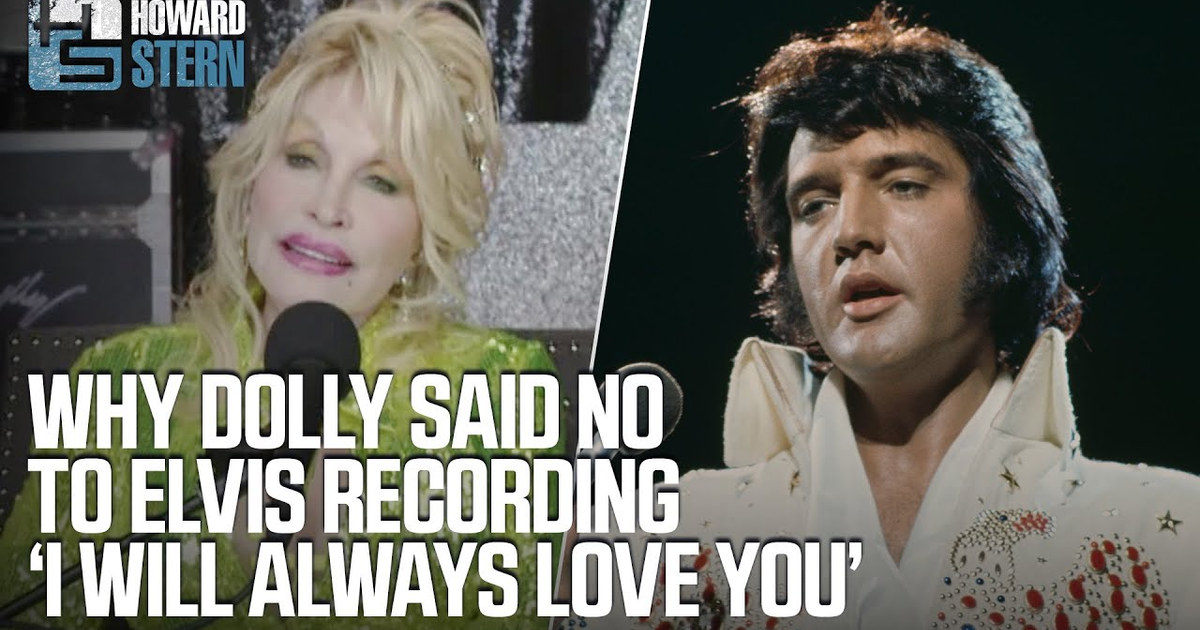
But it's not just about money. It's about legacy. Because she said no to Colonel Tom Parker, she retained control of her song. She got to see it become something bigger than she ever imagined. She got to be the one who decided how it was used, who recorded it, where it went. She got to own her own story.
Cut back to that night. The phone call. The tears. Dolly Parton, alone, heartbroken, thinking she'd just lost the chance of a lifetime. She didn't know that the real chance was still coming. She didn't know that a young singer named Whitney Houston would take that song and turn it into a monument. She didn't know that her refusal to give up half her publishing would be the very thing that allowed her to reap the full rewards.
She didn't know it yet, but that "no" was the best career move she ever made.
The phone rings. She says no. She cries all night. And then, years later, she hears it on the radio and almost wrecks her car. That's the rhythm of a life in three beats. That's the cut that matters.
Next: how that same stubborn streak led her to write the song in the first place — and how a guy named Porter Wagoner ended up on the receiving end of the greatest goodbye in country music history.
From Porter Wagoner's Office to Whitney's Radio Moment
The song was born out of another goodbye. Dolly Parton had spent seven years on The Porter Wagoner Show, a syndicated country TV staple that ran from 1960 to 1981. Porter gave her a break, but their partnership was oil and water. Love-hate. Stubborn meets stubborn. Dolly knew she had to leave to become her own star. She didn't want to spend her life as a girl singer. She wanted the marquee. So she went home, made the call, and wrote 'I Will Always Love You' as a goodbye song.
[[AD]]
The next morning, she walked into Porter's office. Just her and her guitar. She sang it alone. No band. No backing vocals. Just the words and the melody. Porter sat behind his desk. Tears rolled down his face. He said it was the best song she ever wrote. And he let her go—on one condition: he could produce the record. That moment, that tiny office, that single guitar—it's the first cut of a story that would span decades.
Dolly released 'I Will Always Love You' in 1974. It hit No. 1 on the Billboard Hot Country Songs chart. Twice, actually—once in 1974 and again in 1982 when she re-recorded it for the film The Best Little Whorehouse in Texas. But the song's biggest moment was still years away.
Cut to 1992. Dolly is driving her Cadillac in Brentwood, Tennessee. She's coming home from her office on Music Row. The radio is on. A familiar melody starts. She doesn't recognize it at first. Like a dog hearing a whistle. Something rings a bell. Then Whitney Houston's voice hits the chorus. Dolly almost wrecks. She pulls over. Walgreens parking lot. The chorus hits. She can't breathe. Her little country song just went global.
She sat there, parked, listening to the rest of it. 'The most overwhelming sensation,' she called it. She couldn't believe her little country sad song could be done like that. But to hear it like that—it was one of the greatest experiences of her entire life. That's the Whitney Houston version. A pop ballad that soared. A vocal performance that became the definition of a power ballad.
Whitney recorded it for The Bodyguard, the 1992 romantic thriller directed by Mick Jackson. The film stars Kevin Costner as a former Secret Service agent turned bodyguard, and Whitney Houston as a superstar singer he's hired to protect. Runtime: 129 minutes. The soundtrack is a monster. It won the Grammy for Album of the Year. The single 'I Will Always Love You' spent 14 weeks at No. 1 on the Billboard Hot 100. It became one of the best-selling singles of all time.
Dolly's version is a tender country farewell. Acoustic. Intimate. A woman saying goodbye to a man she loves but can't stay with. Whitney's version is a soaring pop ballad. Gospel-tinged. Orchestral. A woman declaring her love with every ounce of her voice. Both are 'I Will Always Love You.' But they live in different worlds. One is a whisper. One is a roar. And both are perfect.
[[VIDEO]]
The timeline is wild. Dolly wrote it in 1973. Released it in 1974. Whitney recorded it in 1992. The song became a global phenomenon. And Dolly made more money from Whitney's version than from any other recording of her catalog. She didn't have to give up the publishing to Elvis. She kept it. And it paid off in ways she never imagined.
Think about that. Dolly wrote a goodbye song for Porter Wagoner. It became a country hit. Then, 18 years later, it became a pop anthem. A movie soundtrack. A Grammy winner. A cultural landmark. And Dolly, the girl singer who left the TV show to become her own star, ended up with the last laugh. She kept the rights. She kept the royalties. She kept the legacy.
The contrast between the two versions is a masterclass in interpretation. Dolly's original is sparse. It's just her voice, a guitar, and the ache of leaving. Whitney's cover is lush. It's a production. It's a moment. But both capture the same truth: love doesn't end just because you walk away. It just changes shape.


