Part 1
The Phone Call That Changed Everything
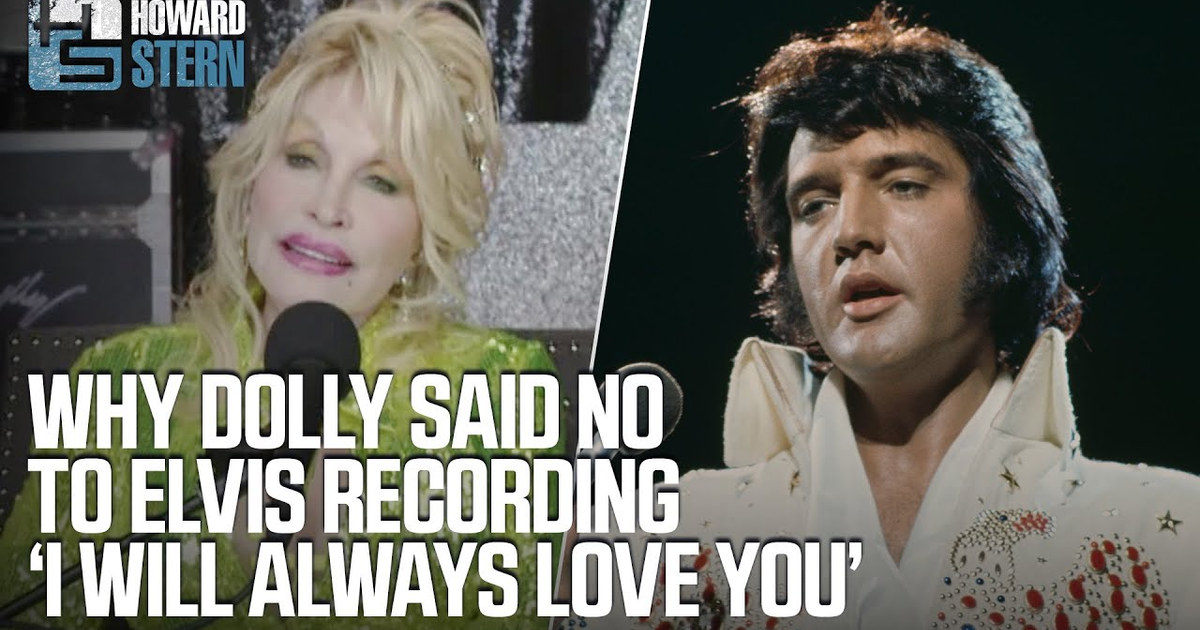
The phone rings. It's the night before the session. Dolly Parton is already dreaming about the sound of Elvis Presley's voice wrapping around her words. She's been told to come down to the studio. Elvis wants to meet her. He wants to record "I Will Always Love You." She's out of her mind with excitement. Then the phone rings again. It's Colonel Tom Parker. He doesn't want to talk about harmonies or key changes. He wants the publishing. Half of it. Or no record. She says no. She cries all night.
That's the scene. One call, one demand, one decision. It's the kind of beat that a trailer editor would cut to a dead-silent frame, then a single piano note. Because everything that comes after — the Whitney Houston version, the biggest-selling single by a female artist in music history, the legacy — all of it hangs on that one "no."
Dolly Parton didn't know it yet. But that "no" was the best career move she ever made.
Let's rewind the tape. Dolly had already built a name for herself as a songwriter's songwriter. She'd written "Jolene" and "Coat of Many Colors." She'd paid her dues on The Porter Wagoner Show. But Elvis? Elvis was the mountaintop. In the mid-1970s, Presley was still a force, even if his best film work was behind him. The idea of him cutting one of her songs was a validation that went beyond charts. It was immortality by association.
So when Elvis's producer called and said, "Elvis wants to meet you, he's going to record 'I Will Always Love You,'" Dolly was, in her own words, "out of my mind with excitement." Picture it: the girl from Sevierville, Tennessee, who grew up listening to Elvis on the radio, now getting the nod from the King himself. She probably started planning the session. Maybe she'd be there in the booth. Maybe he'd ask her to sing backup. Maybe they'd become friends. The fantasy writes itself.
Then the night before the afternoon session, the phone rings again. Colonel Tom Parker. The manager. The man who turned Elvis into a brand, a carnival barker in a suit. He doesn't do warm-ups. He gets straight to it: "We don't record anything with Elvis unless we have the publishing. Or at least half the publishing."
Dolly doesn't flinch. "That's not possible," she says. "That is my most important copyright. I got my own publishing company." She's not just being stubborn. She's protecting her future. She knows what publishing means. It's not just money — it's control. It's the right to say who uses your song, where it plays, how it's sold. It's the difference between owning your legacy and renting it out.
Colonel Tom pushes. "At least you got to give us half." Dolly holds the line. "I can't do that." He delivers the ultimatum: "Well, then we can't record it."
Click. The line goes dead. And Dolly Parton, the woman who would one day be known for her unshakeable optimism, cried all night. She's said it plainly: "I cried all night about that." Not because she was greedy. Because she was heartbroken. The dream of Elvis singing her song evaporated in a single phone call.
But here's the thing about Dolly. She's a businesswoman. She's been savvy since the day she stepped off the bus in Nashville. She understood that "I Will Always Love You" wasn't just another tune. It was her most important copyright. She'd written it as a goodbye to Porter Wagoner, her mentor and sometimes adversary. It was personal. It was painful. It was hers.
Giving up half the publishing would have meant giving up half of that song's soul. And half of its future. She wasn't about to do that. Not for Elvis. Not for Colonel Tom. Not for anybody.
So she walked away. The session never happened. Elvis never recorded "I Will Always Love You." And for years, that was that. Dolly's version, released in 1974, was a country hit. She re-recorded it for the 1982 film The Best Little Whorehouse in Texas, and it hit number one on the country charts again. But the wider world still didn't know the song's full potential.
Then came 1992. Whitney Houston. The Bodyguard. A film that, let's be honest, is remembered almost entirely for its soundtrack. Kevin Costner plays a former Secret Service agent. Whitney plays a pop star. The plot is fine. But the moment Whitney opens her mouth on "I Will Always Love You," the movie becomes a delivery system for a vocal performance that redefined what a cover could be.
Dolly heard it for the first time on the radio. She was driving home from her office on Music Row to her home in Brentwood. She had a Cadillac. She said it was like a dog hearing a whistle — something rang a bell, but she didn't quite place it. Then Whitney hit the chorus. Dolly almost wrecked the car. She had to pull over at a Walgreens to listen to the rest. She called it "the most overwhelming sensation" and "one of the greatest experiences I've ever had in my entire life."
That version — Whitney's version — became the biggest-selling single by a female artist in music history. It topped charts in 14 countries. It won Grammy Awards. It turned "I Will Always Love You" from a country ballad into a global anthem. And Dolly Parton, because she owned the publishing, made a fortune. She's said it plainly: "I made a lot of money off of Whitney's."


