Part 3
[[AD]]
So what does it take to stay that true to yourself for decades without pushing people away? That's the question we're going to tackle next. Because Dolly Parton has somehow cracked the code — and it's not about being perfect. It's about being consistent, kind, and just a little bit gaudy. Stay tuned.
The Longevity Secret: How Dolly Parton Stays Herself Without Pushing People Away
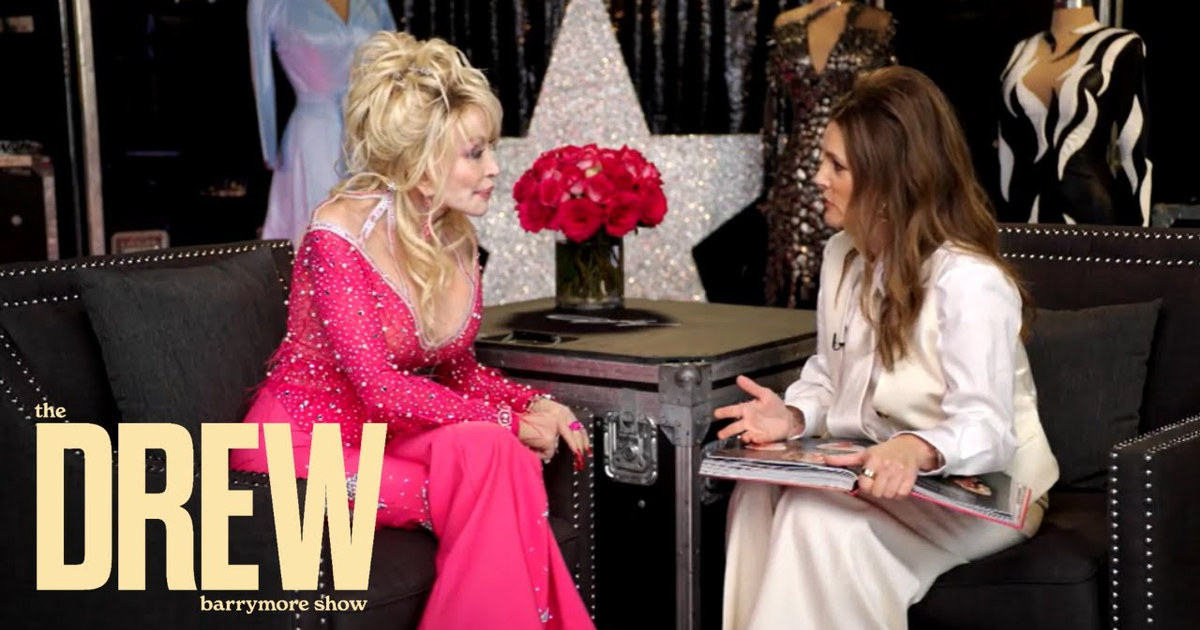
So the interviewer leans in and asks the question we all want answered: How have you managed for all of these decades to be someone who is so very yourself but never alienate people? It’s the kind of question that sounds simple until you try to answer it. Dolly doesn’t pretend to have a formula. She just says, “Sometimes being myself is why I’m still around.” And then she admits, “I don’t always know where to go with it.” That’s the thing about Dolly—she’s been famous for over sixty years, and she still talks like she’s figuring it out in real time. She’s not performing authenticity; she’s just living it.
She brings up being on the other side of the interviewer’s chair, and you can tell it shaped her. “I never wanted to be a journalist who just wanted to hit questions and get an answer,” she says. That line stuck with me. Think about how many interviews you’ve seen where the host is just ticking boxes, fishing for a headline. Dolly remembers that feeling, and she refuses to be that person. Instead, she treats every conversation as an opportunity to realize dreams—not just extract answers. That’s a radical way to move through the world, especially when you’re the one everyone wants a piece of.
But here’s the part that really gets me: she doesn’t just talk about kindness; she radiates it. When people tell her she inspired them or helped them, she says it’s touching. You can hear the sincerity. She’s tried to be a good person, and that effort shows. In a business full of sharp elbows and short memories, Dolly has managed to stay soft without being weak. She’s the rare star who can wear a wig made of four other wigs and still make you feel like you’re the only person in the room.
So what’s the secret? Part of it is that she never takes herself too seriously. She laughs at her old photos. She quotes that old saying, “The higher the hair, the closer to God,” and then adds, “I think we might have overdone it.” She remembers wearing fresh daisies in her hair to the Academy Awards. She recalls her hairdresser Colleen, who was “very creative and very artistic,” and how her hair was always bigger than she was. “I’m not very big, but my hair is really big,” she says. That self-awareness is disarming. She’s not asking you to worship her; she’s inviting you to laugh along.
And that laughter is a kind of generosity. When you’re that famous for that long, you could easily become a caricature of yourself. But Dolly keeps evolving. She’s still wearing heels—even though she admits she’s “probably a little damaged from all the high heels.” She had shoes custom-made by Salvatore Ferragamo (she calls him “D’ Fabrizio” in the transcript, but she means Ferragamo) so she could do stunts in Charlie’s Angels. That’s the 2000 film directed by McG, where she played herself and wore those towering platforms. She didn’t just show up for a cameo; she committed to the bit. That’s the Dolly way: full send, always.
She also name-drops Mae West, someone she identified with because West was little and loved being gaudy and big and showing her stuff. Dolly even put one of West’s gowns in her book—a lacy number with coverage only in a triangular area. “Now, that’s fashion,” she says. And she loves West’s quips, like the one about having thirty men outside and telling them to send ten home because she’s tired. That’s the energy Dolly channels: unapologetic, playful, and always in on the joke. She’s not alienating people because she’s not trying to be above them. She’s right there in the mess with us, wearing a bigger wig.
But let’s not mistake the humor for a lack of depth. Dolly’s longevity isn’t just about jokes and wigs. It’s about a fundamental respect for other people. She knows what it’s like to be asked the same questions over and over, so she tries to make each exchange feel fresh. She knows what it’s like to be judged, so she leads with acceptance. She knows that being herself is the only way she knows how to be—and that’s exactly why we trust her. In a world of carefully managed personas, Dolly is the real deal. She’s the friend who’s seen every foreign cut, the deleted scenes, the commentary track. She talks like a real person at a bar, never like a reviewer writing for a quote.
And that’s the lesson, isn’t it? Being yourself is not a liability. It’s the whole damn point. Dolly Parton has been on the other side of the interviewer’s chair, and she decided to be the kind of person who realizes dreams instead of just extracting answers. She’s kind, she’s funny, and she’s unapologetically herself. That’s why she’s still around. That’s why we still care. And that’s why, if you take one thing from Dolly, let it be that being yourself is not a liability—it’s the whole damn point.


