Part 1
The Consensus: Dolly Parton Is Beloved Because She’s Kind and Relatable
You’ve heard it a thousand times. Dolly Parton is the nicest person in show business. She’s humble, she’s kind, she’s unapologetically herself. That’s the consensus. And I think it’s wrong. Not because Dolly isn’t kind — she clearly is — but because kindness is the symptom, not the cause. The real reason Dolly Parton has survived six decades in an industry that chews up and spits out legends is something far more radical: deliberate, relentless self-invention. She didn’t just stay herself. She built herself. Brick by brick, wig by wig, stunt by stunt.
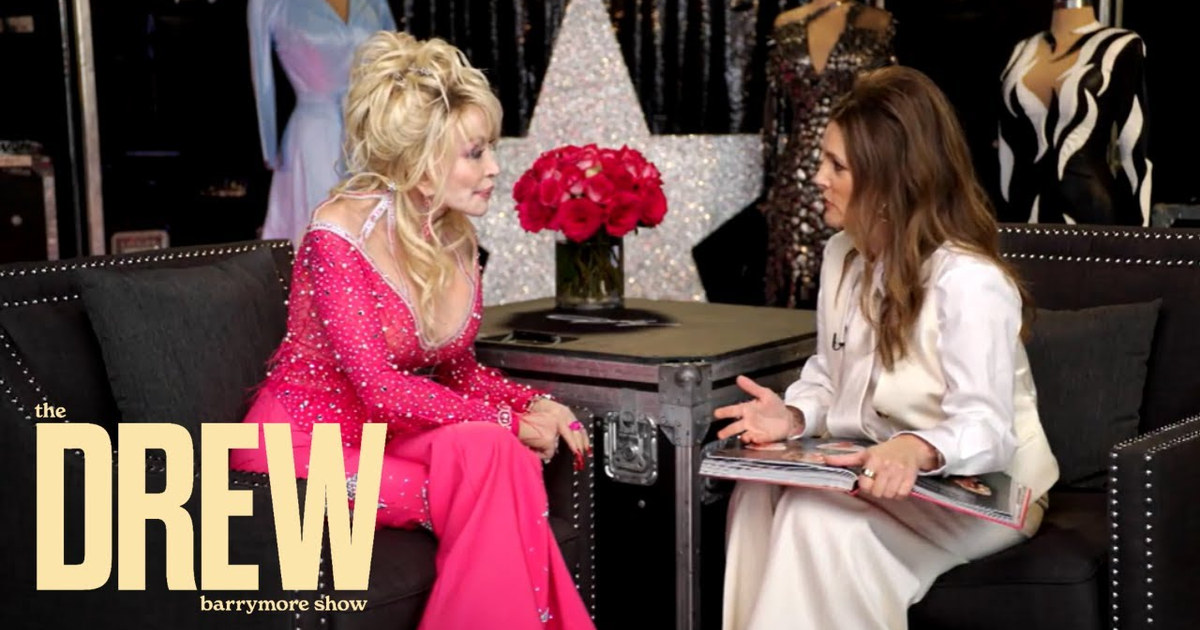
The transcript from a recent interview makes the consensus case for me. An interviewer — visibly starstruck — calls Dolly her “absolute idol” and credits her longevity to “kindness.” Dolly, gracious as ever, nods and says she’s “tried to be a good person.” It’s a lovely moment. It’s also completely misleading. Because two minutes later, Dolly undercuts the whole thing. She says, “Being myself is why I’m still around.” But then she immediately complicates it. She’s been on the other side of the interview chair, and she refuses to be the kind of journalist who just “wanted to hit questions and get an answer.” She calls the interview “an opportunity to realize dreams.” That’s not just nice. That’s strategic. That’s someone who understands that survival in entertainment isn’t about being liked — it’s about being unforgettable.
So here’s my contrarian thesis: Dolly Parton is not beloved because she’s kind. She’s beloved because she’s a genius of reinvention. The kindness is real, but it’s the cherry on top of a sundae she built herself, with her own hands, from scratch. And if we keep reducing her to “the nice lady with the big hair,” we miss the most important lesson of her career: that you can be kind and still be ruthless about your own evolution. You can be humble and still be the architect of your own mythology.
Let’s look at the evidence. Dolly’s career isn’t a straight line. It’s a zigzag of bold pivots. In 1978, she released “Here You Come Again,” a pop-country crossover album that shocked the Nashville establishment. It won her a Grammy and proved she wasn’t just a country singer — she was a pop star. In 1980, she starred in “9 to 5” alongside Jane Fonda and Lily Tomlin, a comedy that became a cultural touchstone and grossed over $103 million on a $10 million budget. She wrote the title song, which became an anthem for working women. Then in 1982, she starred in “The Best Little Whorehouse in Texas,” a musical comedy that leaned into her campy, larger-than-life persona. And in 2023, at age 77, she released “Rockstar,” a rock album featuring Paul McCartney, Ringo Starr, Elton John, and Lizzo. That’s not relatability. That’s range.
The consensus says Dolly is loved because she “stays herself.” But what does that even mean? Dolly herself admits she doesn’t always know where she’s going. She says, “I don’t know always where to go.” That’s not a woman who has it all figured out. That’s a woman who trusts her instincts and keeps moving. And when she looks back at old photos — the wigs, the ribbons, the daisies in her hair at the Academy Awards — she laughs. “Was I serious?” she asks. But she was serious. Dead serious. Because every outrageous look, every over-the-top outfit, was a calculated move in a long game of brand-building. She wasn’t just being herself. She was inventing a self that could withstand the spotlight for fifty years.
The interviewer brings up the wigs — specifically, the rumor that Dolly once wore four wigs on top of each other to get the look. Dolly doesn’t deny it. She says, “I’m sure I did.” And then she drops a line that should be studied in every marketing class: “The higher the hair, the closer to God.” She’s joking. But she’s also not. Because that hair wasn’t just hair. It was armor. It was a signal. It was a way of saying, “I am not like you, and that’s why you can’t ignore me.”
This is the first piece of the consensus I want to dismantle: the idea that Dolly’s kindness is the main event. It’s not. The main event is her audacity. Her willingness to be too much. To be gaudy, as she puts it, like Mae West. To wear the tallest shoes you’ve ever seen — custom-made by Salvatore Ferragamo — so she could do stunts in “Charlie’s Angels.” To sit in a wheelchair like Mae West and joke, “Send 10 of them home.” That’s not just nice. That’s a woman who knows exactly what she’s doing.
And that’s the thing about the consensus. It’s lazy. It’s easy to say Dolly is beloved because she’s kind. It’s harder to admit that she’s beloved because she’s a master of self-creation. She didn’t just “stay herself.” She built a self that could survive the music industry, the movie industry, and the tabloids. She built a self that could pivot from country to pop to rock. She built a self that could wear a dress that only had coverage in a triangular area — as she says, “Now, that’s fashion” — and make it look like a power move.
So no, this isn’t a takedown of Dolly Parton. It’s a takedown of the lazy way we talk about her. The consensus says she’s kind and relatable. I say she’s kind and relentless. She’s relatable and radical. And if we keep calling her “just a nice lady,” we’re not just underestimating her. We’re missing the whole point.


