You have probably watched a dozen prestige dramedies this year, each promising to dismantle the nuclear family with surgical precision and existential despair. Yet, when you stumble upon a vintage broadcast clip of kids bartering over booster tickets or trying to ditch their younger siblings for an afternoon at the ice rink, you are forced to confront an uncomfortable question: why does low-stakes, multi-camera living room banter still capture the frantic machinery of household survival better than our current Golden Age of television?
The answer lies in how traditional four-camera network sitcoms treated family life not as an emotional trauma ward, but as a relentless negotiation of territory. In scenes where an older sister weaves elaborate, terrifying lies about freezing ankles and instant pneumonia just to go ice skating solo, we see the pure, unadulterated essence of childhood tribalism in motion.
Much like Norman Lear accomplished with 'Good Times' (1974), the scene relies entirely on rapid-fire, grounded micro-conflicts. Rudy’s persistent refrain of 'I don't care' cuts through Vanessa’s protective fabrications with comedic clarity. It reminds us that growing up is largely an exercise in wearing down someone else's defenses until they simply buy you off with a promise for tomorrow.
[[AD]]
The Hustle of the Domestic Ecosystem
Turn the corner to the kitchen and the narrative engine shifts from sibling exclusion to patriarchal extortion. A son casually volunteers to assist with a clean stove only after the labor is completed, immediately pivoting into selling banquet tickets for the school football team. The genius here is not in the joke itself, but in the institutional fatigue it exposes.
The dad’s immediate exhaustion over having to peddle school fundraisers to colleagues at the hospital speaks to every working parent who has ever been cornered in a breakroom. His dread—picturing fellow doctors diving under furniture the second he walks into the lounge—mirrors the suburban paranoia mastered by shows like 'The Wonder Years' (1988), where adult dignity is routinely sacrificed to satisfy mandatory extracurricular quotas.
It is an unvarnished examination of how children view their parents: not as flawed individuals traversing middle age, but as fully funded syndicates designed to absorb financial obligations and supply instant captive audiences for their abysmal season highlight reels.
[[AD]]
The Chaos of Transatlantic Phone Calls and Toddler Negotiations
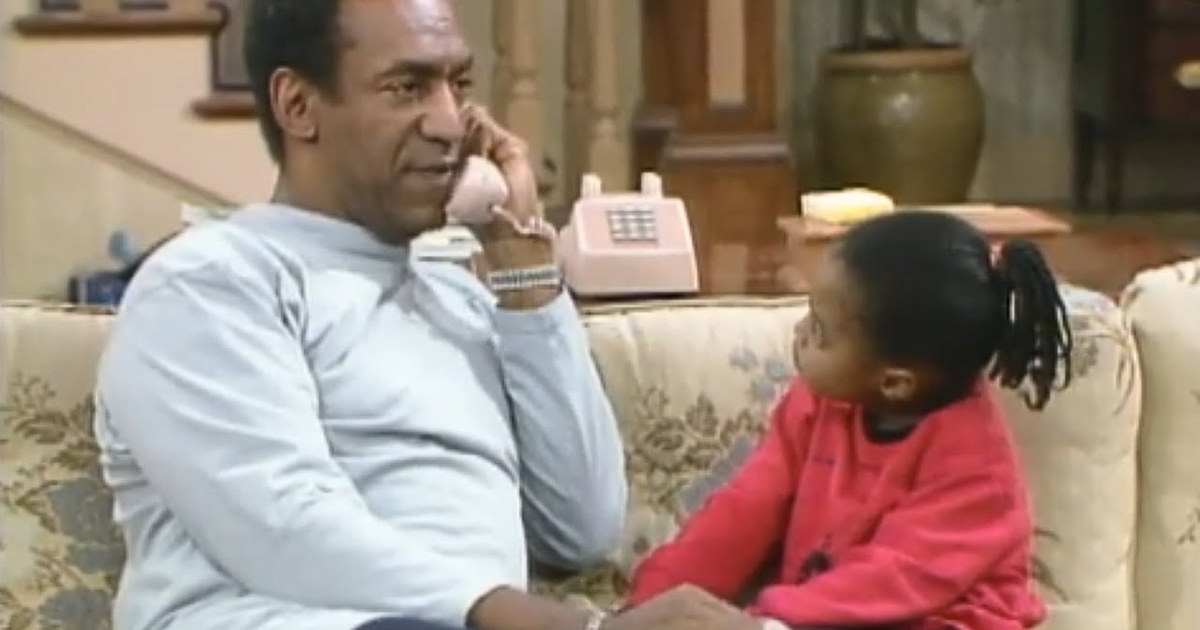
Nothing demonstrates the fragile boundary of parental authority quite like a five-year-old accidentally calling Ireland. Finding Rudy with the receiver, completely unfazed while chatting across oceans because she is bored, crystallizes the terrifying innocence of pre-internet childhood where a rotary dial was an open portal to the globe.
The dad’s counteroffers—pointing to the supposed 'three million dollars' worth of untouched books in her bedroom, pleading with her to draw some letters, or desperate self-nominations to be her best friend—evoke the brilliant, flailing domesticity seen in 'Malcolm in the Middle' (2000). A parent tries to bargain with an unmovable object, only to be hit with the devastating existential truth: 'No, you’re my daddy.'
Children intuitively know the hierarchy of the house better than the adults managing it. When Cliff tries to explain that fathers make the ultimate companions ('Why do you think dogs always hang out with them?'), Rudy cuts through the rhetoric to demand a sleepover instead, effortlessly leveraging his desperation into a full-scale social event.
[[AD]]
Overconfidence and the Inevitable Descent into Madness
The climax of this sequence sets up the ultimate comedic hubris: a father swearing he can handle a house full of kindergarteners entirely solo while his partner is away. It is a boast as ancient and doomed as any tragic hero in dramatic literature, framed in the deceptively cozy confines of a living room set.
Armed only with a class roster and blind optimism, he invites an unspecified army of miniature guests over for dinner, casually asking the older siblings to pitch in for what he terms 'lively guests.' It is the classic calm before the storm, a setup that promises absolute logistical collapse in the very next reel.
[[VIDEO]]
So when you revisit these snapshots of mundane household warfare, you realize why they continue to circulate decades later. They capture the specific, unromanticized friction of real family life—where every conversation is a negotiation, every chore is dodged, and every parent is merely one phone call away from utter chaos.


