Part 1
The Hickey on the Neck: A Scene That Tells the Whole Story
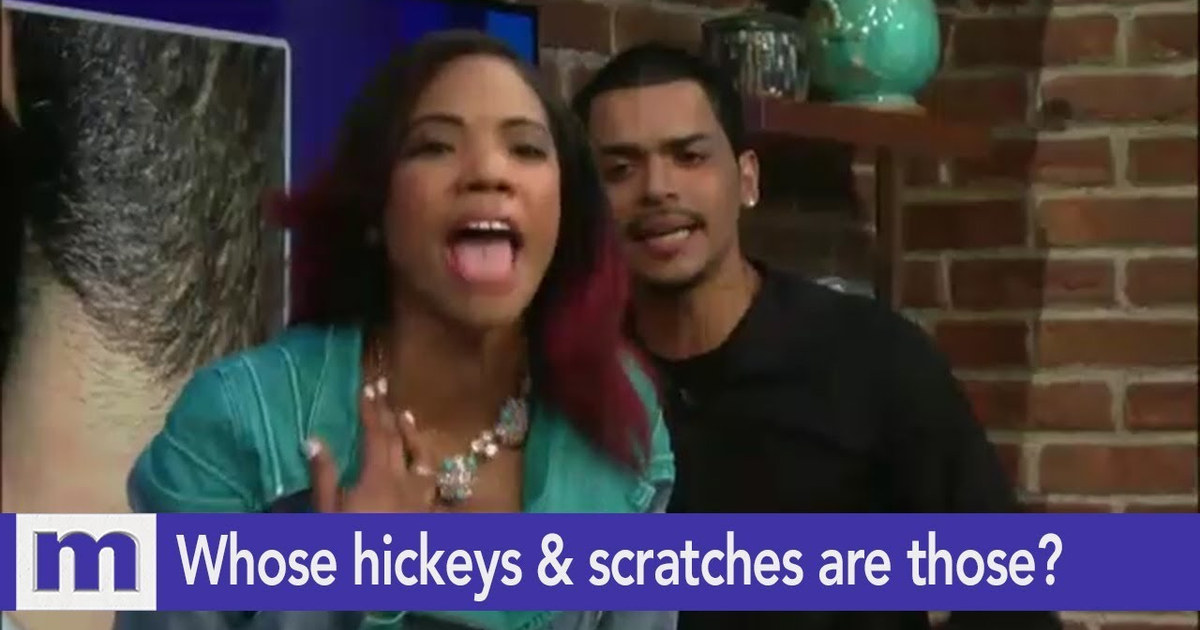
The hickey sat just below Jason's jawline, a small violet bruise the color of a fading storm cloud, and Charlene saw it before he even finished his first cup of coffee. He'd rolled in that morning after a night out with his best friend Derek — hours of radio silence, then the front door, then the smell of a bar clinging to his hoodie. The mark was fresh. It was deliberate. It was a sentence in a story she'd been reading for months, and she was tired of pretending she didn't know the language.
Jason shrugged when she asked. "I'm light-skinned," he said. "Sometimes when I scratch right here, I get a mark." He gestured vaguely at his own neck, as if his fingernails had conspired against him in the dark. Charlene didn't buy it. She told Maury later, with the flat certainty of someone who has stopped negotiating with reality, "I'm not new to this. Don't try to play me." And that's the whole story, really — not the cheating, not the polygraph, not the wedding that didn't happen. It's the shrug. It's the way a person can look at a bruise shaped like a mouth and call it a scratch, and expect you to nod along.
Charlene and Jason had already picked up their marriage license in 2023. They'd stood at the counter, signed the paperwork, and walked out with a future folded in an envelope. Then the Maury producers called. Charlene heard the phone ring and thought: perfect. A lie detector test right before the wedding? A golden opportunity to know, once and for all, what she was walking into. Jason heard the same phone ring and thought something else entirely — that Maury was the reason the wedding got postponed, that Charlene had switched up on him because a TV show gave her an excuse. Same call. Two completely different stories. That's the thing about a hickey. It doesn't just sit on a neck. It sits on a relationship, and it makes everyone around it start telling on themselves.
So let's meet the cast, because this is a story with three players and a machine. Charlene is a tattoo model with 15,000 followers and a rising career — the kind of woman who says, without a trace of vanity, "I'm not ugly, Maury. It's not hard for me to find a man." Jason is a pipe fitter who does construction, makes good money, and insists he has his own career, thank you very much, and didn't propose just to ride her success. And then there's Derek — the childhood friend, the so-called wingman, the man who pushed Charlene and Jason together in the first place and now, according to Charlene, can't stand to be around her. "Derek will lie for Jason to the T," she says. "It does not matter." The stakes are simple and brutal: if Jason fails the test, Charlene says he can keep the ring, he can keep the marriage license, and she's done. No wedding. No negotiation. Just the door.
Read the hickey the way a novelist reads a sentence. It's not just a mark. It's a clause in a larger paragraph about trust — about the stories we tell when the evidence is sitting right there in plain sight. Jason's explanation is a masterpiece of deflection: it admits the mark exists while denying it means anything. That's not a lie, exactly. It's a performance. It's the same performance we've all seen in movies where a character insists the lipstick on his collar is from a crowded elevator, or the text message is from a coworker, or the hotel receipt is a mistake. The hickey is the plot point. The shrug is the theme. And the polygraph — the machine waiting backstage — is the audience, the judge, the thing that doesn't care how good your story is if the needle says otherwise.
There's a long tradition of this in film. In "Fatal Attraction" (1987, directed by Adrian Lyne, 119 minutes), Michael Douglas plays a married man who thinks a weekend fling can stay a weekend fling, and the movie spends two hours proving him wrong. In "Unfaithful" (2002, also Lyne, 124 minutes), Richard Gere and Diane Lane turn a single afternoon into a slow-motion catastrophe. Even "Gone Girl" (2014, David Fincher, 149 minutes) is built on the idea that the story you tell about your marriage can become more real than the marriage itself. These aren't just movies about cheating. They're movies about the moment someone looks at a bruise, a receipt, a phone bill, and decides whether to believe the excuse or believe their own eyes. Charlene is living in that moment. She's been living in it for a while.
What makes this Maury episode different from a Hollywood thriller is that there's no script, no director, no third act where the truth arrives with a musical score. There's just a woman who forgave Jason once already — "I forgave him because I love him," she says — and a man who keeps asking to talk over her, who keeps saying "Can I talk? Let me talk," as if volume were the same thing as honesty. There's a secret Facebook page she found. There's Derek, who allegedly lies on command. And there's the hickey, still sitting there under Jason's jaw, a small purple fact that no amount of talking can erase.


