Part 3
But here's the thing about a polygraph on Maury: one clean answer doesn't clear the board. It just buys you the next question. And the next question is the one Charlene has been holding in her chest since she first spotted those passion marks.
Did Jason cheat with an ex during his relationship with Charlene? No. Truth. The audience applauds again. That's two. Remember, this is the same Jason who already admitted he messed up in the early stages — before they were really together. Charlene forgave him once. She said it plain: she forgave him because she loves him. But forgiveness isn't amnesia. It's a receipt. And she brought it with her.
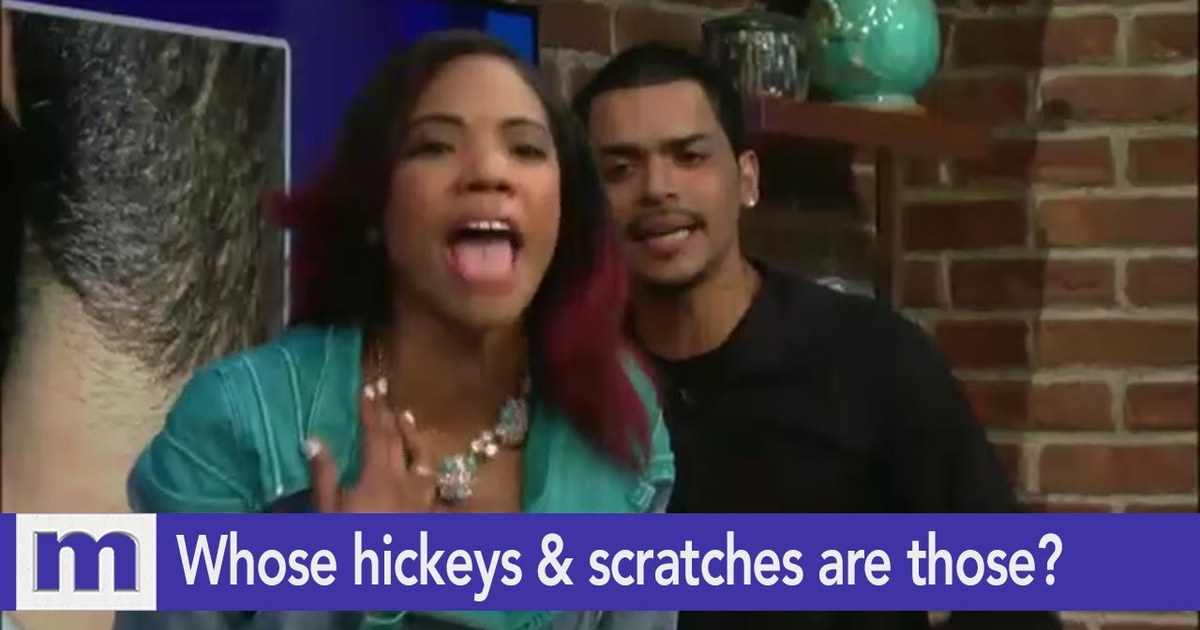
Now the third question. Did the hickeys and scratches come from cheating? No. Truth. This is the one that matters most, because it's the physical evidence that started the whole investigation. Charlene stood backstage and described it like a crime scene: Jason comes home after hours with Derek, passes out, gets drunk, goes to sleep, and then — the next day — there's a hickey on his neck and scratches on the back of his neck. His explanation? "Oh, that came from you." Her response? "No, it didn't. I know that did not come from me."
And when she pressed him, Jason offered the defense that has now entered Maury folklore: "I'm white, so sometimes when I scratch right here, I get a..." You can finish that sentence however you want. Charlene wasn't buying it then, and the polygraph just told her she should have. Truth. The marks weren't from cheating. The machine says so.
Question four. Has Jason slept with any other women he corresponds with on Facebook? No. Truth. This is where the secret Facebook page enters the chat. Charlene found a profile she didn't know about. Jason says he only has one page — J Vibe — and that Charlene blocked him, or he blocked her, depending on which sentence you're tracking. Maury even jumps in with his own Facebook confusion, because of course he does. The audience laughs. The machine doesn't. Truth.
[[AD]]
Question five. Has Jason had sexual contact with any other woman during his relationship with Charlene? No. Truth. That's the full sweep. Every accusation, every suspicion, every late-night spiral about Derek the wingman and the mystery Facebook page — the polygraph clears it. The audience applauds after each result, and by the final one, they're not just clapping. They're cheering for a man who walked into the studio as a suspect and walks out as a fiancé again.
Jason thanks Maury. He shakes his hand. It's the most polite moment in an hour of television that has featured a tattoo model, a pipe fitter, a secret Facebook profile, and a best friend accused of being a professional liar. You half expect a confetti drop. You don't get one. You get Charlene's face, which is doing something complicated.
Because here's the part the applause drowns out. Charlene said it clearly before the test: if he fails, he can have the ring. He can have the marriage license. And she's done. That was the deal. That was the line in the sand. But he passed. Every single question. So what now?
That's the real cliffhanger of this episode, and it's not the one the promos sold you. The promos sold you a cheater. The polygraph sold you a truth-teller. And Charlene is standing there holding a marriage license she picked up last week, a ring she was ready to hand back, and a fiancé who just proved — at least to the satisfaction of a machine and a studio audience — that he didn't do the thing she was most afraid of.
So the question isn't whether Jason passed. He did. The question is whether passing is enough. Charlene didn't say "if he passes, we get married tomorrow." She said "if he fails, I'm done." That's a one-way contract. It doesn't promise a happy ending. It just removes the exit. And in the world of Maury — a show that has been running since 1991, that has produced more paternity reveals than a hospital maternity ward, that turned "you are not the father" into a catchphrase and a dance — removing the exit is its own kind of drama.
Think about the architecture of this episode. It's a three-act play. Act one: the passion marks. Act two: the accusations, the fame, the wingman, the secret Facebook. Act three: the polygraph. And the polygraph is the only act where the audience gets to exhale. Every other segment was built on suspicion. This one is built on resolution. But resolution, on Maury, is never the same as closure.
If you've watched this show for any length of time — and if you're reading a guided tour of a Maury love triangle, you have — you know the pattern. The lie detector is not a therapist. It's a referee. It tells you who touched the ball last. It doesn't tell you whether the game was worth playing. Jason passed. Charlene has to decide what that means. And the cameras keep rolling.
That's the genius of the format. Maury doesn't end episodes. It pauses them. The ring is still in play. The marriage license is still valid. Derek is still somewhere, probably not watching, definitely not apologizing. And Charlene is still the woman who said she loves him, who forgave him once, who came on national television to get a lie detector test right before her wedding. She got her answer. Now she has to live with it.
And now go back and watch the opening again. Watch Charlene backstage, listing the hickeys and the scratches and the hours-long disappearances with Derek. Watch Jason walk out and immediately start talking over everyone. Watch Maury ask the first question and watch Jason's shoulders drop when the truth comes back clean. The whole episode is right there in the first three minutes. You just didn't know which parts were evidence and which parts were theater. Now you do.


