Part 2
Why Feuds Aren't the Real Worst — The Format Absorbs Them
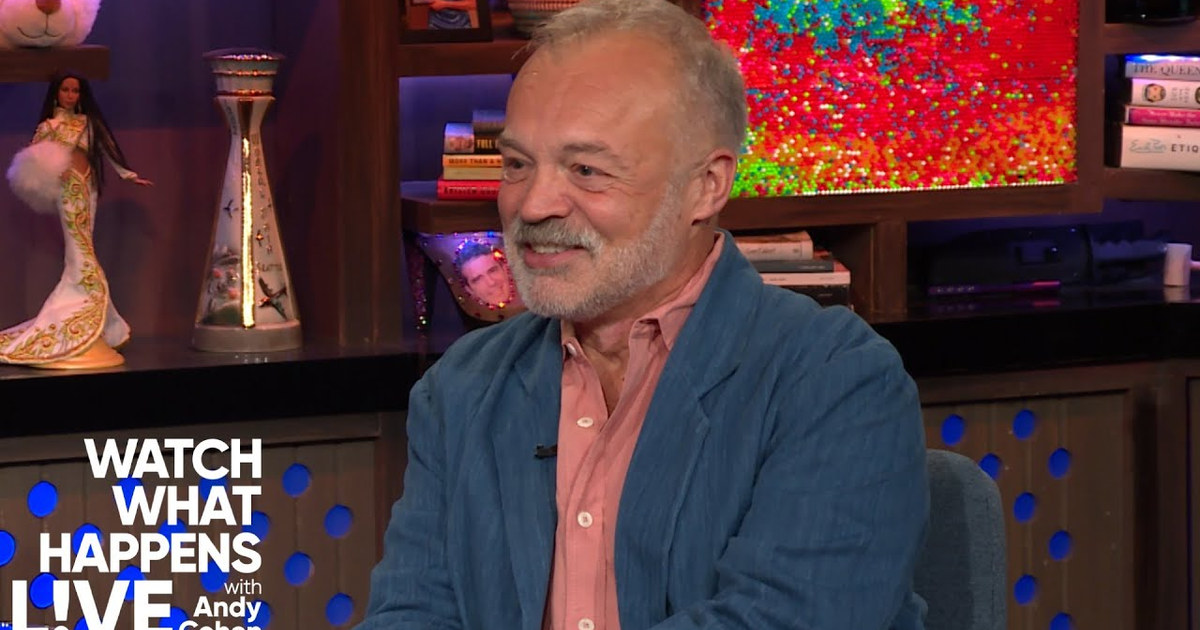
Here's the thing about a televised feud: it's not a bug. It's the whole operating system. When Graham Norton gets asked about the worst guest combo in his show's history, his first instinct is to reach for the clash — two people on the same sofa who visibly can't stand each other. And sure, that's memorable. But memorable isn't the same as damaging. A feud is a gift wrapped in tension, and everyone in the room — host, guests, network, even the audience at home — knows exactly what game is being played.
Norton himself gives us the tell. He says people used to ask him who the worst guest was and he never had an answer, because you don't want to offend anyone. That hesitation is the whole story. Feuds are safe to name. They're safe to joke about. They're safe to book again. Because a feud is entertainment, not damage. If the worst thing that ever happened on your couch was two celebrities throwing shade, you didn't have a worst — you had a Tuesday.
Let's start with the gold standard. Drew Barrymore on Late Show with David Letterman in 1995. She was 20 years old. Letterman was 48. What followed became one of the most replayed, most discussed, most parodied interviews in late-night history — the infamous 'flash' moment, the desk climb, the whole chaotic spectacle. Was it uncomfortable? Absolutely. Was it bad television? Not even close. It's still being talked about three decades later. That's not a failure of the format. That's the format working exactly as designed.
[[AD]]
The same logic applies to Kanye West's appearances on The Ellen DeGeneres Show throughout the 2010s. Those segments were unpredictable, raw, and frequently uncomfortable. They also generated massive ratings and endless viral clips. Ellen's team knew what they were getting. Kanye knew what he was giving. The audience knew what they were watching. Nobody was harmed. Everybody got exactly what they came for: a moment.
Then there's the 2019 Graham Norton sofa with Paul Rudd and Jimmy Fallon. Two genuinely likable guys, a clip that went viral for all the right reasons, and a host who orchestrated the whole thing with the precision of a conductor. That's the modern template. Friction doesn't have to mean hostility. Sometimes it's just two people with different energies bouncing off each other in a way that makes for great TV. The format absorbs it. The format thrives on it.
And here's the proof that the industry knows this: ratings spike after viral awkward moments. The View has built an entire brand on panelists who disagree. Watch What Happens Live with Andy Cohen turned the after-show into a franchise by leaning into the mess. Tension is not a liability on a talk show. It's a monetizable asset. Networks don't fear the awkward moment. They pray for it.
So when Norton finally names his worst guest, notice what he doesn't say. He doesn't name a feud. He doesn't name a clash. He names Harvey Weinstein. An 'awful person' who was also, by Norton's own account, an 'awful guest.' That's the real answer. Not two celebrities who couldn't stand each other — one person whose presence poisoned the entire room. The difference matters more than the consensus wants to admit. A feud is a scene. Weinstein was a stain.
Think about what that means. The worst guest combo isn't the one that makes you cringe for ninety seconds. It's the one that makes you complicit. When a show books someone who has been credibly accused of monstrous behavior and treats them like any other celebrity promoting a project, the format doesn't absorb the tension — it launders it. The couch becomes a credibility machine. The applause becomes a shield. And the audience, laughing along, becomes part of the problem.
That's why the consensus is wrong. Feuds are loud, but they're harmless. They're contained. They're even fun. The real worst combo is quieter and far more corrosive: a guest whose presence turns a light entertainment show into a reputation-rehabilitation service. Norton's answer — Weinstein — isn't just a name. It's a confession that the worst thing that can happen on a talk show isn't a clash. It's a cover-up.
[[VIDEO]]
If the worst combo isn't a clash, then it's a presence that turns the show into a laundering machine. And that's exactly the ground we're covering next. Because once you see it, you can't unsee it — and the consensus about what makes a bad talk show guest starts to fall apart completely.
The Real Worst Combo: When the Show Becomes Complicit
Forget feuds. Forget two movie stars refusing to make eye contact while a host sweats through his monologue. The genuinely worst guest combo isn't about chemistry at all. It's about a host plus a guest the industry already knew about — and the interview still happened anyway. That's the combo that should keep you up at night, not some frosty green-room standoff.
Graham Norton, who has hosted one of the most beloved couches in late-night TV for decades, was asked about his worst guest combo. He brought up someone he called an "odd man." That someone was Harvey Weinstein. Norton was careful. He didn't claim he knew anything at the time. He just said Weinstein was on the show and was an odd man. That's the transcript. That's the boundary. And we should respect it.


