Part 1
First, look at this. Look at the foam rectangle sitting right next to the massive, beige CRT monitor on the studio table. Oprah Winfrey is staring down at it with utter suspicion. To a modern eye, it is an unmistakable relic: a classic late-nineties mouse pad. But to the undisputed queen of daytime television in this specific moment, it is something entirely different. 'I thought it was a coaster,' she confesses without a hint of irony. Stop right there and absorb that image, because it tells you everything about the seismic cultural shift you are about to witness.
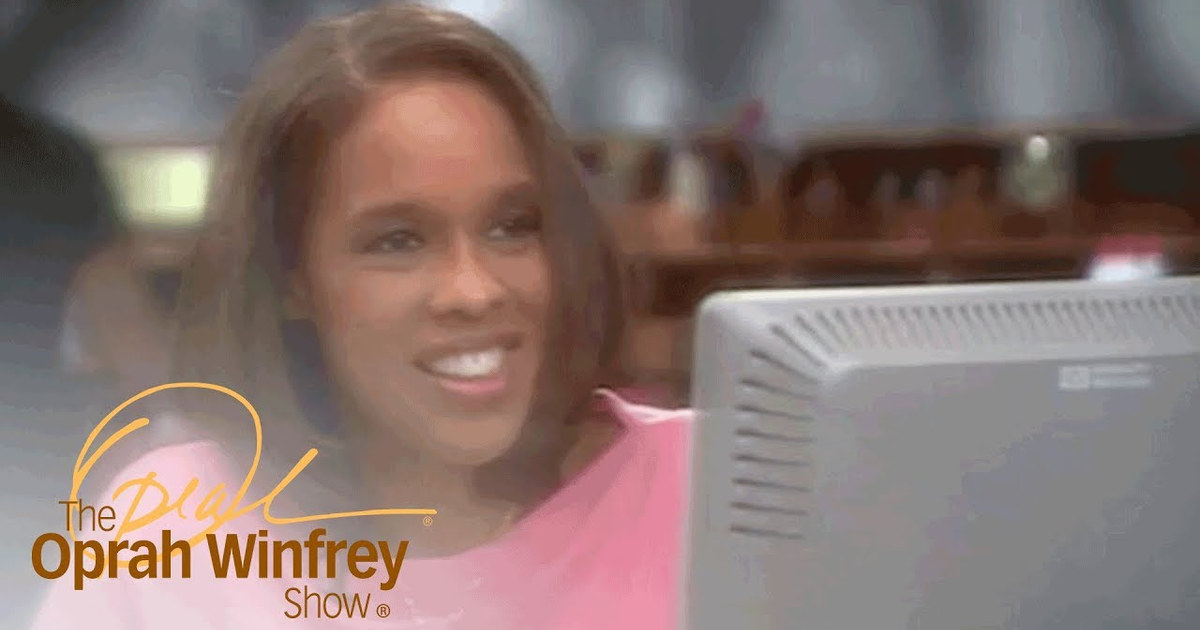
We are stepping directly into the vault to inspect one of the most delightfully human artifacts in modern media history. Long before smartphones lived in our pockets and algorithms dictated our attention spans, the World Wide Web was an intimidating frontier of dial-up tones and cryptic jargon. Millions of viewers across America were terrified of looking foolish in front of a computer screen. So what did Oprah do? She dragged herself and Gayle King into a brutal three-day tech boot camp, brought the television cameras along, and laid her digital ignorance completely bare for the world to see.
As your resident docent for this tour of daytime television gold, I am not going to march you through the obvious highlights in standard chronological order. Instead, we are taking an alternate route through the archive. We will examine the bizarre linguistic inventions, the surreal celebrity correspondence, and the unfiltered panic that made this boot camp an unforgettable masterclass in authentic television. Step closely, keep your eyes on the small details, and let us begin.
[[AD]]
Stop 1: The Hardware Standoff and the Mystery of the Power Button
Our first official stop brings us directly to the physical hardware itself. Look closely at the sheer bewilderment on display as Oprah and Gayle sit before their respective workstations. Today, tech onboarding is seamless; you pull a slab of glass out of a box, tap the screen, and facial recognition takes care of the rest. In this footage, however, the machine is a heavy, humming monolith of plastic and copper wire. The sheer physical presence of the desktop computer commands an immediate standoff between human intuition and machine architecture.
Enter our unsung heroes: Omar and Sophie, the personal trainers tasked with an almost mythical assignment. Can you imagine the pressure resting on their shoulders? They were hired to teach the most powerful woman in entertainment how to interface with the future, knowing full well she had zero baseline knowledge. Oprah admits right out of the gate: 'Boy, did they have a challenge in store for them because Gayle and I were not faking. We were true novices.' And the proof comes within seconds.
'I don't know how to turn it on,' Oprah confesses plainly. Gayle instantly echoes the sentiment: 'I don't either.' Notice how neither of them tries to laugh it off or disguise their confusion with rehearsed television banter. They do not poke blindly at the machine to look competent. They sit with their hands hovering in mid-air, baffled by a basic toggle switch. Why does this moment resonate so powerfully decades later? Because it captured an exact societal turning point where an entire generation had to swallow its pride and ask where the power button was hiding.
[[AD]]
Consider the dynamics between Omar, Sophie, and their superstar students. The trainers do not condescend or rush past the basics. They understand that before you can teach someone about bandwidth or HTML, you have to demystify the plastic rodent on the foam coaster. Watching Oprah realize that sliding a piece of hardware across a desk moves a tiny arrow on an illuminated glass box is like watching early humanity discover fire, only broadcast to tens of millions of homes in syndication.
Stop 2: The Rosetta Stone of Cyberspace ('Hook-em-ups' and 'Click-ems')
Now, let us move to the center gallery of our exhibit: the linguistic translation. Pay close attention to how human beings react when confronted with an entirely new conceptual framework. Before the vocabulary of the internet became second nature, early adopters had to invent vernacular crutches just to understand how different pages connected to one another. What happens when Oprah encounters a hyperlink for the first time? She throws standard tech manuals out the window and builds her own vocabulary.
'It was like learning a whole new language,' she reflects during the recap. When the concept of a hyperlink is explained, she does not memorize the technical term. She renames it on the spot: 'What's a link? A link is a hook-em-up.' Gayle immediately chimes in with the mechanics of how it functions: 'Well, you get to you through the click-em.' Oprah nods in firm agreement: 'That's right. You get to you through the click-em.' It is rhythmic, completely hilarious, and undeniably brilliant.
Why do these improvised terms matter to us today? Because they reveal how language evolves in real time under the pressure of technological revolutions. In the late nineties, words like 'hypertext,' 'URL,' and 'browser' felt cold and hostile to casual users. By translating a complex computer science concept into 'hook-em-ups' and 'click-ems,' Oprah did something extraordinary: she democratized the web for her audience. If you could understand clicking something to hook up to something else, you were no longer locked out of the digital age.
[[AD]]


