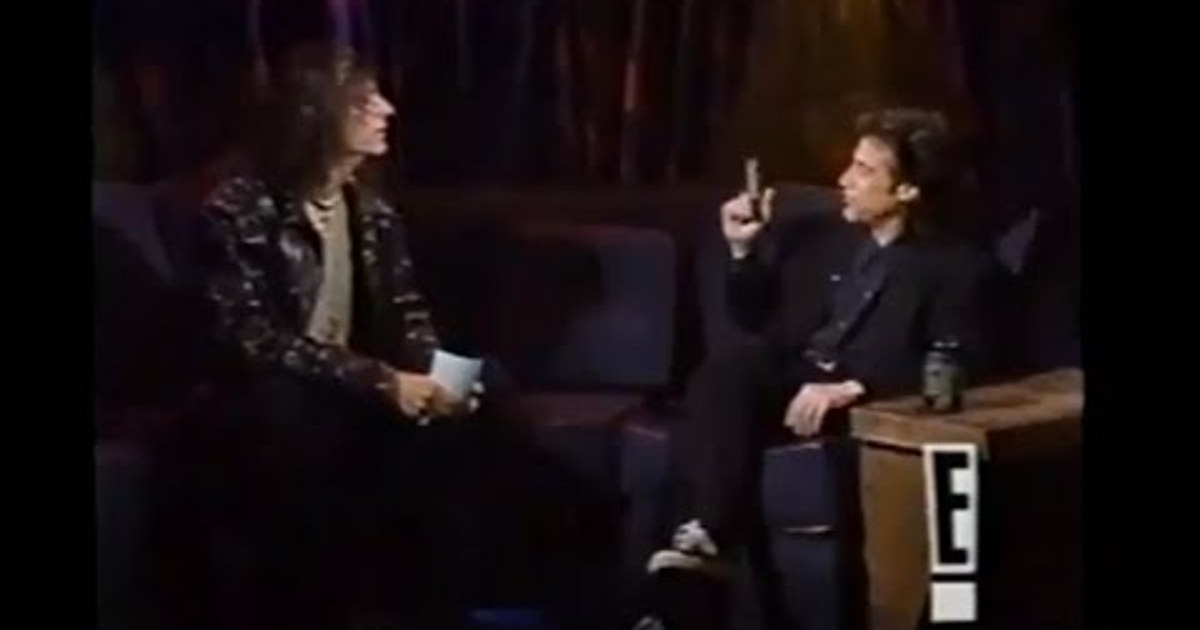
The mid-nineties broadcast interview was never an open-format chat show; it was an uncalibrated, high-wattage interrogation chamber designed to strip away performative polish until only raw psychological survival remained.
If you ever operated a camera on a second-unit crew in 1993, you knew the visual grammar of the era. Network television was drowning in soft, flattering three-point lighting setups designed to make celebrities look like porcelain dolls. Then you flip the channel to the syndicated chaos of The Howard Stern Interview, and the entire aesthetic turns into a bare-bulb police lineup.
Howard Stern sat behind a desk like an inquisitor with two hot Fresnels cooking his subject. Enter Richard Lewis, dressed in layers of black wool and nursing an ocean of neuroses. Lewis didn't bring talking points to promote his latest projects. He brought raw, unshielded anxiety, and Stern immediately turned up the heat.
[[AD]]
Beat One: The Wardrobe Ambush Under Hard Tungsten Keys
The tape rolls, the title card crashes, and before Richard Lewis can even adjust his posture on the couch, Stern fires a direct hit at his physical frame: 'Right now you look thin... you look like an idiot.'
That is the opening bell. There is no establishing pleasantry, no soft ramp-up, and zero fill light to cushion the blow. Stern treats Lewis's layered sweaters not as personal style, but as physical evidence of mental instability. Lewis counters instantly, calling the observation absurd while defending a jacket he insists Howard only hates out of pure jealousy.
From a staging perspective, this interaction is pure kinetic resistance. Most talk show guests wait for their cue, smile on their mark, and deliver pre-approved soundbites. Lewis refuses to accept the camera's center of interest. When Stern refuses to shake his hand properly, Lewis threatens to conduct the interview from behind the set couch just to break Stern's eyeline.
Stern pushes harder, demanding Lewis admit he despises doing stand-up comedy altogether. He compares Lewis's gaunt appearance to Roy Cohn's ghost and Tonto's sidekick in the same breath. Lewis shoots back with pure, unvarnished exasperation: 'My goal is to make you cry.' You cannot script this type of combustion; it only happens when two absolute masters of spoken rhythm collide in an unscripted medium close-up.
[[AD]]
Beat Two: The Red Carpet Forensic Breakdown
After threatening to kick Lewis off the stage during the commercial break, Stern returns to the desk and slams archival paparazzi footage onto the monitor like a prosecutor revealing crime scene Polaroids.
Stern demands the tape operator freeze and rewind a clip of Lewis arriving at a premiere alongside an impossibly glamorous date. He frames the footage as a total biological anomaly. 'If this isn't better than Cindy Crawford, I don't know what is,' Stern shouts, demanding to know how a self-loathing neurotic comedian lands women of that caliber.
This is where Lewis pivots from punchline to profound vulnerability. Under the harsh glare of the studio monitors, he admits the entire truth behind the image. He met her at a concert, got rejected immediately because she had a boyfriend, and stayed in the friend zone for four straight years before they ever dated.
Even deeper, Lewis confesses that celebrity romance didn't heal his underlying void. He explains going to therapy just to prove to himself that he had likable human qualities that existed outside of his stage fame. Stern wants to reduce the relationship to pure locker-room bravado, but Lewis insists on dragging the conversation right back into existential self-doubt.
[[AD]]
Beat Three: Late-Night Crossfire and Rorschach Inkblots
Stern abruptly pivots the lens toward the brutal 1993 Late-Night Wars, brandishing cards and demanding Lewis pick a side between David Letterman, Jay Leno, and Chevy Chase.
In 1993, network late-night television was an active war zone. Letterman was making his jump to CBS at 11:30 PM, Leno was digging into the Tonight Show desk, and guests were caught in the crossfire of exclusivity bookings. Stern presses Lewis on his loyalties, pointing out that Dave gave him over fifty appearances while Jay helped resurrect his stand-up career early on.
Lewis tries to navigate the political minefield with diplomacy, but Stern will not let him off the hook. He presses Lewis on rumors of blacklisting and gets him to admit he avoided Arsenio Hall purely out of loyalty to Letterman. Lewis openly jokes about the terror of crossing showrunners, quipping that he only avoids certain shows because he is afraid someone might murder him.
Just when Lewis thinks he has survived the corporate talk, Stern pulls out actual psychiatric Rorschach inkblots. Stern holds up the abstract black-and-white cards, demanding instant psychological readouts. Lewis doesn't miss a beat. He looks at the shapes and deadpans: 'No children or marriage,' followed by identifying another symmetrical blot as 'two lesbian poodles.'
[[VIDEO]]
Even while plugging his upcoming roles—starring alongside Don Rickles in Fox's Daddy Dearest and playing Prince John in Mel Brooks' Robin Hood: Men in Tights—Lewis refuses to slip into promotional mode. He treats every single second on that set as a desperate fight to maintain his dignity while giving Stern the best television possible.
[[AD]]
What to Watch For: The Visual Breakdown
When you revisit this clash, keep your eyes on the physical blocking and editing rhythm rather than just the jokes. Notice how the director cuts to extreme close-ups every time Lewis starts fidgeting with his collar. The production intentionally denies him a wide safety net, trapping him in the frame to maximize the claustrophobia.
Watch Stern's eyeline. He rarely looks straight into the studio camera; he keeps his gaze locked directly on Lewis like a director pushing an actor through an unscripted breakdown. That tension forces Lewis to abandon the practiced cadences of his stage act and react purely on instinct.
Notice also the incredible story about David Brenner that Lewis drops near the end. When Lewis was twenty-four, broke, and desperate to quit his day jobs to pursue stand-up full-time, Brenner handed him a thousand-dollar check on pure friendship. That single act of generosity anchored Lewis's entire life in comedy, providing the real emotional bedrock beneath all the neurosis on display.
Modern talk shows are rehearsed to the second, with PR managers approving every beat before the red light ever illuminates. This exchange between Stern and Lewis proves that television is at its absolute best when the setup is hostile, the lighting is hard, and two brilliant minds have no choice but to battle it out in real time.


