Part 1
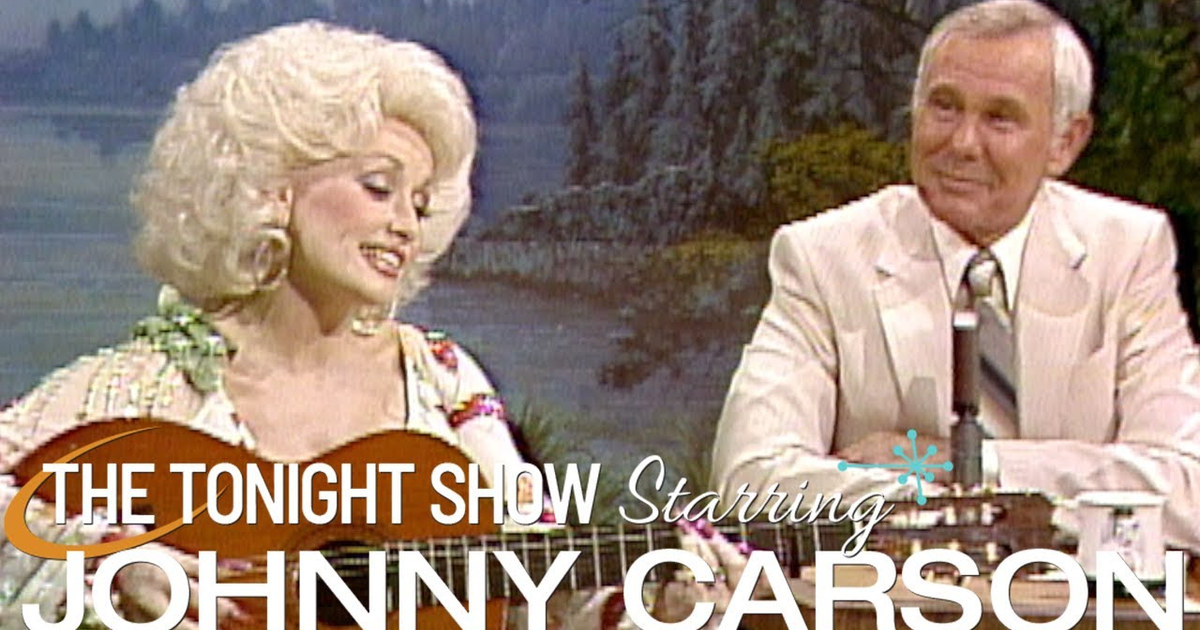
You have probably seen the archival clip circulating across algorithmic feeds: a burst of blonde spun glass, rhinestones flashing under harsh cathode-ray television lighting, and Johnny Carson leaning back on his Burbank desk, visibly charmed yet noticeably disarmed. At first glance, it reads like another charming bit of vintage late-night fluff from the twilight of the 1970s. But look closer at that exchange, and a much sharper, more fascinating question emerges: How does an artist engineer a complete crossover into the dominant American monoculture without allowing that monoculture to swallow them whole?
In 1979, the late-night couch was not merely a promotional stopover on a pre-packaged press junket; it was the imperial court of American entertainment. Johnny Carson was its undisputed monarch, an arbiter of taste who could turn an unknown stand-up into a household name overnight or quietly consign a veteran performer to the obscurity of the regional circuit. To sit across from him was to enter a high-stakes psychological fencing match disguised as casual living-room chatter. Most guests played defense, desperate to survive the host’s legendary deadpan barbs and sardonic glances to the camera.
Dolly Parton, however, never played defense. When she walked onto the set of *The Tonight Show* in late September 1979—flanked on the guest roster by Henny Youngman and author Joseph Wambaugh—she was standing squarely at the cultural Rubicon. She was systematically dismantling her image as a regional country-syndication sidekick and rebuilding herself into a global multimedia phenomenon. Watching her operate in this masterclass of an interview is to witness an artist who fully understood the transactional mechanics of fame long before modern public relations turned celebrity into an algorithmic science.
[[AD]]
The Sovereignty of the Couch: Subverting the Regional Caricature
The segment begins with Carson acknowledging the electric atmosphere in the room, marveling at the fervent loyalty of Parton’s audience. Dolly instantly turns the compliment back outward with disarming grace, attributing her devoted following entirely to Carson’s platform: 'Well, I think it's all because of the Johnny Carson show.' It is a textbook deferral, reminiscent of the calculated modesty Joan Didion chronicled in *The White Album* (1979), where public figures in post-sixties California learned to wrap ironclad ambition in sunny, domestic vernacular. Parton makes Carson feel like the architect of her fortune while subtly reminding the millions watching at home that she belongs on this stage by sovereign right.
Carson brings out a telegram from Sevierville, Tennessee—Parton’s hometown—signed by Mayor Gary Wade, Vice Mayor Carl Hatcher, and Alderman Luther Gilbert. The city officials had written directly to Carson, inviting him to attend the formal dedication of the Dolly Parton Parkway on October 6th. The setup is ripe for the traditional Hollywood condescension toward rural America: the coastal late-night host ribbing the hillbilly prodigy about a strip of asphalt in the Great Smoky Mountains. Carson leans in, joking about inspecting the 'off-ramp,' a double entendre that would have derailed a less agile performer.
Instead of bristling or blushing, Parton seizes the joke and pushes it to its comic extreme before Carson can land a punchline. 'That was one of the greatest compliments that I've had paid to me,' she beams, 'and you might know they picked the flattest stretch of ground! No curves, no hills, straightaway!' By beating Carson to the punchline regarding her famous silhouette, she weaponizes her own iconography. She takes the latent sexism of the medium and converts it into self-authored folk humor, completely controlling the frame.
[[AD]]
She immediately pivots from the road dedication to her own civic and philanthropic reality, noting that the unveiling coincided with her annual scholarship benefit concert in Sevierville to fund higher education for local children. When Carson tries to counter by joking that he was once featured on the cover of the Burbank telephone directory, Parton hits him with an effortless ad-lib: 'Of course, that’s just for a year, isn't it? But see, they're not going to take the freeway up.' It is a brilliant, kinetic exchange. In less than three minutes, she has honored her roots, asserted her permanence over transient Hollywood tokens, and out-quipped the sharpest monologue man in television history.
This tactical mastery was essential in 1979. Country performers had historically entered coastal media spaces either as rustic oddities or as mournful, tragic troubadours. Think of the tragic, melancholic framing of Ronee Blakley’s character in Robert Altman’s *Nashville* (1975). Parton utterly rejected both archetypes. She refused to apologize for the rhinestones, the hair, or the Tennessee twang, but she paired them with an executive-level intellect that refused to be patronized.
Depositions and Diets: Navigating the Industry Crossfire
The conversation takes a sharp turn when Carson brings up the specter of serious legal trouble. Rumors had been swirling in the press that Parton was facing potential jail time—a tabloid frenzy stemming from a bitter, multi-million-dollar breach-of-contract lawsuit filed by her former mentor and duet partner, Porter Wagoner. When Parton had walked away from Wagoner's syndicated empire in 1974 to chart her own artistic destiny, the Nashville establishment viewed it as an act of apostasy. By 1979, the legal warfare had reached a boiling point, culminating in mandatory depositions where failure to answer sensitive business inquiries could have resulted in contempt citations.
[[AD]]
For any other star, having a high-profile lawsuit aired on national television would be an unmitigated public relations disaster. Yet Parton handles the inquiry with the breezy composure of someone discussing a minor traffic ticket. 'There was one point in time if I didn't answer a certain number of questions that I faced a jail sentence,' she tells Carson, before dropping a deadpan tag: 'It might be amazing to go to jail and see what it's like.' She diffuses the institutional terror of the legal system by turning it into a vaudeville premise, imagining herself as the prison warden.


