Part 4
So when you scroll past the next catfish clip, remember: the absence isn't a bug. It's the hook. The format is doing something to you. And now that you see the machinery, you can't unsee it.
Stop Five: The Rewatch — Go Back to the Opening
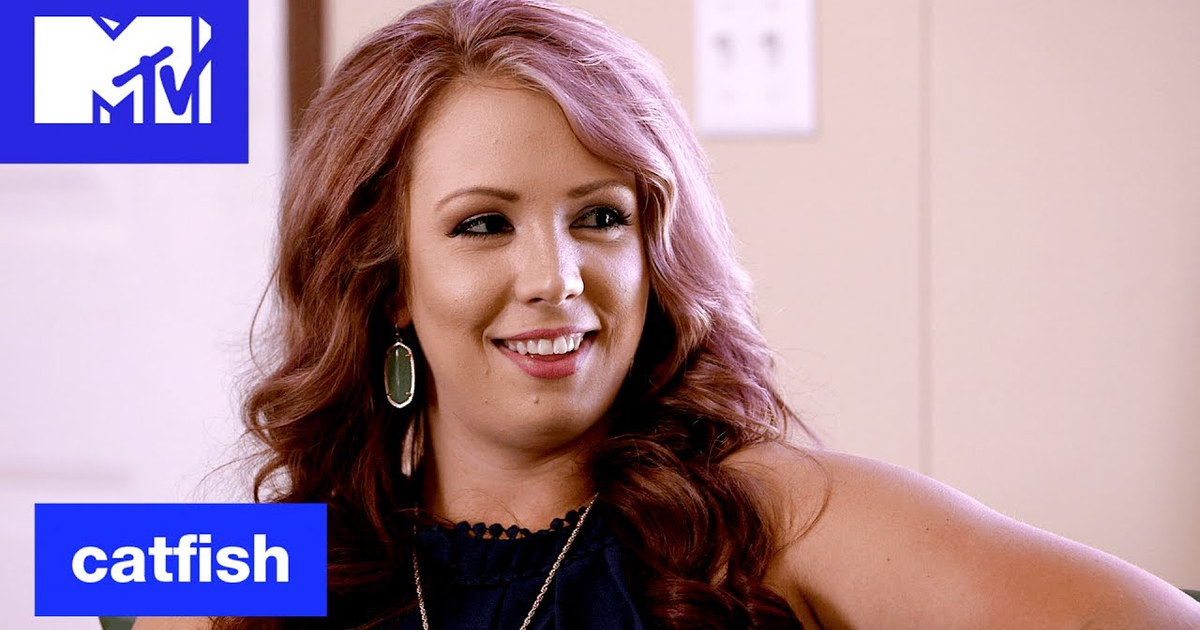
Now that we've walked the whole clip, go back to the very first thing she says. "His smile — definitely his smile. That you've never seen." You heard it as a sweet opener the first time. Hear it again now. That line is the hook, the evidence, and the warning, all stacked in one breath. She leads with the smile because it's the thing she's holding onto. It's also the thing she can't actually verify. A smile in a photograph is not a smile you've seen. It's a smile someone sent you.
That's the trick of this whole clip, and it's why it works as a piece of storytelling. It starts with affection — "it just like reaches out and like grabs my heart" — and it ends with "I don't get a good feeling about this." That's a full arc in under two minutes. Beginning, middle, end. Warmth to doubt. And the doubt doesn't arrive because someone yells at her. It arrives because a friend asks one calm question about a photo.
So let's ask the question the transcript never answers. Is Brandon real? The clip never says. Nobody confirms it. Nobody disproves it. What the clip does say is that the friend doesn't believe him — "the most likely explanation is that he's not the guy in the pictures" — and the woman is starting not to. That's it. That's all the evidence we get. And honestly? That's enough to make you uneasy, which is exactly the point.
This is the moment to notice how the format itself is doing work on you. If this clip is part of a series — and the shape of it strongly suggests it is — then the next stop is the reveal. The call. The confrontation. The moment the pictures stop being enough. That's the episode where someone finally says a name out loud, or a reverse image search comes back with a stranger's face, or a phone number traces to a burner. We don't get that here. We get the last quiet beat before it. The held breath.
And that's why the rewatch matters. On first watch, you're watching a woman talk about a crush. On second watch, you're watching a woman talk herself out of one. Every line she says about him — the smile, the pictures, the mudfest weekend — is a line she's using to keep the story alive. "Maybe he was just watching you and like too nervous to say hello." "Maybe his truck broke down." She's not lying to the friend. She's negotiating with herself. And the friend, to their credit, doesn't push. "I don't want to scare you." "I'm not scared." But she is. You can hear it.
This is the docent's last note, and it's the one I'd underline. The lesson of this clip is not "don't trust anyone online." That's lazy and it's not true — people meet online every day and it works. The lesson is: notice the timeline. The mudfest photo didn't match the story. He invited her to a weekend festival, she went, he never showed, she left, and then suddenly he's there in a picture from that same weekend. That's not a coincidence you explain away. That's a seam. And seams are where these stories always start.
Think about how many films and shows have taught us this exact lesson, and how rarely we apply it. In Catfish — the 2010 documentary directed by Ariel Schulman and Henry Joost, runtime 87 minutes, the one that gave the whole phenomenon its name — the reveal isn't a dramatic confrontation. It's a slow accumulation of mismatches. A song that doesn't exist. A address that doesn't line up. By the time Nev Schulman actually meets the person behind the profile, the audience has already done the math. The movie just confirms it. That's the structure this clip is borrowing, whether it knows it or not.
Or take The Tinder Swindler, the 2022 Netflix documentary directed by Felicity Morris, runtime 114 minutes. Same architecture. You don't get the gut-punch first. You get the romance first. You get the trips, the gifts, the future being sketched out. Then you get the timeline. Then you get the doubt. Then you get the women comparing notes and realizing the story only worked because none of them had the full picture. That's what a friend does in this clip. They hold up one piece of the picture and say, wait.
And then there's the fictional version — the one that's been teaching this lesson since 2014. Gone Girl, directed by David Fincher, runtime 149 minutes. Not a catfish story exactly, but a story about how a person can become a narrative. How the version of someone you're presented with is a construction. How the smile in the photo is a performance. The difference is that in Gone Girl, the construction is deliberate and the audience is in on it. In this clip, the construction might be deliberate and the woman is not. That's the horror. Not that someone lied. That someone might be lying right now, and she's still hoping they're not.
So here's where we leave the tour. Go back and watch the opening again. Not the whole clip — just the first thirty seconds. Watch her face when she says "his smile." Watch how she lights up. Then watch the last thirty seconds, when she says "I don't get a good feeling about this." Same person. Same clip. Same smile. The only thing that changed is that someone asked a question about a photo. You'll hear the doubt in her voice the first time now, because you know where it's going. That's the whole trick. That's the whole lesson. And that's the whole reason you're going to watch the next one.


