Part 4
Because here's what the test actually proves: biology. That's it. A cotton swab and a lab report confirmed what Jade had been saying all along. It did not undo the twelve months Henry spent treating his daughter like a stranger. It did not erase the birthday parties he skipped, the diapers he refused to change, the bedtime stories he never read. Aviana is one year old. She has never had a real father. And no dramatic Maury reveal can retroactively fix that.
[[AD]]
Henry's celebration is telling. He isn't celebrating Aviana. He's celebrating his own vindication. "I told you" isn't a declaration of love — it's a victory lap. He wanted to be right more than he wanted to be a dad. And now that he's been proven right, he expects the world to applaud. But the applause shouldn't be for him. It should be for Jade, who fought for her daughter while Henry fought against her.
A Year of Neglect Is Not Hesitation — It's Abandonment
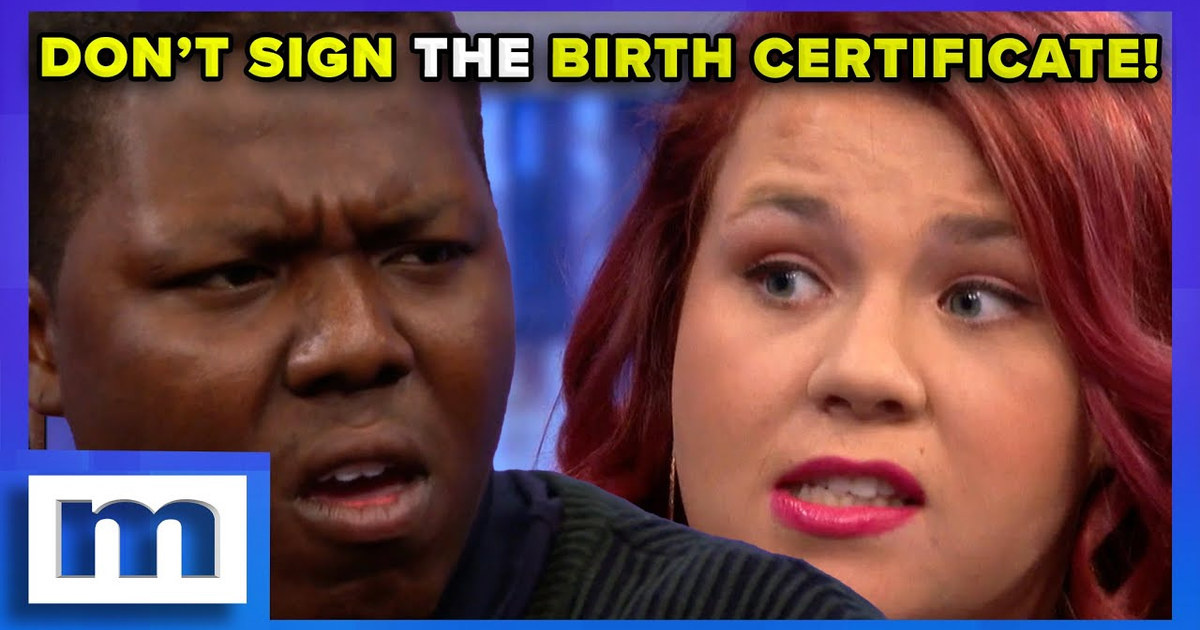
Let me give Henry his due, because the case for doubt is genuinely strong. Jade lied. Not about the paternity — she was telling the truth about that — but about everything surrounding it. She slept with another man while she and Henry were together. Her own sister, Heather, went on record calling her a liar: "I'm positive that Aviana is not Henry's baby. Jade may be my sister, but she is a liar." The timing was suspicious. The circumstances were messy. When Jade told Henry not to sign the birth certificate in the delivery room, she handed him a live grenade. His initial hesitation wasn't just understandable — it was human. Any man in that position would have questions.
But there's a difference between hesitation and abandonment. Hesitation lasts a few weeks. It looks like asking for a test, setting boundaries, maybe stepping back until you know. Abandonment lasts a year. It looks like refusing to change a single diaper. It looks like watching your infant daughter scream and run to her mother because she doesn't recognize you. It looks like pouring every ounce of love into your eight-month-old son while ignoring the one-year-old daughter sitting in the same room, wondering why Daddy won't look at her.
Henry didn't just doubt. He decided. He decided Aviana wasn't his before the test ever happened, and he treated her accordingly. That's not caution. That's a verdict.
Wanting to Be a Father Isn't the Same as Being One
When Maury asked Henry point-blank, "You want to be her father?" Henry said yes. He said he wanted that same feeling he had in the delivery room. And maybe he meant it. Maybe, in that moment, he genuinely wanted to turn the page. But wanting is not enough. Wanting is the easy part. Every deadbeat dad in America wants to be a father right up until it's time to actually do the work.
The work looks like this: changing diapers at 3 a.m. Reading "Goodnight Moon" for the four hundredth time. Learning which stuffed animal she can't sleep without. Showing up to daycare pickup even when you're tired. Earning her trust one small moment at a time, because right now, Aviana doesn't know Henry. She knows a man who comes and goes, who looks at her like a problem to be solved. That's the man she's scared of. And that fear didn't come from nowhere — it came from a year of being ignored.
Henry can't just announce that he's her father and expect her to fall into his arms. He has to prove it. Not with words. Not with a DNA test. With presence. With patience. With the boring, exhausting, unglamorous daily grind of parenting. That's the real test. And it doesn't happen in a TV studio.
The Maury Show Doesn't Follow Up — But We Should
Here's the uncomfortable truth about Maury: the show has been running paternity reveals since the 1990s, and it has never once followed up on what happens after the cameras stop rolling. The format is built for climax, not consequence. We get the scream, the cry, the "I told you." We don't get the years that follow. We don't see the fathers who get the result they wanted and still fail to show up. We don't see the kids who grow up wondering why they were treated like a court case instead of a child.
And there are plenty of those stories. The Maury Show has aired thousands of paternity episodes, and the pattern repeats: a man denies a child, demands a test, gets the result, celebrates — and then disappears. The test was never about the child. It was about winning. Henry's celebration has that same energy. He got his answer. But Aviana didn't get a father. Not yet.
The audience should follow up. We should ask the question the show never asks: what happens next? Does Henry step up? Does he learn to change a diaper? Does he show up for Aviana the way he shows up for his son? Or does he ride off into the sunset, vindicated, while Jade raises another child alone? The DNA test gave Henry the truth. What he does with it is still an open question.
Jade Isn't Innocent — But She Was the One Fighting
Let me be clear: Jade is not a saint. She lied. She put Henry in an impossible position. She humiliated him on national television. She made choices that would make any partner question everything. If you're looking for a villain in this story, she's an easy target. But here's what the consensus keeps missing: Jade fought for her daughter. Henry fought against her.
Jade came on the Maury Show not to shame Henry, but to prove that Aviana deserved a father. She sat there and took the accusations, the sister's betrayal, the audience's skepticism, all so that her daughter might have a chance. Henry came on the show to prove he was right. Those are not the same goal. One is about a child. The other is about pride.
So here's the uncomfortable question we should be asking: why did Henry need a DNA test to love his own child? Why did he need a lab report to change a diaper? Why did he need Maury Povich to tell him what Jade had been telling him for a year? The answer is that Henry never wanted to be a father to Aviana. He wanted to be right. And now that he's been proven right, the real work begins. The test is over. The fatherhood hasn't started.
Next time, we'll look at other Maury Show paternity episodes where the father was wrong — and what happened to the kids afterward. Because the reveal is never the end of the story. It's just the part they show you.


