Part 3
Henry even admits it on the stand. When Maury asks what he does for Aviana to help her open up, Henry says, 'I try to get close to her. She don't want me.' That's not a strategy. That's a shrug. You don't earn a one-year-old's trust by trying once and giving up. You earn it by showing up every single day until she stops flinching. Henry never put in the reps. Then he blamed the baby for the score.
Now look at the son. Henry says his eight-month-old son gets straight happy when he walks in the room. He says the boy has a fit when he leaves. Henry treats that as proof of paternity — see, my son knows me. But all it proves is that Henry actually parents him. He does everything for that boy, as Jade puts it. He shows up. He interacts. He's a presence in that child's life. The son's joy isn't biology lighting up. It's familiarity. It's the same mechanism that makes Aviana run to her mom. She's bonded to the person who shows up for her. Henry just isn't that person.
The difference between the two children's reactions is entirely explained by Henry's behavior. Same father, same DNA, two completely different relationships. If biology were the deciding factor, both kids would react the same way. They don't. That's not a paternity test. That's a parenting audit, and Henry flunked it in front of a national audience.
Some people will push back. They'll say Aviana's fear is innate — that she senses Henry isn't her dad on some deep, primal level. That's not science. That's superstition. Babies don't have DNA detectors. They don't run a cheek swab in their heads. They respond to familiarity and care. If a stranger walked into your living room and reached for your toddler, she'd scream too. That doesn't mean the stranger isn't related to her. It means she's a baby acting like a baby.
This is the same logic that fuels every 'kids just know' myth on daytime TV. It sounds profound. It's actually just a way to dress up abandonment as intuition. Henry didn't earn Aviana's trust, so he decided her fear was evidence. That's not a conclusion. That's a cop-out.
[[VIDEO]]
The Maury Show has been running this play since the '90s, and the pattern is always the same. A father rejects a child, the test comes back positive, and the studio erupts. But watch what happens after the reveal. The kid doesn't magically bond with the man who spent years denying them. The damage is already done. You can't undo abandonment with a piece of paper. DNA doesn't erase the months or years of absence. It just confirms what the child already learned: this person wasn't there.
That's the part the audience misses while they're cheering. The test result is a plot twist. The rejection is the actual story. Henry spent a year treating Aviana like a stranger, and now he wants credit for a paternity result. The show profits from these emotional explosions — that's the business model. But the real drama isn't Maury reading the envelope. It's a one-year-old girl who learned to fear a man who should have been her father. That's not a mystery. That's a choice Henry made every day.
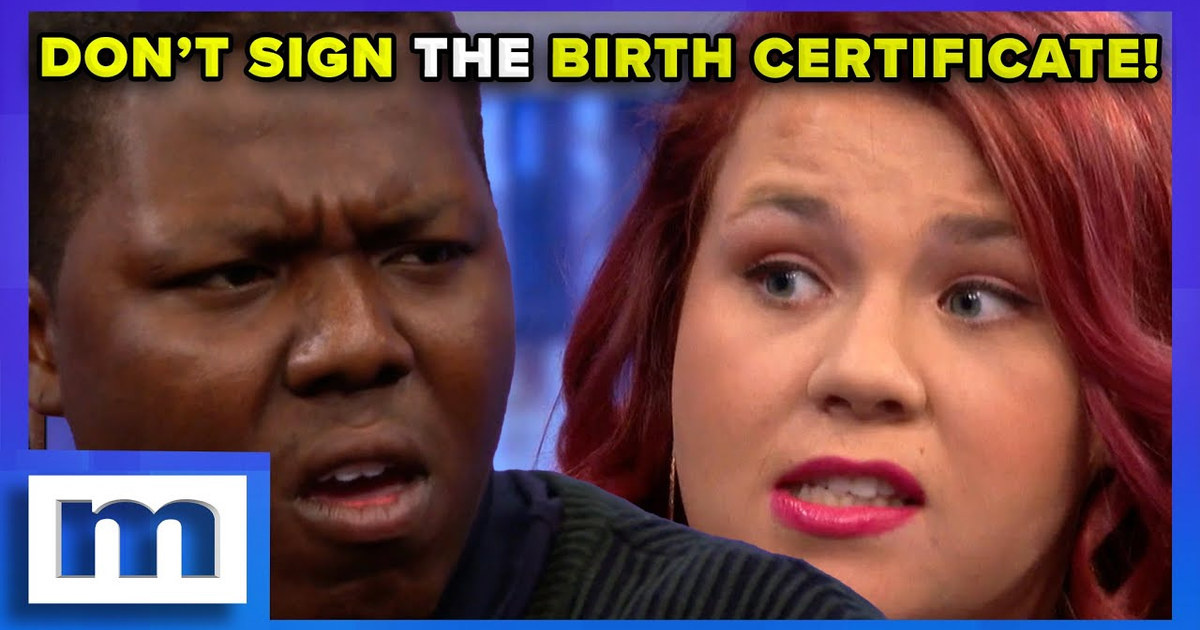
To be fair, Jade's delivery-room confession was brutal. Telling Henry not to sign the birth certificate and admitting she slept with another man — that's a nuclear move at the worst possible moment. It was poorly timed and devastating. Henry had every right to be shaken. Anyone would be.
But here's the thing. A mistake is a moment. Henry's response was a year. One is a bad decision made in a hospital room under stress. The other is a sustained choice to reject a child who had no say in any of it. Jade's confession lasted a few minutes. Henry's rejection lasted Aviana's entire life. Those aren't equivalent. Not even close.
Henry ripped up the birth certificate and tossed it in the trash. That was one moment of anger. But then he kept walking past Aviana every day. He kept doting on his son while his daughter watched. He kept letting his family whisper in his ear. That's not a reaction. That's a pattern. And patterns are what children actually remember.
The DNA test is coming. Maury will read the results, and Henry will either be the father or he won't. But the test can't answer the real question: what kind of father has Henry already been? Aviana's fear isn't proof of anything except that Henry wasn't there. The next section is about what the result actually means — and why a positive test doesn't fix a year of neglect.
The DNA Test Proved Henry Was the Father — But It Didn't Fix His Fatherhood
The moment arrives. The envelope opens. Maury Povich looks at the card, then at Henry, then at the studio audience, and delivers the line that has launched a thousand memes: "In the case of one-year-old Aviana — Henry, you are the father."
Henry explodes. "I told you! I told you!" He pumps his fist, hugs strangers, and beams like he just won the Super Bowl. Across the stage, Jade collapses into tears and screams the exact same words back at him: "I told you! I told you!" It's a moment of pure, unfiltered TV — the kind of clip that gets clipped and shared and captioned for years. And if you only watch that thirty-second highlight, you'd swear this is a happy ending. The truth is messier. This isn't a finish line. It's a starting line, and Henry is already a year behind.


