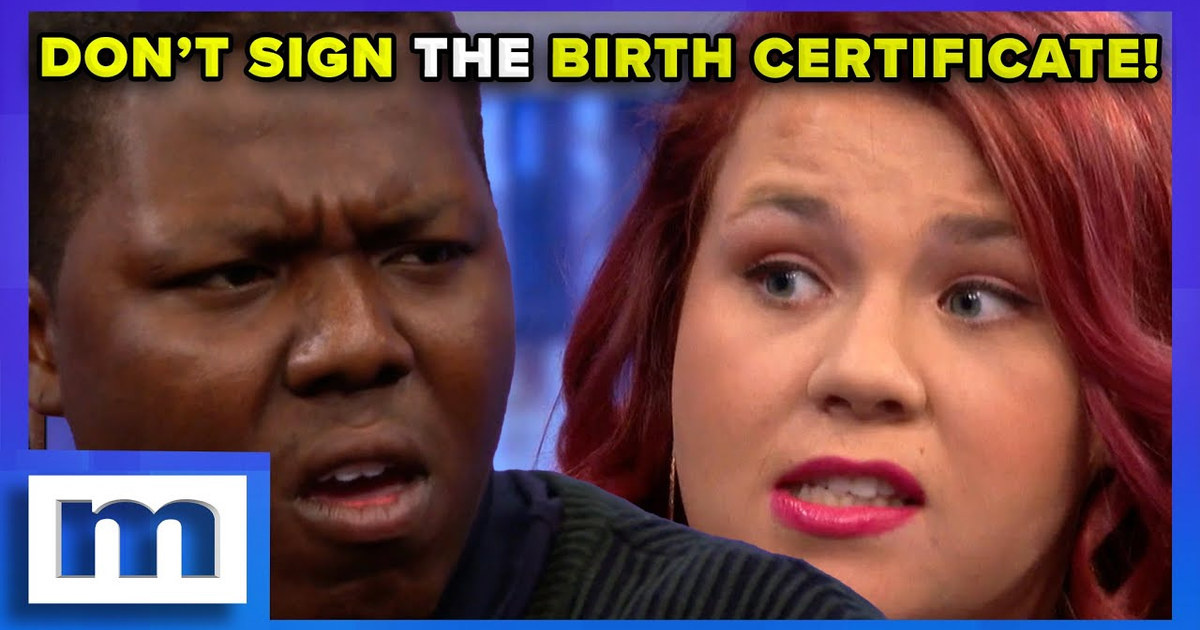
Part 2
Henry's Double Standard: One Son He Claims, One Daughter He Rejects
Let's talk about the eight-month-old elephant in the room. Henry has a son with Jade. He does everything for that boy. Every bottle, every diaper, every late-night cry—he's there. But Aviana? He won't change a diaper. He won't read to her at night. He won't help. His excuse? 'My son gets happy when I walk in the room.' Meanwhile, Aviana screams and runs to her mom. So Henry treats his son like a prince and his daughter like a stranger. And he thinks that's evidence she's not his. Newsflash: that's not evidence. That's neglect.
Here's the circular logic that would make a philosophy professor weep. Henry never bonded with Aviana because he decided she wasn't his. Then he points to her fear as proof she isn't his. But why is she scared? Because he's a stranger. Because he never tried. Because he treated her like an intruder while showering her brother with affection. That's not a paternity test—that's a self-fulfilling prophecy. And it's cruel.
This isn't the first time a daytime talk show has hosted this exact tragedy. Maury Povich has been delivering DNA results since 1991, and the pattern is always the same: a father rejects one child while embracing another, usually because of rumors or doubt. Steve Wilkos, Jerry Springer—they've all aired episodes where a man's emotional distance becomes a weapon. The DNA test reveals the truth, but the damage is already done. The child grows up knowing they were the one who wasn't wanted. Henry's story is a textbook case.
Now, let's contrast Henry with Jade. Jade may have lied. She slept with another man and told Henry not to sign the birth certificate. That's a betrayal. But she stayed. She raised both kids. She fought to prove Henry was the father. She came on national television to say, 'I know who I slept with.' Henry checked out. He ripped up the birth certificate and tossed it in the trash. He walked away from his daughter. So who's the real villain here? The one who lied, or the one who abandoned?
Henry says Aviana 'looks at me like I'm a straight stranger.' Of course she does. He is a stranger. He never changed her diaper. He never read her a bedtime story. He never got down on the floor and played with her. He was in the delivery room, he cut the umbilical cord, and then he decided she wasn't his. That's not a child's job to fix. That's a father's job to show up. And Henry never did.
I'll give Henry this: his family was in his ear. His mom, Jade's sister Heather—they poisoned the well. Heather even said, 'I'm positive that Aviana is not Henry's baby.' That's a heavy accusation. But Henry is a grown man. He should be able to separate family gossip from his own child. He chose to listen. He chose to believe the rumors over the little girl who needed him. That's not a mistake. That's a decision.
So before we crown Henry the victim, remember this: he had a son he claimed and a daughter he rejected. He had a choice. And he chose wrong. Next, we'll dig into the psychology of why Aviana is scared of Henry—and why that fear isn't proof of anything except his failure as a father.
Aviana's Fear Isn't Proof — It's a Symptom of Henry's Neglect
Henry sits on the Maury stage, leans into the mic, and delivers what he clearly believes is his ace: Aviana acts like he's a stranger. Every time he gets close, she runs to her mom. She screams bloody murder. Case closed, right? That's not his kid. The audience has heard this logic a thousand times. It's the same move every reluctant father makes when he's looking for an exit. But if you actually listen to what Henry is describing, he's not describing a DNA problem. He's describing a parenting problem. And he's the one who created it.
Jade fires back before the applause dies down: he never interacts with her. He won't change a diaper. He won't read to her at night. He won't help. Simple stuff. That's not a woman making excuses. That's a checklist of everything a one-year-old needs to feel safe around an adult, and Henry has done none of it. Aviana isn't rejecting her biological father. She's rejecting a man she has no reason to trust. She's a baby. She doesn't know from DNA. She knows from faces, voices, and arms that hold her. Henry's arms aren't in that rotation.
This is where the consensus gets lazy. People watch the clip, see Aviana flinch, and nod along with Henry. They treat a toddler's fear as forensic evidence. It isn't. It's a report card. And Henry is failing the class.
[[AD]]
Child psychology isn't complicated here. Babies bond through consistent care. They attach to the people who show up — the ones who feed them, change them, rock them at 3 a.m., and read the same board book forty times in a row. That's it. That's the whole mechanism. If Henry never changed a diaper, never read to her, never held her, of course she's wary. He's a large, unfamiliar man who occasionally drifts into her space and then leaves. From Aviana's perspective, he's not dad. He's a guest who overstays.


