Part 1
Two Audiences, One Episode: The Genre Fan and the Craft Nerd
There are two kinds of people who stumble onto a Maury Povich paternity episode. The first is the genre fan. They came for the red-hair DNA drama, the screaming, the lie detector, the moment the envelope opens. They want the emotional payload, and they want it now. The second is the craft nerd. They came to watch the machinery: the pacing, the beat structure, the way a single line gets repeated until it becomes a hook. If you're reading this, you're probably both. And that's the only honest way to watch an episode like this one.
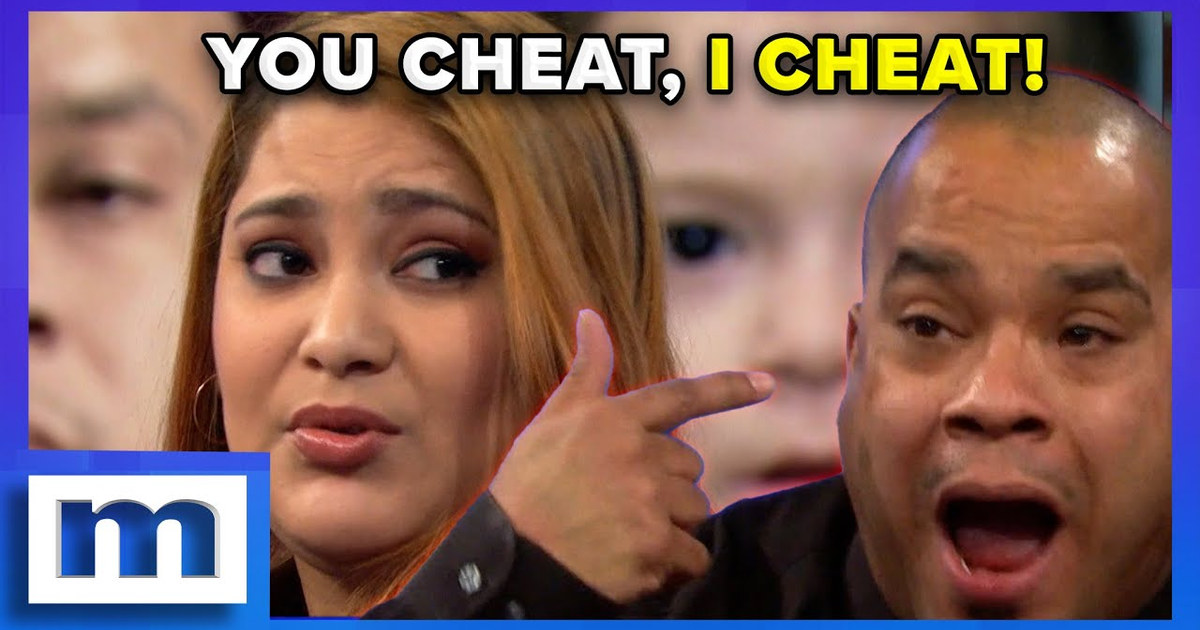
The case itself is almost too perfect. Maria and her boyfriend Jose hit a rocky patch four years ago. Jose cheated. Maria felt angry and rejected, so she slept with another guy. Soon after, she discovered she was pregnant with her now 3-year-old daughter, Jacqueline. Jacqueline was born with red hair and light skin. Jose lost it at the hospital. He screamed at the nurse to give the baby a DNA test. He denied the child. He accused Maria of cheating. Maria says Jacqueline looks exactly like him — same nose, same mouth, same facial expressions — and she's absolutely positive he's the father. She also admits she cheated in the past, but says she hasn't stepped out since. So Maury gave her a lie detector test. Jose was at the hospital when Jacqueline was born. He looked at her and demanded a DNA test because 'it wasn't his.' That's the setup. The episode aired circa 2018–2020, exact date unverified. But the date doesn't matter. The structure does.
Now, if you're the genre fan, you already know why this works. It's a classic Maury Povich paternity test episode, the kind that made The Maury Povich Show a daytime institution. The red hair is a visual cheat code — it's a genetic anomaly that lets the audience play detective. The lie detector adds a second layer of suspense. The baby, Jacqueline, is the innocent at the center. And Jose's hospital outburst gives us a villain we can boo. It's a three-act tragedy compressed into a segment. You don't need to know anything about filmmaking to feel the tension. It's engineered to hit you in the gut.
But here's where the craft nerd leans in. Look at the transcript. Lines repeat. 'Jose went through a rocky period' appears three times. 'She slept with another guy' appears three times. 'So soon after that, Maria discovered she' appears three times. That's a transcription artifact — the captioner looped the audio. But it's also a perfect metaphor for how talk-show beats are built. The repetition isn't a bug; it's a feature. Every time Maria says 'I'm absolutely positive,' the show reinforces her certainty. Every time Jose's accusation is restated, the conflict sharpens. The transcript accidentally exposes the skeleton of the genre: loop the stakes, loop the emotion, loop the question. Will the DNA test prove Jose is the father? The genre fan feels the loop as drama. The craft nerd sees it as a rhythm section.
This is where the two audiences split. The genre fan wants the verdict. The craft nerd wants the verdict too, but they also want to know how the verdict is framed. They notice that Maury doesn't just ask questions — he performs them. 'So Maria, give me the number one reason why he doesn't think he's the father.' That's not a question; it's a prompt. It's a cue for Maria to deliver her line. 'He says that because she has red hair and she's light-skinned, but she looks exactly like him.' That's not just testimony; it's a rebuttal to Jose's entire case. The craft nerd sees the engineering: the host as moderator, the guest as witness, the audience as jury. The genre fan just sees a woman fighting for her family.
And then there's the lie detector. The genre fan hears 'lie detector test' and thinks: finally, proof. The craft nerd hears 'lie detector test' and thinks: a second narrative device. It's not just a test; it's a threat. It raises the stakes for Maria. If she passes, Jose looks like a fool. If she fails, her credibility collapses. The show doesn't need to show the results immediately. It can cut to commercial. It can stretch the tension. That's pure craft. And it's the same craft you see in movies like A Few Good Men (1992, dir. Rob Reiner, 138 min) — the courtroom confrontation is engineered to delay the payoff. Or in 12 Angry Men (1957, dir. Sidney Lumet, 96 min), where the entire film is a single conversation that loops and escalates. Maury's show is doing the same thing, just in 10-minute chunks with commercial breaks.
But let's not pretend the genre fan is shallow. The genre fan knows exactly what they came for: the moment Jose hears the result. The genre fan knows that the red hair is a symbol. It's a visual marker of doubt. It's the thing that made Jose scream at a nurse. It's the thing that turned a hospital room into a crime scene. The genre fan doesn't need to analyze it; they feel it. And that's valid. Because the craft nerd's analysis only works if the emotion lands. If you don't care about Maria and Jacqueline, the structure is just empty scaffolding. The genre fan brings the heart. The craft nerd brings the blueprint. You need both.


