Part 1
Every documentary clip that catches fire online splits its audience clean down the middle within the first three seconds. You have the genre viewer, who logs on seeking the pure, unfiltered dopamine hit of a human miracle: the tears, the airport embrace, the eerie providence that feels plucked from an early 2000s studio melodrama. Then you have the craft viewer, sitting back with an analytical squint, watching the pipeline of information: how the narrative information is staged, how the beats are paced, and whether the emotional payload is earned by clean structural mechanics or brute-force sentimental manipulation.
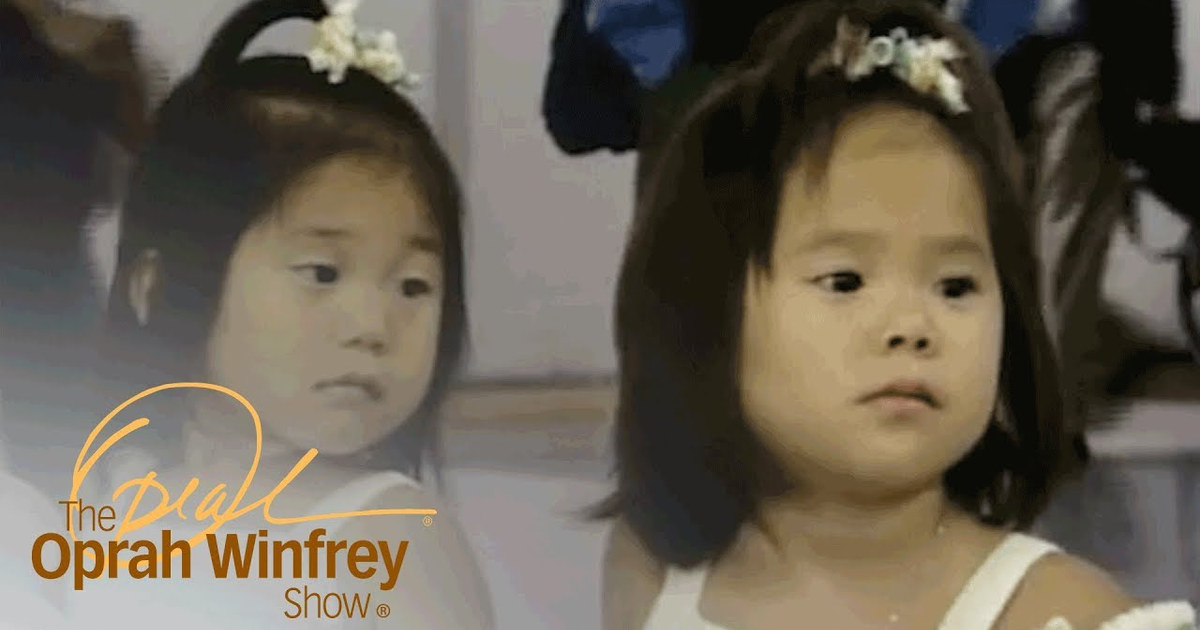
The television segment detailing the case of Holly Funk, Diana Ramirez, and two toddler girls named Mia is an extraordinary stress-test for both factions. If you arrive looking for genre, it is an immaculate tearjerker about biological sisters separated at a factory gate in China and reunited by pure chance across hundreds of miles of American interstate. If you arrive looking for craft, it is a masterclass in compressed storytelling, statistical improbability, and the forensic parsing of biographical metadata.
To fully appreciate what is happening here, you cannot choose one lens over the other. The emotional wallop does not work without the logistical absurdity of the facts, and the technical fascination falls completely flat if you do not care about the human stakes at the terminal gate. Let us open the codebase and see how this narrative actually compiles.
[[AD]]
The Initialization Phase: Parallel Threads in Illinois and Florida
From a genre perspective, this story opens like a classic fairy tale split across two parallel tracks. In Illinois, Holly and Doug Funk are managing a household of five children. By every rational metric, their family roster is filled. Yet they experience that distinct, unexplainable spiritual prompting to open the adoption queue one more time, looking toward Asia. Meanwhile, down in Florida, Diana and Carlos Ramirez are raising two boys. Diana describes a persistent, unyielding ache for a daughter—a phantom limb of maternal longing that domestic comfort simply refused to soothe.
For the craft viewer, this is the initialization of two decoupled processes running in different environments. What the segment does exceptionally well is establish baseline constraints. Holly’s household is not desperate for a child to complete their identity; they are already at capacity, meaning their decision to adopt is an anomaly introduced into a stable system. Diana’s household is seeking balance, specifically drawn to a dossier involving a child with a medical vulnerability—a ventricular septal defect, colloquially known as a hole in the heart.
These conditions matter because they govern the processing time. Holly’s adoption clears in July 2004, bringing home a thirteen-month-old infant. Diana’s adoption requires additional logistical clearance due to the medical classification, finalizing in October 2005 when the child is two years and four months old. In narrative terms, the timeline desynchronizes. If both adoptions had occurred simultaneously, the matching patterns might have triggered immediate bureau-level recognition. Instead, the two-year latency buffer ensured that both files were archived independently.
[[AD]]
The Name Collision: The Computational Absurdity of 'Mia'
Here is where the genre audience reaches for tissue paper and the craft audience opens a terminal to calculate combinatorial odds. Both families, working in isolation across different states, independently assigned their adopted child the identical, relatively short, three-letter moniker: Mia. Not Maria, not Michelle, not Maya. Mia.
Holly details how the name arrived without prior precedent: her husband felt an impression to adopt from Asia, she received an inexplicable mental association with the number two, and the specific phonetic token 'Mia' presented itself out of nowhere. Diana, hundreds of miles to the south, looked at a solitary photograph of a toddler with a cardiac condition and experienced an identical flash of intuition. Without consulting baby books, family lineage, or mutual acquaintances, both mothers assigned the exact same string value to distinct adoption records.
In programming, we call this a catastrophic hash collision. When two disparate inputs generate the identical hash output, the system assumes an error or an underlying architecture that has not yet been documented. The segment lets this detail land with maximum impact because it requires zero editorial embellishment. The producers do not need sweeping orchestral crescendos when the raw transcript provides an empirical impossibility that defies the normal distribution curve.
[[AD]]
The Message Board Query: A SQL JOIN in a Human Interest Forum
For the narrative craft purist, the turning point of this story is not a dramatic confrontation or an investigative breakthrough; it is an unindexed database query conducted on a mid-2000s Web 1.0 message board. Holly and Diana belonged to the same online adoption support group—a digital watercooler where parents traded notes on paperwork, pediatric clearances, and development milestones.
Diana casually drops a social broadcast into the forum: her daughter Mia is turning three in June, and the family is planning a celebratory Disney cruise. Holly, scanning the feed, notices the name and the age bracket. She drops a benign response into the thread: her daughter Mia is also turning three in June, specifically on June 13th. Diana replies with an escalation that changes the entire conversation: her Mia turns three on June 12th.
This is where the storytelling shifts from domestic slice-of-life to forensic thriller. You have two variables matched: name and birth date (within twenty-four hours). But in the context of Chinese adoptions during this era, birth dates assigned to foundlings were frequently estimates generated by welfare directors based on dentition and weight. The date alone is a soft correlation. What Diana asks next is the hard foreign key: 'Where was she found?'


