Part 5
And here's the takeaway for the craft nerd: a real, genuinely frightening night in New York got compressed into a single line, in a single scene, in a single 109-minute movie, and that line is still the funniest threat in a comedy from 1980. The folklore and the screenplay are the same artifact at different resolutions.
That's the pipeline running clean. Next, we open up the machine itself — the storytelling, the performance choices, and the engineering that turns a country singer into a screen presence worth studying frame by frame.
Pure Craft: Storytelling, Performance, and the Engineering of a Legend
Let's switch gears. We've had our fun with the genre fan's delight in Dolly's New York misadventure. Now it's time to put on the craft nerd's glasses. Because what Dolly does in that interview isn't just telling a story — it's engineering a narrative. And if you're a genre fan, don't worry: you're still getting the Dolly lore. You're just getting it with a side of structural analysis. So let's break down the architecture of a Dolly Parton anecdote, the performance of an interview, and the filmmaking craft of 9 to 5. By the end, you'll see why both audiences win.
The Architecture of an Anecdote
Dolly's New York story is a masterclass in comedic structure. She sets the scene with precision: 'the late 60s, early 70s,' she says. 'I had just started making it in country music.' That's your exposition. She introduces her co-star: her childhood friend Judy Ogle. 'We've been friends since we were little,' she says. That's your character establishment. Then she raises the stakes: 'We didn't have any money.' That's your inciting incident. From there, she escalates: they check into a hotel, they go out, they come back to find their luggage in the hall, they're locked out. That's rising action. The punchline? 'They thought we were hookers.' That's the climax, delivered with perfect timing. And then she adds a coda: they wait in the lobby, and then they walk down 42nd Street, where they're mistaken again. The story cuts off in the transcript, but you can bet there's a payoff. She leaves you wanting more. That's not an accident. That's craft.
What makes this anecdote work? Concrete details. 'We just got one room.' 'I looked cheaper then than I even do now.' 'Judy didn't look any better.' These aren't just funny lines — they're vivid, specific images. In screenwriting, we call that 'show, don't tell.' Dolly shows us two country girls, naive and broke, wandering into a city that doesn't understand them. She doesn't say 'we were out of place.' She shows it. She also uses self-deprecating humor to keep the audience on her side. She's the butt of the joke, but she's in control of the joke. That's a delicate balance. If you're a craft nerd, you recognize this as a classic comedic technique: the reliable narrator who is also the victim. If you're a genre fan, you just think, 'Damn, Dolly is hilarious.' Both reactions are correct.
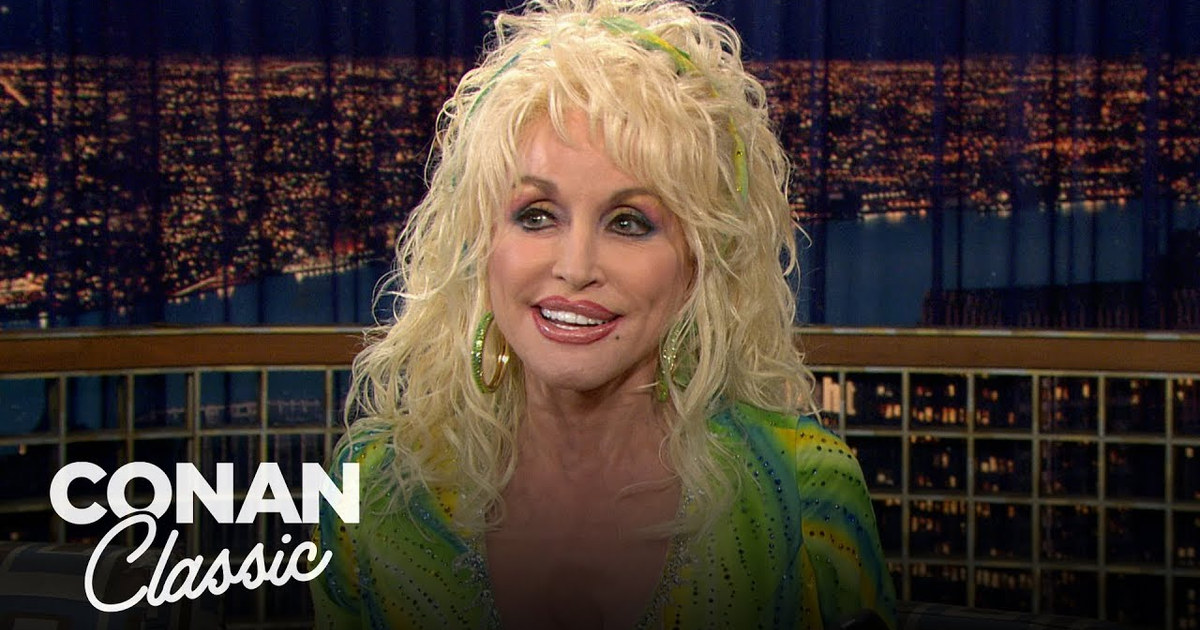
The host's reactions are part of the performance. The host says, 'You look incredible.' Dolly responds, 'I got all dressed up in my tie-dye to represent my hippie songs.' That's a quick, witty comeback that reinforces her brand. The host says, 'I love you.' Dolly doesn't miss a beat. She's playing off the host, using their energy to fuel her own. The pacing of the interview is like a well-tuned algorithm: compliment, question, story, laugh, repeat. Dolly controls the tempo. She pauses before punchlines. She lets the host's laughter breathe. She builds suspense: 'We didn't know where to go.' You can almost hear the audience leaning in. That's the engineering of suspense. She's not just telling a story; she's performing it. And the host is her scene partner. For the craft nerd, this is a study in timing and audience engagement. For the genre fan, it's just Dolly being charming.
Compare this to stand-up comedy. Dolly's story has a setup ('We came to New York'), a turn ('They thought we were hookers'), and a punchline ('They threw our luggage out'). She uses the rule of three: they checked in, they went out, they came back to a locked door. Three beats. She uses contrast: Smoky Mountains vs. New York City. She uses callbacks: 'I looked cheaper then than I even do now' is a callback to her own appearance, which the host just complimented. That's sophisticated. She's weaving threads together in real time. If you're a craft nerd, you can diagram this story like a flowchart. If you're a genre fan, you're just laughing. And that's the beauty: the same story works on both levels.
But here's the thing that separates a good anecdote from a great one: the emotional core. Underneath the jokes, Dolly's story is about being judged. Two young women, trying to make it in the big city, are mistaken for sex workers and thrown out of their hotel. That's humiliating. But Dolly doesn't play it for pity. She plays it for laughs. That's a choice. She's in control of the narrative. She decides how the audience feels. That's the power of a storyteller. For the craft nerd, that's point of view. For the genre fan, that's Dolly being resilient. Both are true.
From Life to Screen
Now let's talk about how Dolly's real-life experiences inform her acting. Enter 9 to 5, released in 1980, directed by Colin Higgins. This was Dolly's first major film role. She played Doralee Rhodes, a secretary who is sexually harassed by her boss, Franklin Hart Jr., played by Dabney Coleman. The film also stars Jane Fonda as Judy Bernly and Lily Tomlin as Violet Newstead. The plot: three women team up to get revenge on their sexist boss. Dolly drew on her own experiences of being underestimated and objectified in the music industry. She has said she based Doralee on herself. In the film, Doralee is a smart, capable woman who is treated like a dumb blonde. Dolly knew that feeling intimately. That authenticity is why the performance works. She's not just acting; she's channeling. For the craft nerd, that's method acting lite: drawing on personal experience to inform a character. For the genre fan, it's Dolly being Dolly on screen. Both get what they want.


