Part 3
Two audiences, one output stream. The genre folk get the legend, the songs, the accent, the tie-dye. The craft folk get the structure, the compression, the career arc, the production credits.
That's the trick of a great interview. It ships one artifact and it renders correctly on both screens. Nothing is dumbed down for the casual viewer, and nothing is padded to impress the technical one.
Which brings us back to lower Manhattan, two broke country girls, a locked hotel room, and a gun. Next: the New York misadventure in full — how it went down, how it ended, and how a bad night in the wrong decade became a permanent line in a 1980 movie that still plays.
Genre Craft: Dolly Parton's New York Misadventure and the Birth of a Movie Line
If you came to this story for the genre — the rhinestones, the twang, the Smoky Mountain mythology, the whole country-music canon — this is your half of the conversation. Everything below is genre material: the kind of anecdote that gets passed hand to hand at the Grand Ole Opry, retold on late-night couches, and eventually baked into a hit movie.
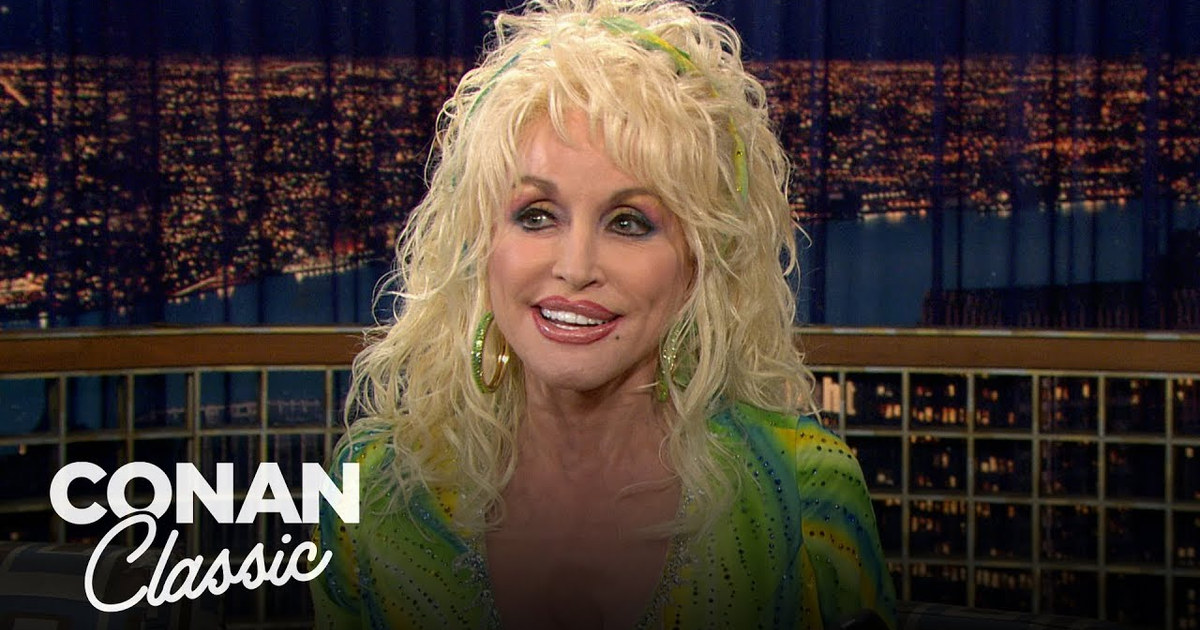
[[VIDEO]]
Here's what a genre fan already suspects and a craft nerd is about to learn: with Dolly Parton, the folklore and the production pipeline are the same object. A genuinely frightening night in New York in the late '60s or early '70s became a laugh. The laugh became a line. The line became a scene. The scene became a 1980 comedy that was one of the biggest hits of its year.
So let's answer both audiences at once. The genre fan wants to know: who was she then, what did the culture clash feel like, and is the legend true? The craft nerd wants to know: how does a real event get converted into a screenplay line? Both questions get answered by one hotel room, one purse, and one sentence.
From Smoky Mountains to NYC
Dolly Parton was born January 19, 1946, in Sevier County, Tennessee — Locust Ridge, in a one-room cabin, the fourth of twelve children. Her childhood economy was hand-me-downs, an outhouse, and a family that worked. The Smoky Mountains aren't a branding decision she made at a desk. They're a location in her memory, and she's never filed them away.
In 1964, the day after graduating from Sevierville High School, she got on a bus to Nashville. By 1967 she had a spot on The Porter Wagoner Show, the syndicated country TV institution that put her in front of living rooms across the South. Singles like "Dumb Blonde" and "Just Because I'm a Woman" were putting her on country radio, and both titles tell you something about how she planned to handle the persona she'd spend the next sixty years subverting.
Now, country music in the late '60s was a tight system — Music Row, the Opry, a narrow radio format with strict interfaces. And a huge amount of its content was built around a single migration story: leaving the holler for the city and getting burned by it. So when Dolly says, "all country girls want to go to the city," she isn't being cute. She's describing a genre trope she was personally living inside of.
So she and Judy Ogle — her best friend since childhood back in Sevierville, and still her friend today — went to New York. It was the late '60s or early '70s. She was just beginning to make it, which in country music at that stage means you are not making much. Which is why two young women checked into a hotel and took one room.
"I looked cheaper then than I even do now," she says. "And Judy didn't look any better." Watch the delivery. That's a woman who now owns a theme park telling the story from the cheap seats. The self-deprecation isn't a media-trained pose — it's the structural spine of how she narrates her own life.
They went out to look around the city. They came back to find their luggage sitting out in the hallway and the door locked against them. Management had taken one look at these two and decided they were hookers. They had no reservations back home, so they asked if they could at least leave their stuff in the lobby — and then just waited. Two Tennessee girls parked in a New York lobby with nowhere to be.
Eventually they wound up out on the street after dark, in an area where the sidewalks were not kind. That's where the second half of the anecdote starts, and it's the part that country fans have been repeating for decades.
The Gun Incident
A man wouldn't leave her alone. In the version of this story she has told many times over the years, he kept following, kept touching, kept steamrolling every version of "no" she had available on a New York sidewalk. So she reached into her purse, pulled out a gun, and said: "If you touch me one more time, I'm gonna shoot you."
The resolution is comedy, not tragedy. He bolted. She and Judy got out of there. She tells it now with a laugh, and in her telling, the whole night is a bit — and she's the punchline. A country girl with a pistol in her handbag in Midtown Manhattan is a Chekhov's gun loaded with a joke.


