Part 1
The Genre Fan and the Craft Nerd: Two Ways of Watching a Legend
There are two kinds of people who hit play on an interview with Dolly Parton. This piece is for both of them, and I refuse to rank them.
The first viewer came for the genre. Country music. The Smoky Mountain twang. The woman who wrote "Jolene" and "I Will Always Love You" and then watched the world do whatever it wanted with them. That viewer wants the rhinestones, the stories, the songbook, the legend at full volume.
The second viewer came for the craft. They want to know how a story gets built, how a line lands, how a performer holds a room for an hour without a script. They watch an anecdote the way an engineer reads a stack trace — looking for where the thing was assembled and why it didn't crash.
Here's the fun part. This particular conversation feeds both of them, and it never once picks a favorite. That's rarer than it should be.
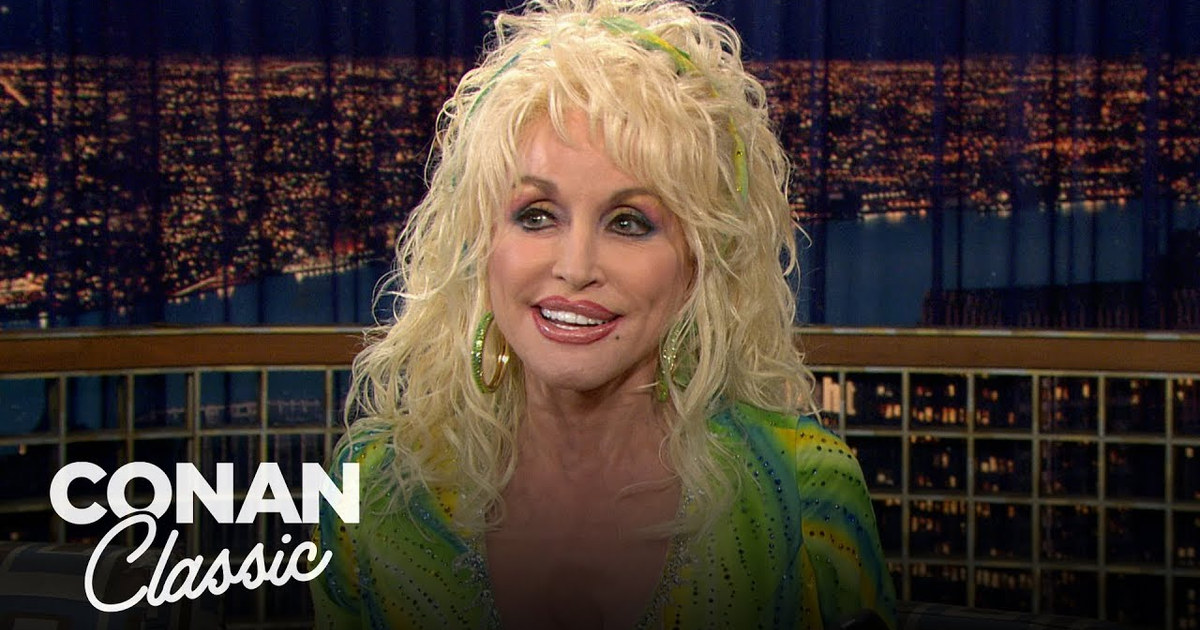
The setting is New York City. The guest is Dolly Parton, and she shows up in tie-dye. Her own words: she got "all dressed up" in her tie-dye "to represent my hippie songs." That's an outfit doing three jobs at once — costume, joke, and thesis statement.
The interviewer opens by noting how gloomy the city has been, and how Dolly walked in and brought the sunshine with her. Then there's the green. The host mentions loving green "because you're Irish," and Dolly rolls with it instantly, folding the color into the conversation like it was always part of the plan.
Quick note on me, since voice matters: I write code for a living and long blog posts for fun. I don't read film credits like a fan. I read them like a build log. Who compiled this? What dependencies did it pull? Where did the bugs get patched?
Which is exactly why filmmaking is the best art form for that habit. It's engineering with a soul. A movie is a pipeline — script, casting, blocking, lighting, edit, score — and every stage can quietly break the whole thing. When it works, you can't see any of the seams. That's a good build.
So here's how I'm running this piece: two passes, alternating. One pass for the genre brain, one for the craft brain. Same footage, two render targets. Because Dolly Parton, it turns out, is a case where the genre product and the craft product are literally the same artifact.
Let's start with the genre side, because context is a dependency and you don't ship without it.
Dolly Parton was born on January 19, 1946, in Sevierville, Tennessee — Smoky Mountains territory, one of twelve children, raised in a one-room cabin without electricity or running water. That's not trivia. That's the origin commit for everything she's ever written.
She was singing on local radio as a kid. By her early teens she was appearing on The Cas Walker Show out of Knoxville, a regional country and variety program that functioned as her first real stage. Local broadcast, tiny audience, zero budget. Everyone starts on a dev server.
In 1959, at thirteen, she cut "Puppy Love" for Goldband Records. It went nowhere nationally. But the file existed. She had a record, a label, and a reason to keep going.
She moved to Nashville the day after she graduated high school in 1964. Not a week later. Not after saving up. The day after. If you've ever wondered whether the ambition is real or just a press-kit invention, that detail settles it.
Monument Records signed her in 1965 and initially tried to sell her as a pop singer. It didn't take. The breakthrough was "Dumb Blonde" in 1967 — a song that sounds like a joke and is actually a threat. Genre fans will recognize that move instantly, because she never stopped doing it.
Also 1967: she joined The Porter Wagoner Show. That's the gig that put her in front of a national country audience every single week. It's also the partnership that produced some of the most durable duets in the genre's history.
Then the run starts. "Joshua" in 1971. "Jolene" in 1973. "I Will Always Love You" in 1974 — written the same era, and smart people still argue about which one is the better song.
By 1977 she'd crossed over hard with "Here You Come Again," and the country-only lane stopped being enough to describe her.
So when she says, in this interview, that her first New York trip happened when she'd "just started making it in country music," she is not being modest. She is being accurate. That's a woman with receipts.
Now the craft pass. Listen to how she tells it. Decades later, she still has the decade, the year range, her traveling companion's full name, the sequence of events, and the exact emotional beat of each step. That's not nostalgia. That's a database with clean indexes and a very good query planner.
The story itself: late sixties, early seventies, her first time in New York City. She explains the motivation in one sentence — "all country girls want to go to the city." That's a logline, delivered for free.
Her companion was Judy Ogle, a friend since childhood. Not an entourage. Not a manager. Her best friend from back home. That detail does a lot of work, and it does it in four words.


