Part 4
The family timeline runs underneath all of it. Moynahan gave birth to their son in 2007. Brady married Bündchen in 2009. They had two children together. On paper, this is a PR nightmare: a pregnancy announcement, a new relationship, a blended family, all under the flashbulbs. The transcript points out that even what could have been a fiasco didn't dent his popularity. I'll tell you why in craft terms.
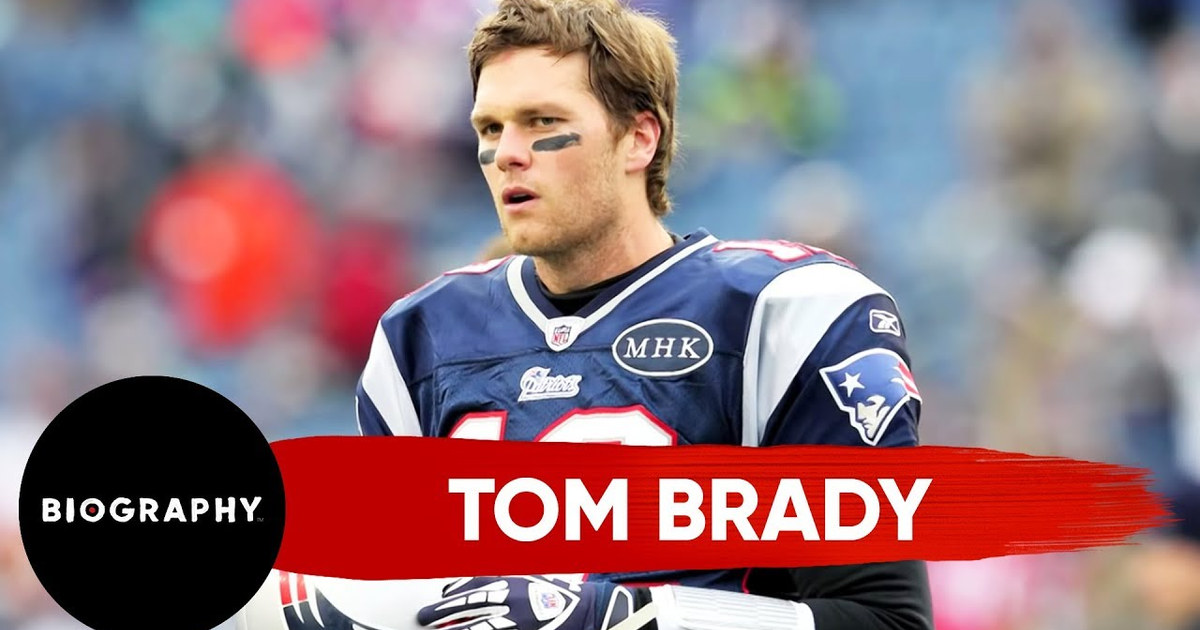
The brand was shot on long glass. When you shoot on a 600mm, you don't get seams. You don't get the messy reverse angle of a guy leaving a hospital. You get a compressed, flattened, airbrushed version of a life. The tabloid second-unit didn't need a lighting plan because the long lens does the lighting for them. It isolates. It blurs the background into a creamy bokeh. It makes the subject pop. And when the story got complicated, the compression held. There were no seams to catch because the lens never showed them. The long lens is a narrative machine. It doesn't just take pictures. It takes a position. And the position was always: Tom Brady is the hero of this frame.
Contrast that with the older quarterback advertiser grammar. The transcript invokes Mount Rushmore: John Elway, Joe Montana, Terry Bradshaw. Those guys sold products in a different era of cinematography. They were shot on soundstages with three-point lighting. They looked into the lens and delivered lines. Joe Montana sold cameras. Tom Brady sold the idea that the camera wasn't there. That's a completely different piece of visual grammar. Montana's spots were about the product. Brady's spots are about the absence of production. He's not selling you a camera. He's selling you the illusion that no one is watching. That's the long-lens effect applied to advertising. It's the same trick: flatten the depth, hide the seams, let the subject float in a world that seems unmediated. Montana said, 'Buy this camera.' Brady said, 'You don't even see the camera, do you?'
And then came the reversal. Man in the Arena (2021, ESPN+). Brady narrating his own archive. Nine episodes, directed by Gotham Chopra, and for the first time Brady takes the camera back. He's not being shot from the bushes. He's in the interview chair, framed in medium close-up, with a proper key light and a soft fill. He's telling you what the long lens left out. It's a correction. It's the reverse angle the paparazzi never got. And it's a masterclass in how to reclaim a visual narrative. The guy who was always the subject becomes the narrator. The guy who was always framed becomes the framer. The long lens finally gets a counter-shot.
The Dynasty (2024, Apple TV+) goes the other way. It's the negative-space read. It shows you the seams the long lens hid. It shows you the locker room, the tension, the cold front. It's the coverage that the second-unit crew never shot. If Man in the Arena is Brady taking the camera back, The Dynasty is everyone else taking it away from him. Together they form a diptych: the myth and the myth's shadow. One is the long lens. One is the reverse angle. And neither is the whole truth. But together they show you the lighting plan for what it was: a choice.
So here's what to watch for. The next part of this story covers the 2007 16-0 regular season and the Super Bowl XLII loss to the Giants on February 3, 2008. That's the first crack in the lighting plan. Then Super Bowl LI, the comeback against Atlanta in 2017 — the brightest light in the whole reel. Then the Tampa Bay move in 2020 and Super Bowl LV on February 7, 2021 — the final frame, a completely different uniform, a completely different set. Each of those reels does something to the lighting plan we've built here. Some of them reinforce it. Some of them blow it up. And some of them, like the helmet catch, expose the seams the long lens spent years hiding.
The long lens built the myth. The long lens flattened the seams. The long lens made Tom Brady into a brand that could survive a tabloid storm, a blended family, and a cameo in Ted 2. But every long lens eventually gets a reverse angle. And that's where the story gets interesting. The lighting plan changes. The framing changes. And the myth either holds or it doesn't. The 400mm gave us the icon. The reverse angle gives us the man. And the man is always more complicated than the icon.
Next time, we'll look at the 2007 season, the helmet catch, the Atlanta collapse, and the Tampa Bay finale. We'll see what happens when the second-unit crew gets fired and the subject starts directing himself. The long lens was never the whole picture. It was just the piece that made the picture look whole. And when the reverse angle finally came, it didn't just show us Tom Brady. It showed us everything the long lens left out. That's the next part.


