Part 3
Why does this matter for Brady's story? Because the Snow Bowl is the first time the Patriots' locker room had a reason to look at the kid and think: maybe. Not 'maybe he's a nice story.' Maybe he's the guy. A franchise doesn't believe in a sixth-round pick because of a stat sheet. It believes because of a night in the snow when everything is falling apart and the ball keeps moving forward.
That's the room we're in. Cold hands, white field, one overtime drive. Remember it, because the next stop is the one everybody remembers.
Super Bowl XXXVI: How Much of a Legacy Is One Two-Minute Drill?
February 2002. Super Bowl XXXVI. The Patriots are not supposed to be here. The Rams are. St. Louis has the Greatest Show on Turf, and New England has a second-year quarterback who was drafted 199th overall.
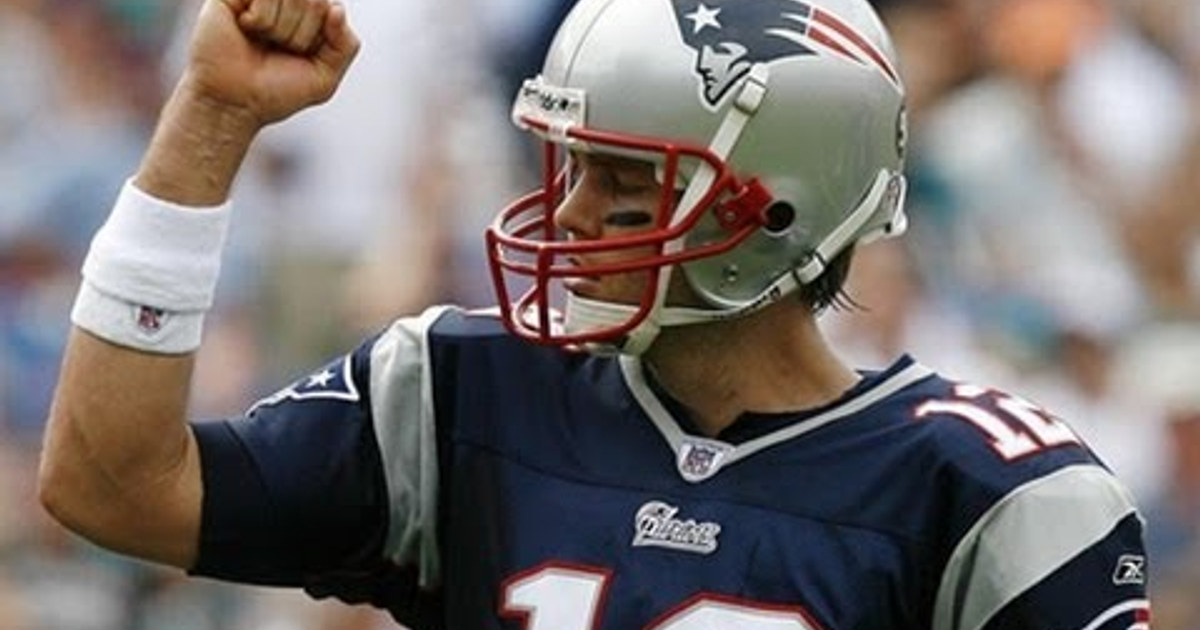
The tape gives us the ending first: Brady drove his team down the field in the game's final seconds, made room for a Patriots field goal, and won a nailbiter. He took home the MVP award. He became the youngest quarterback ever to win a Super Bowl.
Here's the question I want you to sit with as we stand in this room: how much of a legacy is one two-minute drill? Because on paper, it's one drive. In the archive, it's the moment the entire story changes shape. Before this, Brady is a backup who got lucky. After this, he's a Super Bowl MVP, and every conversation about him for the next two decades has to start there.
The tape doesn't linger on the play calls. It doesn't need to. It just notes the result and moves on. But the result is the point. One drive, one kick, one trophy, and suddenly the 199th pick is the answer to a trivia question that will never go away.
The Dip: 2002 and the Flat Year That Belongs in the Exhibit
Now we step back. Because the tape doesn't go straight from glory to glory, and neither should we.
The 2002 season: a shoulder injury plagued Brady, and the Patriots missed the playoffs. That's it. That's the whole entry in the archive. No drama, no redemption arc, just a flat year.
Why include it? Because this is where the rhythm of the tape matters. If you only watch the Super Bowls, you get a highlight reel. If you watch the whole thing, you get a career. The flat year is part of the exhibit because it proves the story isn't a straight line. It's a guy who got hurt, whose team didn't make the playoffs, and who had to come back the next year and prove the first one wasn't a fluke.
Keep that in mind as we walk into 2003. The Patriots aren't defending champions anymore. They're a team with something to prove, and their quarterback is a guy who just spent a season watching from the sideline.
2003 and 2004: The Run That Turned a Story Into a Dynasty
We're still in 2003. The Patriots win the AFC East. They go on to win Super Bowl XXXVIII. Brady is named MVP again. And the tape adds a detail that gets lost in the trophy count: he set a Super Bowl record for most completions by a quarterback.
That record matters because it's not a highlight. It's a grind. It's the kind of stat you get when you're completing passes underneath, taking what the defense gives you, and refusing to make the big mistake. It's the opposite of the two-minute drill. It's the whole game, played patiently.
Then 2004. Brady earns a second Pro Bowl selection. And the Patriots win a third Super Bowl in four years. The tape names the years and the wins exactly, and we should too: 2001, 2003, 2004. Three rings in four seasons, with a flat year in the middle.
[[VIDEO]]
Stand in this room for a second and look at the wall. This is the part of the tour where the archive stops being surprised. The sixth-round pick isn't a story anymore. He's the standard. And once you're the standard, the only question left is what you're worth.
Stop 4: The Money — $60 Million and the Number on the Balance Sheet
Here's the contract extension. The Patriots sign Brady to a deal worth $60 million over six years.
Ask yourself what it means when the 199th pick becomes the number on the balance sheet. For years, Brady was the cheapest kind of asset: a late-round pick who outperformed his rookie deal. Now he's a line item. Now the franchise is betting $60 million that the Snow Bowl, the two-minute drill, and the two MVP awards weren't a coincidence.
What did New England buy with it? Stability. A face for the franchise. A reason for the rest of the roster to believe the team was serious about winning. And, as we're about to see, a quarterback famous enough to get invited to host Saturday Night Live.
The Comedy Detour: Saturday Night Live, 2005
This is the funniest stop on the tour, and the most human. In 2005, Brady hosts Saturday Night Live on NBC. The tape's reference to the 'Tom City' sketch is garbled — the archive mangles it — but the point comes through anyway. This is the moment a quarterback becomes a celebrity.
Think about what that means. For the first few years of his career, the archive notices Brady's arm. Now it starts noticing his face. He's not just the guy who wins Super Bowls. He's the guy who can stand on a stage in Studio 8H and get laughs. The tape mentions a restaurant-sketch gag, though it doesn't give us the dialogue, and we won't invent it. We'll just note that the sketch exists in the record, and that it's a strange and wonderful thing to find in the middle of a football career.


