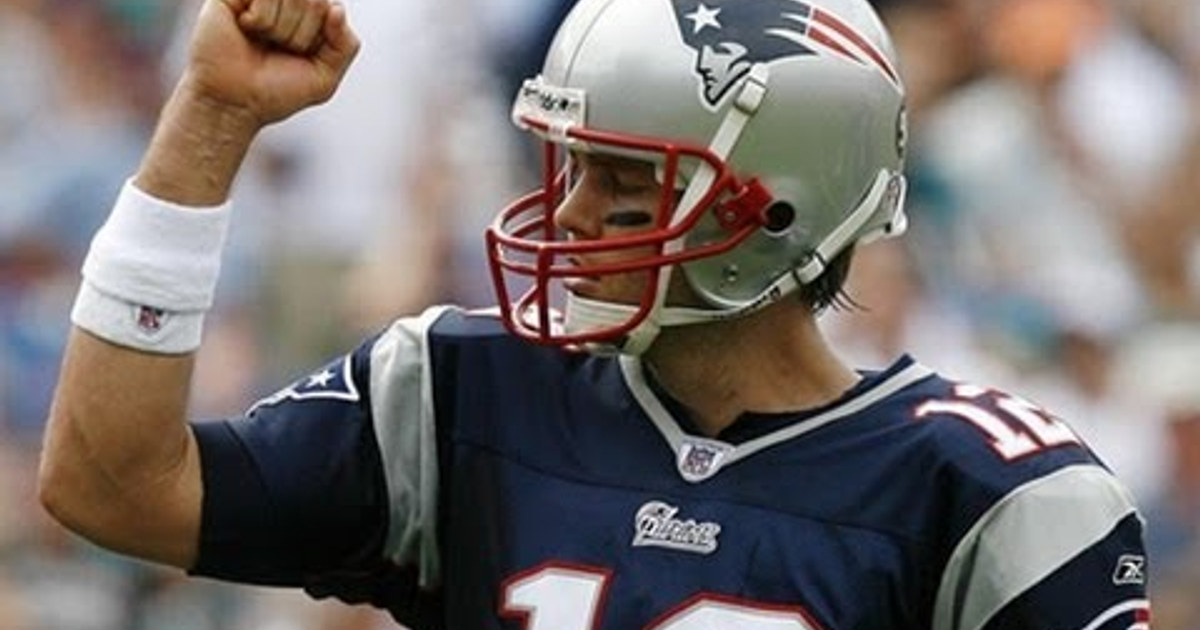
Part 1
First, Look at This: San Mato, the 199th Pick, and the Kid Who Told the Expos No
Before the confetti. Before the sixth-round pick becomes a punchline that punches back. Before any of it — look at one word. In the opening seconds of WatchMojo's career rundown, the YouTube clip that dropped you into this rabbit hole, the narrator tells you Tom Brady was born "August 3rd, 1977 in San Mato, California." San Mato. Roll it around in your mouth. There is no San Mato.
There is San Mateo. A real city on the western lip of the San Francisco Bay, twenty-some minutes south of where the 49ers played, close enough to the water that the fog shows up for dinner uninvited. That's where Thomas Edward Patrick Brady Jr. actually landed.
So here's the question this entire tour hangs on: why does one mangled word sit underneath the biggest career in NFL history? Why does the archive fumble the hometown of a man it will spend the rest of the running time calling "a real-life Captain America"?
Because that's not a typo. That's the pattern. The record keeps arriving a little late to Tom Brady — and then spending years catching up. Being underestimated isn't a chapter in this story. It's the spine of it.
Rules of the tour, quickly. We are walking the WatchMojo video (watchmojo.com, on YouTube) deliberately out of order. Not birth-to-2011. Not clean and chronological. Stop by stop, in the sequence the choices actually decided things — which is not the order the calendar decided them.
Five stops. The last one drops you back on the frame we're standing in right now, and by then you'll see something in it you can't see yet. First stop: a kid, a stadium, and an idol.
Stop 1 — San Mateo, the 49ers, and the Idol in the Huddle
August 3, 1977. San Mateo, California. The tape gives you the date and the dot on the map, then immediately hands you the engine underneath it: young Tom nurtured his love of sports by attending San Francisco 49ers games to watch his idol, Joe Montana, in action.
Don't skim past that, because it isn't trivia. It's wiring. A boy in the stands, watching a quarterback who made the position look like calm in the middle of a windstorm. Not a howitzer. Not a highlight machine. Calm. If you were building a quarterback from a childhood, that's the raw material you'd order.
Now, the tape opens by claiming that if ever there were a real-life Captain America, it would be him. Fine. Big claim, easy to say. Let's test it instead of repeating it. What did the actual kid do to earn that framing?
He went to games. He watched. He copied. That's the origin story on the record — not a super-soldier serum, just a Bay Area kid, a seat in the stands, and an idol worth imitating. Somehow that's more impressive than the slogan.
Stop 1, Continued — Two Sports, One Impossible Fork in the Road
Here's where the tape gets good, and where most people skimming it miss the whole point. Brady was, in the archive's words, a natural jock — with skills in football and baseball. Not "pretty good for a quarterback." Genuinely, legitimately two-sport good.
Good enough that in 1995, the year he graduated high school, the Montreal Expos picked him in the 18th round of that year's Major League Baseball draft. As a catcher. That's not a courtesy selection with a funny name attached. A real organization spent a real pick on his real arm from behind the plate.
And he turned it down. Not to sit somewhere safe — to go play football at the University of Michigan, where, spoiler, the depth chart was about to eat him alive.
Which raises the question a docent actually wants asked: what does an eighteen-year-old know that most adults never learn? What kind of internal compass tells you to walk away from pro baseball and toward a Big Ten quarterback room that isn't even promising you snaps?
Careful, though. The tape doesn't tell us why. No explanation, no quote, no press conference, just the choice. So we don't get to invent one. But notice how badly we want to narrate that decision backwards from the rings he hadn't won yet. In 1995 there were no rings. There was a catcher's mitt, a depth chart, and a kid who said no to the Expos. That's all we're allowed to know — and honestly, that's enough to be remarkable.
Stop 1, Still — The Bench Is the First Exhibit, Not the Warm-Up
Michigan. And the tape blows past this part too fast, which is a mistake, because this is the best material in the whole opening act. Brady spent most of his first two years on the bench, backing up Brian Griese — who would go on to be an NFL quarterback himself.
So ask it plainly. What does a bench year actually teach a quarterback? What does it teach two of them, stacked one behind the other, both of whom end up in the pros? The tape doesn't lecture you on it, and neither will I. But look at the shape of the résumé instead of the words on it. The bench isn't the prequel to this story. The bench is chapter one.
Then the door opens. By 1998 he took the top spot and started every game for the next two seasons. He led the team to wins in the 1999 Citrus Bowl and the 2000 Orange Bowl. He walked out of Ann Arbor as a fifth-year senior, on a bowl victory.


