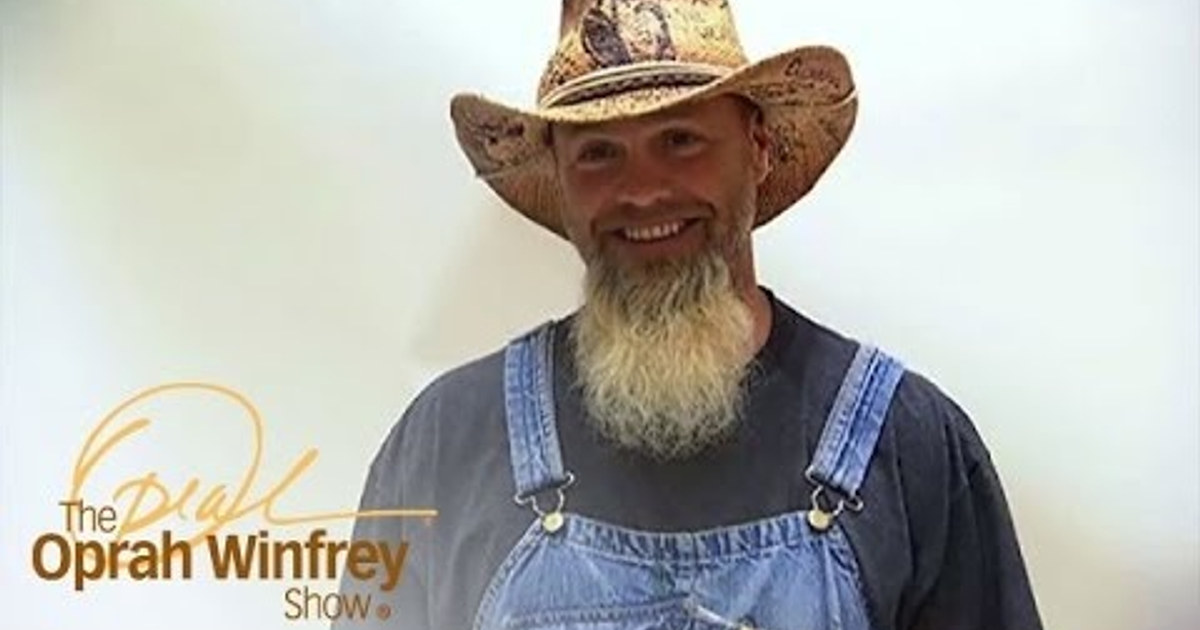
You have probably seen the clip circulating across your feed: a rugged, denim-clad man walking through a home improvement store, looking less like a modern citizen and more like a caricature plucked straight out of a rural sketch show. It raises a question that contemporary television has grappled with for decades: can true personal authenticity survive the sharp edge of a high-gloss makeover, or does television inevitably scrub away the very soul it claims to rescue?
When daytime television entered its golden renaissance in the mid-2000s, transformation segments were everywhere. Shows like *Queer Eye for the Straight Guy* (2003) and *What Not to Wear* (2003) taught audiences that an unkempt silhouette was merely an unedited first draft waiting for a stylist's scalpel. Yet, when Tim Gunn—the venerable arbiter of taste on *Project Runway* (2004)—stepped onto Oprah Winfrey's stage to unveil Jason, the stakes felt distinctly different.
Jason was not merely underdressed; he was an aesthetic extreme. Discovered roaming the aisles of a local Lowe's, he was clad in baggy, tattered overalls, a bleached goatee, and a shredded straw hat that looked like a biological hazard. It was a visual language that felt alienated from the modern world, prompting Gunn to wonder openly whether the entire ensemble was an elaborate Halloween costume.
[[AD]]
Deconstructing the Costume: The Lowe's Encounter and Identity Shock
To understand the sheer magnitude of Jason's transformation, one must first confront the sheer audacity of his original attire. When Oprah's scout team ambushed him, they saw what Gunn affectionately dubbed a 'Farmer in the Dell' caricature. Jason had just clocked out from an honest day's labor and swung by the hardware store for tools, entirely unbothered by the spectacle he created in public spaces.
Much like Peter Bogdanovich captured the poignant collision between dusty small-town tradition and modern expectations in *The Last Picture Show* (1971), Jason’s everyday gear spoke to a total withdrawal from modern style conventions. His wardrobe was not deliberate subversion; it was pure inertia. For years, he had layered worn-out straw hats and stained denim, absorbing the stares of passersby without ever realizing he was broadcasting all the wrong signals.
The camera team did not see a hopeless case, however; they spotted a hunky archetype waiting beneath layers of neglect. The long bleached goatee masked his face, and the shredded straw hat practically threatened tetanus to anyone brave enough to touch it. The gulf between how Jason moved through the world and how the world actually perceived him had widened into an unbridgeable canyon.
[[AD]]
The Socratic Needle: Gunn's Tailored Philosophy
Instead of imposing a corporate runway aesthetic onto a working man, Gunn applied his signature pedagogical method: the Socratic interrogation. Rather than issuing unilateral decrees, Gunn sat down with Jason to unearth his genuine style references. Who did he admire? Whose swagger resonated with his lived experience? The answer emerged immediately: Tim McGraw and the sharp, structured grandeur of contemporary country music.
In doing so, Gunn mirrored the thoughtful narrative recalibration seen in cinematic character studies like *Crazy Heart* (2009), where an artist's outward rough edges are honed rather than obliterated. Gunn recognized that stripping Jason of his Western identity would be a betrayal. The goal was never to put him into a sleek European trench coat; the goal was to elevate his beloved genre into something commanding and enduring.
The cornerstone of this tailored salvation was a classically cut blazer featuring a subtle Western yoke across the shoulders. Paired with perfectly proportioned dark denim and premium cowboy boots, the silhouette balanced rugged heritage with red-carpet polish. Gunn proved that traditional masculinity need not rely on baggy disarray to feel genuine.
[[AD]]
The Grooming Knife: Diana Schmidtke Carves Out a Star
Clothing, however, is only half the battle when a subject is swallowed behind facial hair. Enter celebrity groomer Diana Schmidtke, famed for styling heavyweights like George Clooney on high-profile magazine spreads. When Schmidtke laid eyes on Jason's bleached goatee, her diagnosis was instant: the facial hair had to be eradicated in its entirety.
The overgrown, bleached growth functioned as an aesthetic barricade, completely swallowing Jason’s charming, wide smile. Schmidtke's swift editorial intervention was reminiscent of the sharp visual reinvention in *Walk the Line* (2005), stripping away years of stylistic confusion with a few deliberate strokes of the razor to unveil the real star hiding underneath.
Once shaved clean, Jason’s jawline and youthful visage completely transformed the energy in the room. Schmidtke understood that a great makeover does not invent bone structure; it simply removes the clutter that obscures it. The crowd reacted with unbridled awe because Jason no longer looked like an accidental prop—he looked like a polished country music headliner.
[[AD]]
The Stage Reveal: From Lowe's Aisle to Kenny Chesney Swagger
When the studio doors parted and Jason walked onto Oprah's soundstage, the room erupted. Strutting under the warm television lights, he radiated a newfound poise that immediately drew comparisons to Kenny Chesney. Gone were the frayed overalls and hazardous straw headpieces; in their place stood a razor-sharp, charismatic modern cowboy.
Oprah marveled at the hat, confessing she had just picked up a cowboy hat herself during a recent visit to Dallas. The transformation avoided the uncanny valley of daytime television makeovers by honoring Jason's roots while ditching the neglect. It proved that personal presentation is not about abandoning who you are, but about editing your visual narrative for maximum resonance.
Jason's demeanor shifted dramatically. Asked how he felt, his response was immediate and luminous: 'I feel fantastic.' For years, he had endured the puzzled stares of strangers in public aisles, accepting the attention for all the wrong reasons. Now, the applause washing over him affirmed that stepping into one's best self is an act of self-respect, not superficial surrender.
[[VIDEO]]
The Timeless Answer: Style as Editing, Not Erasure
So, does a television makeover inherently strip a working-class individual of their core identity? In the hands of Gunn and Schmidtke, Jason’s reveal offers a definitive answer: quite the opposite. True styling does not erase the subject; it removes the accidental noise so their authentic essence can finally speak with clarity.
By swapping hazardous straw for a pristine cowboy brim, and exchanging shredded overalls for a tailored Western yoke, the makeover unlocked the hunky, self-assured country gentleman Jason was always meant to be. It stands as a masterclass in daytime television that remains as electrifying today as the day it aired. Stay tuned for our next retrospective dive as we break down another legendary daytime transformation that reshaped fashion culture.


