Part 3
The Cost of Being the Devil: Typecasting, Burnout, and Reinvention
You have probably seen the trailer for some glossy reboot or legacy sequel, the kind where a familiar face from your childhood appears for exactly seven seconds, and the whole theater loses its mind. The question hanging over that moment is always the same: what does it cost an actor to be so good at being bad that the audience can never see them as anything else? Tim Curry answered that question with his body, his career, and eventually his silence. The man who made Dr. Frank-N-Furter a cultural landmark, who turned Pennywise into a generation's nightmare, and who voiced Hexxus with such oily glee that environmentalism felt sexy, spent decades paying a toll for every devil he played. And the toll was not metaphorical.
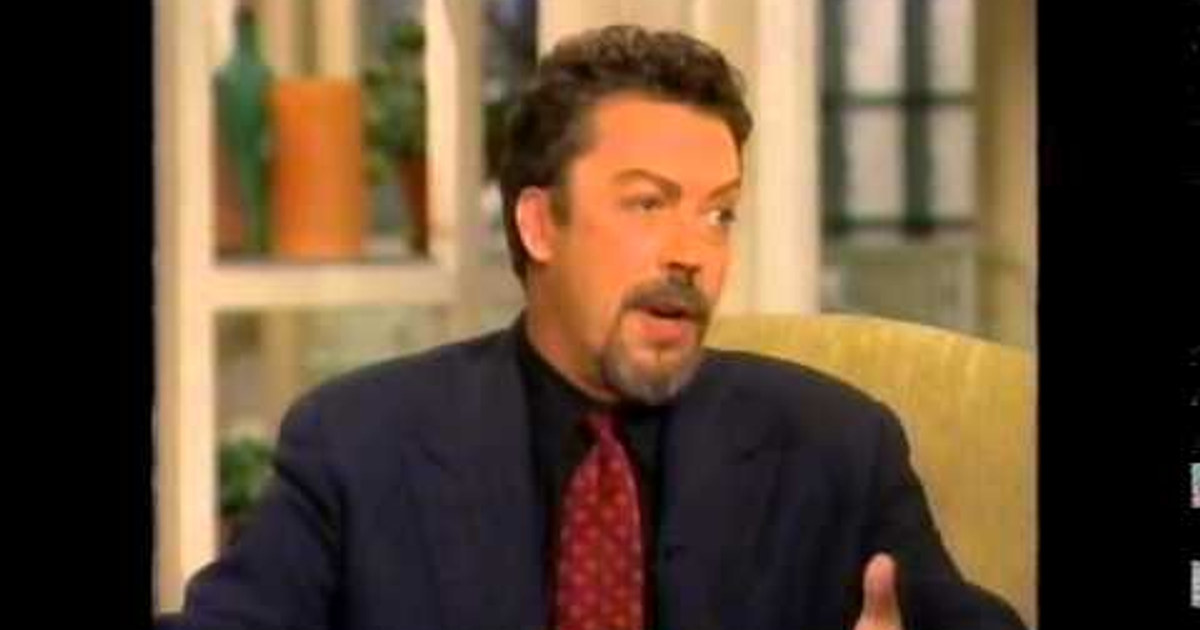
Curry understood the vulnerability of the actor's body long before his own betrayed him. In a 1997 appearance on a daytime talk show, promoting his short-lived sitcom 'Over the Top', the conversation turned to a Hollywood plastic surgeon scandal. Curry, never one to mince words, called the breach of trust 'appalling' and zeroed in on the core terror: 'You're so completely vulnerable when you're in surgery anyway and you're under anesthesia.' He was talking about a doctor's betrayal, but the word 'vulnerable' hung in the air like a confession. For an actor whose entire persona was built on physical command—the corseted swagger of Frank-N-Furter, the rubbery menace of Pennywise, the oil-slick charisma of Hexxus—the body was not just an instrument. It was the site of risk. Every snarl, every hip thrust, every drop of fake blood was a wager that the body would hold up. And for decades, it did. Until it didn't.
[[AD]]
The cost of being the devil is not just the roles you get; it's the roles you stop being considered for. By the mid-1990s, Curry was a bankable villain, but Hollywood had no idea what to do with a bankable villain who could also sing, dance, and deliver a one-liner with more precision than most leading men. Enter 'Over the Top' (1997), a sitcom that tried to cash in on Curry's persona by sanding off the edges. He played Simon Ferguson, an unemployed actor and the former husband of Annie Potts' character. The premise was sitcom-standard: ex-husband moves back in, chaos ensues. But the humor still relied on Curry's menacing charm. The pilot's joke—'How does it feel to sell your soul to the devil for a prime time series?'—was a wink at the audience, a promise that the devil was still in there, just domesticated. It didn't work. The show lasted twelve episodes. The problem was not Curry's performance; it was the fundamental mismatch. You cannot put the devil in a cardigan and expect him to be funny for long. The audience wanted the devil, not the divorcee.
Compare that to Hugh Laurie, another British actor with a face built for sneering. Laurie spent the 1990s playing comedy villains and sidekicks in 'Blackadder' and 'Jeeves and Wooster', then crossed the Atlantic and became Dr. Gregory House in 'House' (2004). House was a villain in all but name—a misanthropic, drug-addicted diagnostician who verbally eviscerated everyone in his path. But the show framed him as a hero, and Laurie became the highest-paid actor on television. Curry never got that reinvention. He was offered the devil, over and over, and when he tried to play something else, the industry shrugged. 'Over the Top' was his shot at the Laurie arc, and it failed not because Curry lacked the talent but because the culture had already decided what Tim Curry was for. He was the devil you paid to see, and the devil you paid to see could not be allowed to retire.
The physical toll of playing the devil is rarely discussed, but it is real. Curry's performances were full-body commitments. Frank-N-Furter required corsets, heels, and a level of physical abandon that would wreck a lesser athlete. Pennywise required hours in makeup that restricted breathing and movement. Darkness in 'Legend' (1985) required prosthetics that covered his entire face, leaving only his eyes and voice to convey emotion. Hexxus was a voice role, but Curry still threw his whole body into the recording booth, contorting himself to find the character's oily, seductive purr. This is not sustainable. Actors who play physical villains age faster, hurt more, and burn out sooner. Curry's 2012 stroke was a private medical event, but the public facts are stark: a massive stroke that left him wheelchair-bound and largely withdrawn from public life. It would be irresponsible to draw a direct causal line between his roles and his stroke, but it is not irresponsible to note that a career built on physical extremity exacts a price. The body remembers every snarl.
In the quieter years before the stroke, Curry found a different kind of reinvention. His voice work in 'The Wild Thornberrys' (1998) as Nigel Thornberry was a revelation: warm, bumbling, and utterly devoid of menace. He voiced the character for five seasons and two feature films, proving that the instrument that had terrified millions could also make them laugh with pure, unironic joy. Then came 'Star Wars: The Clone Wars' (2008), where he played Chancellor Palpatine—a villain, yes, but a villain rendered entirely through voice. No prosthetics, no physical contortion, just the slow, creeping corruption of a democracy delivered through a microphone. It was a quieter reinvention, one that acknowledged the limits of the body while still honoring the power of the voice. Curry could not play the devil on screen forever, but he could still be the devil in your ear.
The stroke did not end Curry's career, but it changed it irrevocably. He continued to work, mostly in voice roles and occasional appearances, but the public image shifted from 'the man who played the devil' to 'the man who survived'. That shift is its own kind of cost. The actor who had been defined by his physicality was now defined by his vulnerability. The irony is that Curry had always understood vulnerability. He had spoken about it on that talk show in 1997, about the terror of being under anesthesia, about the trust an actor places in the people who handle their body. He knew that the body was a fragile thing, even when it was dressed in leather and fishnets. He just never expected the fragility to become the story.
So what does it cost an actor to be so good at being bad? It costs them the chance to be good at being anything else. It costs them their body, piece by piece, until the body can no longer do the job. It costs them the reinvention that other actors get, the Hugh Laurie arc, the chance to be a leading man. Tim Curry paid that price for decades, and he paid it willingly, because he understood something the rest of us only glimpse: the devil is not just a role. The devil is a mirror. When Curry played the devil, he showed us our own desires, our own fears, our own capacity for corruption. He made evil seductive, and we loved him for it. But we also punished him for it, because we could not separate the actor from the abyss. Tim Curry didn't just play the devil. He showed us why we need the devil, and what it costs the actor who embodies him. The cost is everything.


