Part 1
The viral graveyard-cleaning video is not just wholesome late-night content; it is a guerrilla night-cinematography masterclass, and every orange crust, haunted phone call, and sunrise reveal is evidence that motivated light, real stakes, and a 35mm lens beat a studio budget every time.
I have shot second unit on enough night exteriors to know the graveyard at 2 a.m. is a liar. It looks like a black hole for exposure. But this video walks into that black hole with a phone flashlight, a scrub daddy, and the kind of confidence that makes a gaffer weep. That is the thesis: the most emotionally effective image here is not the cleanest grave. It is the one lit by the same flashlight the cleaner is using to find the dirt.
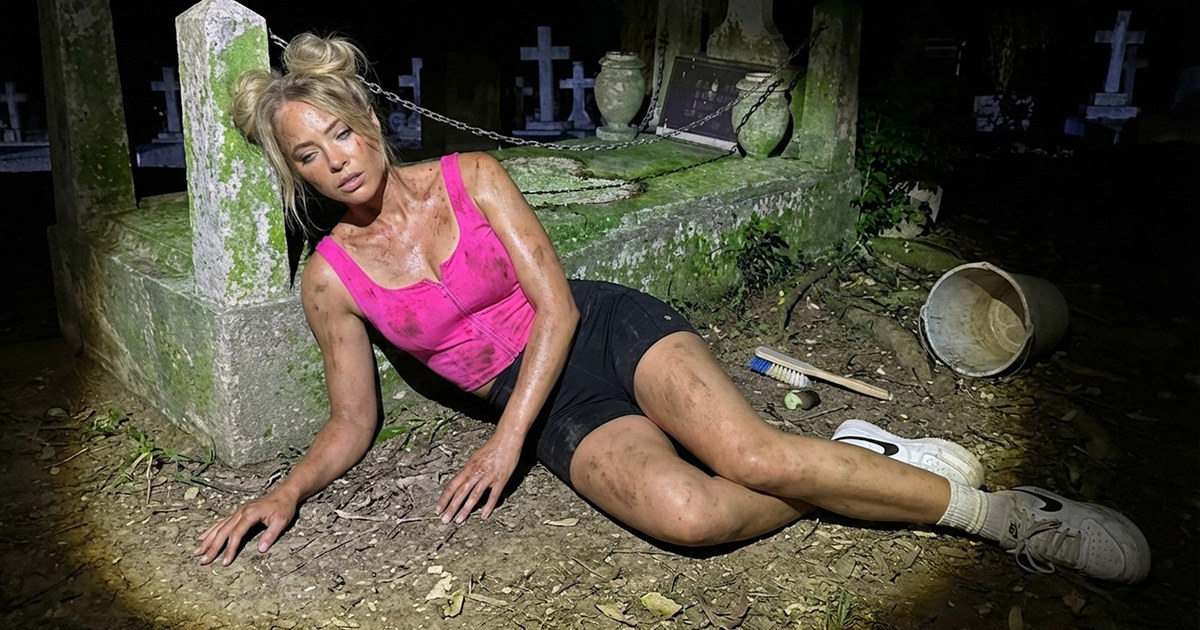
Let us set the scene. Our narrator is in the graveyard at night, cleaning abandoned graves for free. She is scared of the dark. She keeps hearing weird noises. She is doing it because Sam the graveyard man has the cleanest heart, and the graveyard does not have enough workers. The graves get dirty faster than they can clean them. So she is surprising Sam before the sun wakes up. That is not a plot. That is a lighting brief.
[[AD]]
The Orange Crust and the 24mm Night Exterior
Scene beat: she finds a grave covered in orange crust. 'Look at this orange crust,' she says. 'It comes right off.' She is using scrappy tools cheaper than a pancake. The image is gross, satisfying, and impossibly intimate. If I were shooting second unit on this, I would put a 24mm on a full-frame body, stop down to T2.0, and let the flashlight do the key. No fill. No bounce. Just hard, motivated light raking across the stone. That is why the crust reads. It has texture because the shadows have teeth.
The technical magic is negative fill. The night is not a background. It is a character. Every time she pans, the darkness swallows the edges of the frame. A lesser video would crank ISO and flatten the image into gray mush. This one lets the blacks crush. The phone screen becomes a practical. The flashlight becomes a key. The moon, if it is there at all, is a rim light you cannot control. That is documentary grammar, and it is why the fear feels real. You cannot fake that kind of exposure anxiety.
Then she reads the names. Alberto AB Bronte, born November 14, 1943, died May 8, 1994. Another grave: iel Carlo Ramirez, passed July 28, 1994. Only a few months after Alberto. She notices. That is the emotional turn. The camera does not push in. It does not need to. The frame holds on the stone, and the dates do the work. That is second-unit wisdom: when the production design is already tragic, get out of the way.
[[AD]]
The Haunted Phone Number and the Art of the Punchline
Scene beat: she finds a haunted phone number. 'Should I call it?' she asks. She practices her intro. 'Hi, clean girl, I mean, um, my name is Clean Girl.' She debates. She commits. She calls. 'Thanks for choosing Dominoes.' Nope. She cannot do it. It is too spooky. That is a horror-comedy beat executed with the timing of a great editor. The cut from tension to pizza is the punchline, and it lands because the setup was shot like a thriller.
Here is the cinematography lesson. The phone call sequence is all close-ups and shallow depth. If I were shooting it, I would use a 50mm at T1.4, maybe an 85mm for the reaction. The phone screen is the only light source on her face. It is 5600K, cold, unflattering, perfect. The background falls into a swamp of bokeh. You cannot see what is behind her, so your brain fills in the monster. That is not a budget limitation. That is a choice. The frame is a haunted house, and the negative space is the ghost.
The comedy works because the stakes are fake but the fear is real. She is not actually in a slasher movie. She is in a graveyard at midnight, alone, hearing noises. The Dominoes joke releases the tension, but it does not erase it. The next shot is her walking away, still scared. That is the rhythm of the whole video. Clean, joke, clean, scare, clean, reveal. It is a montage with a heartbeat.
[[AD]]
The Lost Scrub Daddies and the Dawn Color Shift
Scene beat: her supplies disappear. She left them over there. Now they are gone. There is literally nobody else here. She finds a scrubby that is not hers. She panics. 'I need to go.' Then she comes back. She found her supplies. She was confused. She thought this grave was that grave. Classic. That sequence is a masterclass in unreliable nighttime geography. Everything looks the same at night because the lighting is motivated and the coverage is handheld. The audience is as lost as she is.
Then she finds snail trails. Squiggly lines from her friend Larry. She finds crazy graves she has to clean next. A mango falls out of a train and scares her. She has to forget about fruit and clean. The clock is ticking. The sun is coming. This is where the video shifts from horror-comedy to something else. The night exterior becomes a race against color temperature. The blue hour is coming. You can feel it in the exposure.


